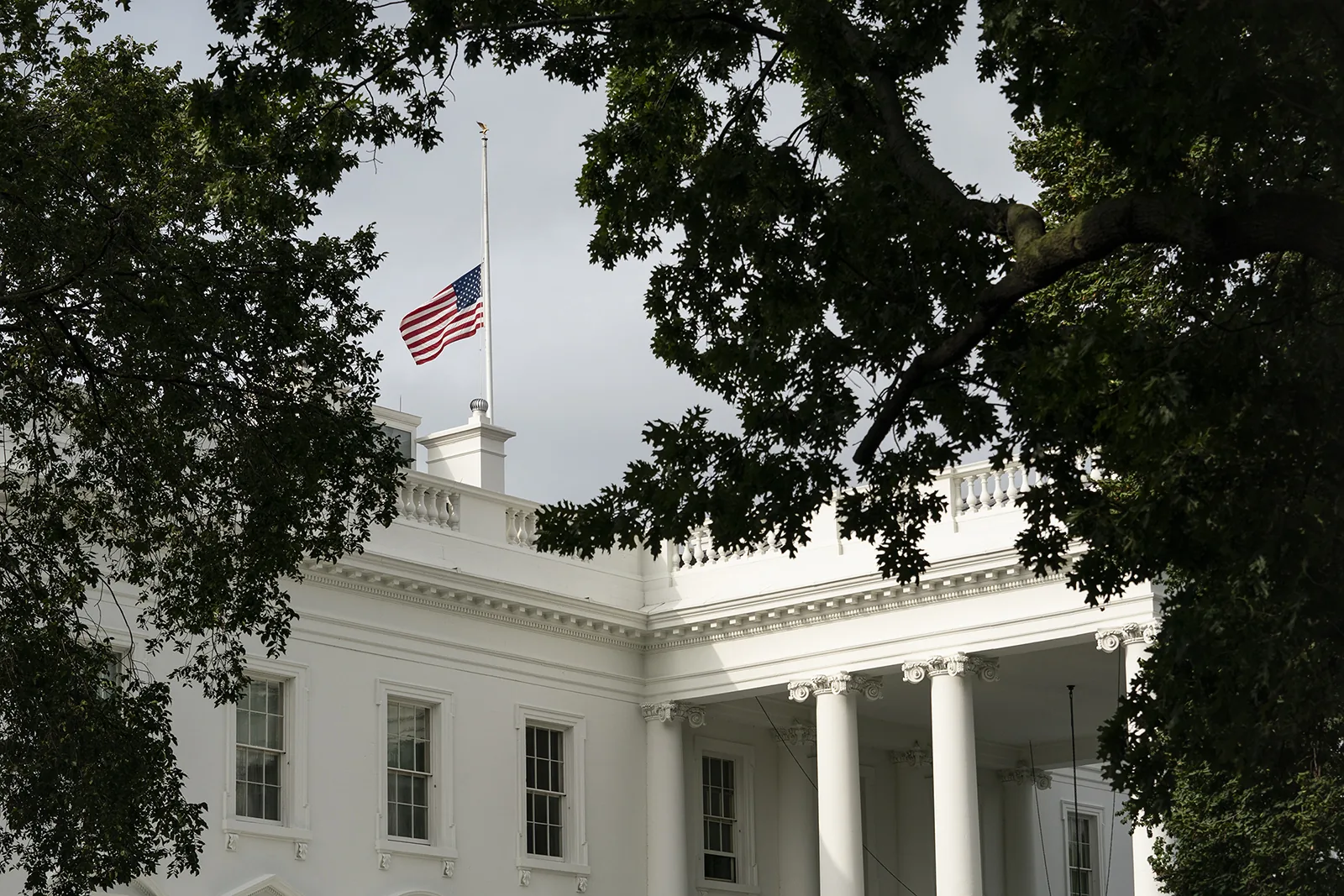
A U.S. flag flying at half-staff at the White House normally signals an official federal period of mourning or remembrance. The reason may come from a presidential proclamation, a standing rule in federal law, or a scheduled observance such as Memorial Day. But the position of the flag by itself does not reveal every location covered or the exact time the tribute ends. For the changing answer, start with today's U.S. half-staff status, then open the original government action linked to the record. A photograph, livestream, or news report can confirm what was visible at one moment; it is not a substitute for the document that states the reason, scope, and return-to-full-staff time.
What a Half-Staff Flag at the White House Actually Tells You
The flag people usually mean is the United States flag displayed on the White House grounds. When that flag is lowered, it is strong evidence that the Executive Residence is observing a federal mourning or remembrance instruction. It is not, on its own, proof that every flag at every home, business, school, state building, or city facility must be in the same position.
That distinction matters because a flag display has three separate parts:
- The observed position: what the flag looked like at a particular place and time.
- The controlling authority: the statute, presidential action, or agency instruction supporting the display.
- The stated scope: the properties, jurisdictions, dates, and facilities named in that instruction.
Federal law defines ?half-staff? as halfway between the top and bottom of the staff. It also directs that the flag be raised to the peak before it is lowered to half-staff and returned to the peak before it comes down for the day. ?Half-mast? is common search language, but half-staff is the standard U.S. term for a flag on land; half-mast is traditionally associated with a ship or naval setting.
Three Different Reasons the White House Flag Can Be Lowered
A presidential proclamation or special direction
Presidents issue special actions after deaths, attacks, disasters, and other events chosen for national remembrance. The operative wording matters more than a headline. A typical action names the White House, public buildings and grounds, military posts, naval stations and vessels, and federal facilities abroad. It also states an end condition such as a date, a clock time, sunset, or the day of interment.
For example, the official proclamation after Justice Ruth Bader Ginsburg's death directed the flag to half-staff at the White House and specified federal locations until sunset on the day of interment. The 2025 proclamation honoring Pope Francis used a similar interment-based end condition. Neither example should be paraphrased as a timeless instruction for ?all flags everywhere.? The correct reading comes from the locations and dates in the document.
For a broader explanation of presidential, gubernatorial, agency, and local roles, see who can order U.S. flags to half-staff.
A standing mourning period in 4 U.S.C. ? 7(m)
Not every federal lowering depends on a newly published proclamation. Section 7(m) of Title 4 supplies baseline mourning periods after the deaths of specified officials. That is why the absence of a fresh announcement is not enough to conclude that a White House display is unexplained.
| Official | Federal statutory baseline |
|---|---|
| President or former President | 30 days from the day of death |
| Vice President, Chief Justice or retired Chief Justice, or Speaker of the House | 10 days from the day of death |
| Associate Justice, executive or military department secretary, former Vice President, or Governor | From death until interment |
| Member of Congress | Day of death and the following day under the general statutory sentence; federal instructions can add location-specific treatment |
This table is a verification starting point, not permission to ignore a more specific presidential or agency instruction. The official version of 4 U.S.C. ? 7 also reproduces relevant executive-document rules, including geographic details for congressional deaths. Facility managers should follow the controlling direction for their property rather than applying a simplified chart in isolation.
A scheduled observance
Some lowerings occur because the calendar calls for remembrance. Memorial Day is the best-known example with a special timing rule: the flag is displayed at half-staff from the morning until noon, then raised to full-staff. The 2026 Memorial Day proclamation also requested participation by governors, local officials, and citizens for that customary morning period.
Do not transfer the noon rule to every observance. Use the half-staff calendar to identify a relevant date, then read the statute or current presidential proclamation supporting it.
How to Verify the White House Flag Status Step by Step
- Record the observation. Note the date, approximate time, and source. A television clip or social post may show footage from another day.
- Check the live national answer. The Half Staff Today homepage separates confirmed federal evidence from an unconfirmed status and links to preserved order records.
- Search White House Presidential Actions. Open the proclamation or order itself rather than relying only on a headline, excerpt, or screenshot.
- Check standing law if no new action appears. Compare the event with the named offices and mourning periods in 4 U.S.C. ? 7(m).
- Extract the exact scope and end language. Look for covered buildings, grounds, posts, vessels, embassies, jurisdictions, and an end stated as noon, sunset, a date, or interment.
- Check the authority for your own property. A state building, local school, private office, and federal installation may not be controlled by the same instruction.
| Evidence | What it can establish | What still needs checking |
|---|---|---|
| Original presidential action or statute | Authority, named scope, effective period | Later amendments or facility instructions |
| Official agency or government status notice | How that authority applies the instruction | Whether it controls a different property type |
| Reliable news report | Event context and observed implementation | Exact operative wording |
| Photo, livestream, or social post | Visible position at a reported moment | Date, authority, scope, and end time |
Preserve the original timing language. If an action says ?until sunset? without supplying a clock time, do not quietly convert it into a made-up Washington time for every facility. Follow the issuing or facility authority's interpretation for the location involved.
Why the White House and Another Flag May Not Match
A different position does not automatically mean someone has ignored an order. The White House is federal property. A governor can issue a separate state proclamation, a mayor or county executive may direct flags on local property, and a private organization may participate voluntarily or follow its own established policy.
Federal law contains a particularly important scope detail: when a governor or the mayor of the District of Columbia issues a qualifying half-staff proclamation because an Armed Forces member from that jurisdiction died on active duty, federal installations in the covered area follow that proclamation. That specific rule should not be expanded into a claim that every state order controls every federal building.
Other possible explanations include an old camera image, an operational delay in changing the halyard, a different local sunset, an order limited to selected facilities, or a voluntary tribute not based on a government directive. These are possibilities to investigate, not reasons to guess.
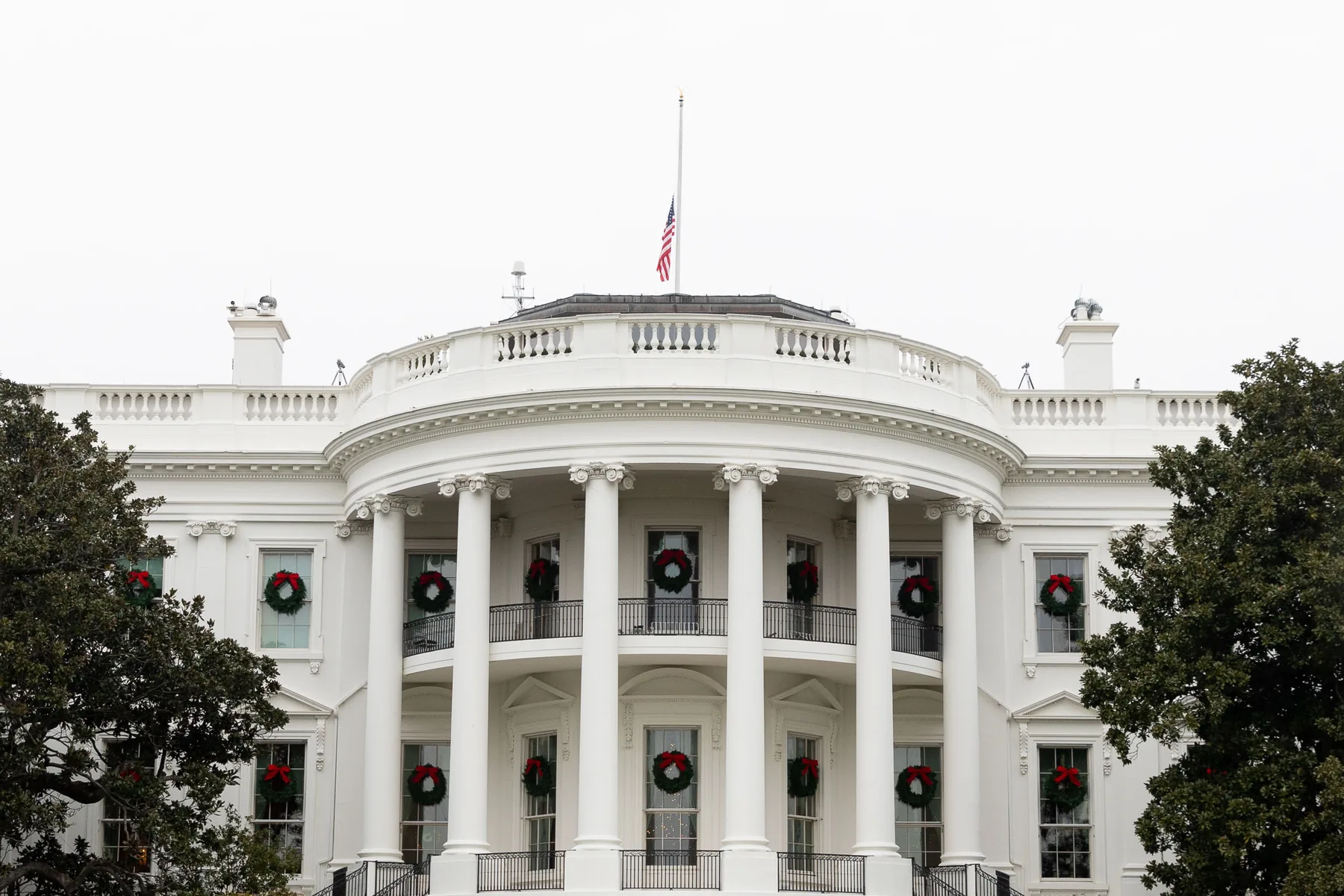
A Real Example of the Status Changing Within One Mourning Period
January 20, 2025 demonstrates why a single duration is not always the whole answer. A 30-day half-staff period was underway following former President Jimmy Carter's death. On Inauguration Day, a new presidential action ordered the flag to full-staff at the White House and named federal locations for the remainder of that day. The same action directed the flag to return to half-staff after Inauguration Day until the Carter period concluded.
The practical lesson is simple: read the effective window and every referenced action. ?Thirty days? described the broader mourning period, while the later action created a time-limited full-staff interval. A photograph taken during either interval could be accurate even though it looked inconsistent with a summary that omitted the later instruction.
A separate example involving a statutory mourning period and the absence of a routine proclamation appears in the guide to flags at half-staff after Dick Cheney's death.
What Homeowners, Businesses, Schools, and Local Agencies Should Do
If you manage a federal property, use the federal action and your agency's implementation instructions. If you manage a state or local facility, compare the federal status with the governor's office, state administrative department, county, municipality, school system, or other authority that controls the property.
Homeowners and businesses can choose to participate respectfully, but they should distinguish a presidential order covering federal property from language that requests or invites broader participation. A White House camera image should not be described as a legal command to a private owner. When an announcement says residents are ?encouraged? or ?invited? to join, preserve that voluntary wording.
If you lower a flag, follow the ceremonial sequence: raise it briskly to the peak, lower it to the halfway position, then raise it to the peak again before taking it down. The flag position calculator can help with the physical halfway point. Always use the stated return time; Memorial Day's noon change is the notable exception to an assumed all-day display.
White House Flag Status FAQ
Does the White House flag show whether every U.S. flag should be lowered?
No. It shows the display on White House federal property. The underlying action may have broad federal scope, but state, local, and private properties must be checked against the exact document and the authority governing that property.
Where can I find the official reason?
Begin with the live national status and its evidence link, then check White House Presidential Actions and the official text of 4 U.S.C. ? 7(m). Use an original proclamation, order, statute, or government notice as the basis for the reason and end time.
What if there is no new White House proclamation?
Check whether a standing statutory mourning period applies, whether an earlier action is still effective, and whether the responsible federal agency issued implementation instructions. ?No new proclamation found? is not the same as ?the flag should be full-staff.?
Does ?until sunset? always mean sunset in Washington, D.C.?
Do not assume a time zone that the action does not state. Preserve the original wording and consult the implementing authority for the facility involved, especially when a federal action covers locations across the country or overseas.
Should I call it half-staff or half-mast?
For the White House and other land-based U.S. flagpoles, ?half-staff? is the standard term. ?Half-mast? is traditionally used for a ship or naval setting, although people commonly use both phrases when searching for the same display.
Comments
Comments are reviewed before publication.
Sign in with Google to join the discussion.
Loading comments…