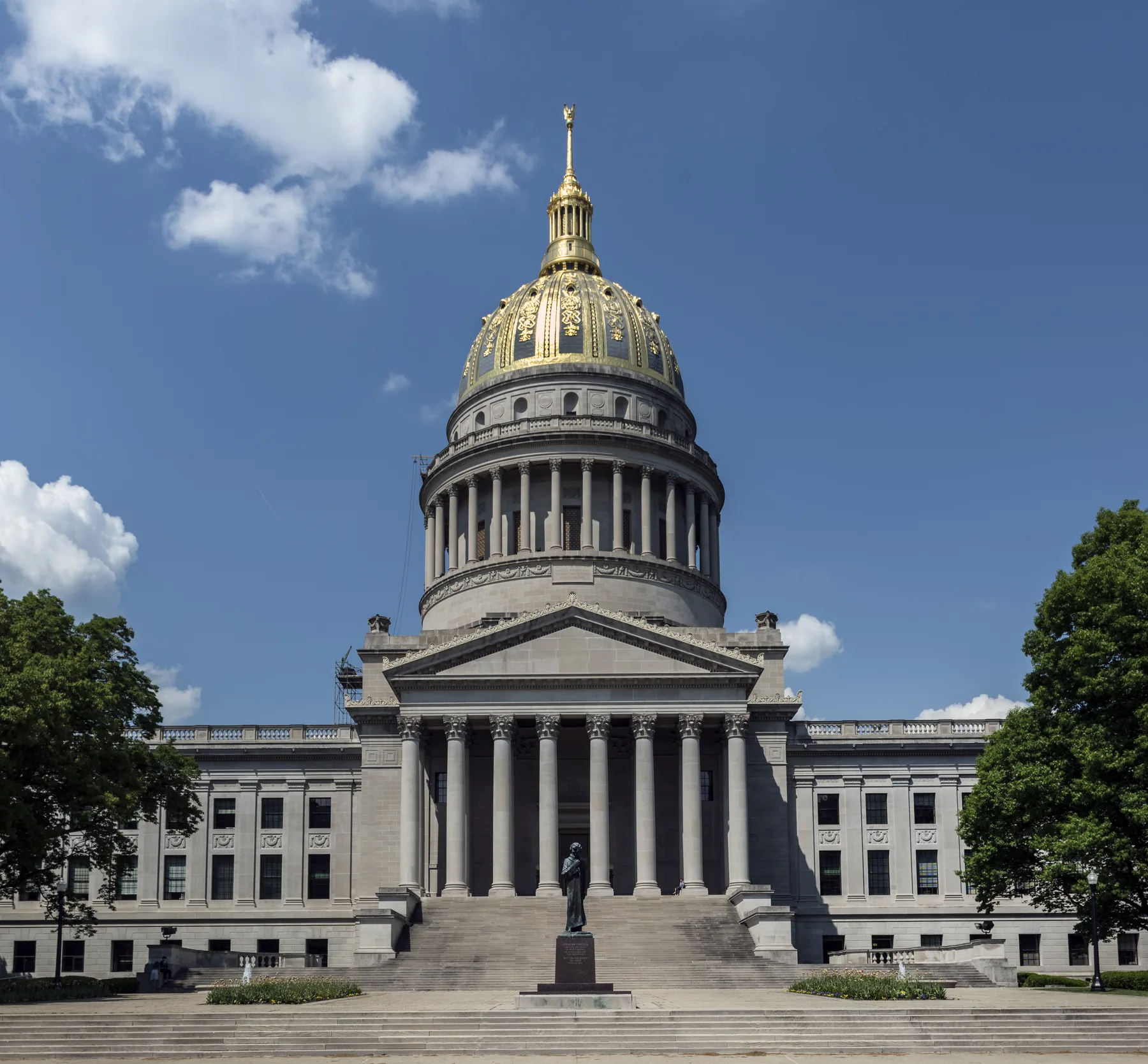
If you need the West Virginia flag status today, begin with the live West Virginia status page, then confirm the reason and exact instructions on the West Virginia governor’s website. Do not assume that a dated news release, a social post, or a flag you saw on one property applies everywhere. A usable half-staff notice identifies five things: who issued it, which flags it names, which buildings or places it covers, when it starts, and when it ends.
This guide explains how to verify a West Virginia order without freezing a changing “today” answer into an evergreen article. It also shows why federal, statewide, Capitol-only, and county-limited instructions can produce different correct flag positions at the same time.
Where to Check West Virginia’s Current Flag Status
The best first stop for a state instruction is the West Virginia governor’s official Flag Status block. The governor’s homepage also surfaces a flag-status panel, while detailed reasons are commonly published as separate news articles or proclamations. That division matters: the short status panel can answer whether a state instruction is active, but the associated order supplies the dates, geography, flags, and honoree that determine how it applies.
For a faster combined view, use Half Staff Today’s West Virginia status page. It is designed to separate a West Virginia instruction from a national one and to point readers toward the underlying authority. Then open the newest official source before changing a flag. The national status page is the comparison point when a presidential proclamation or federal instruction may also be active.
A reliable check takes less than a minute when you follow the same order every time:
- Read the live status label, not a search-result snippet.
- Open the newest linked governor article or proclamation.
- Record the issuer, named flags, covered property, start, and end.
- Check the national status separately.
- Recheck near the stated end, especially if it depends on a funeral or interment time.
Do not treat an old governor article as a standing order. For example, an article may remain indexed long after its sunset deadline has passed. Its value is historical and procedural: it shows how West Virginia writes an instruction, not what a flagpole should display today. The same caution applies to screenshots and cached search results, which can omit an update or extension.
If the official status block and a detailed release seem inconsistent, compare publication times and read the release itself. An apparent conflict may simply reflect a narrow order—such as one county or the Capitol Complex—rather than a statewide direction. When the wording still is not clear, rely on the government office responsible for the property instead of inferring scope from nearby flagpoles.
Federal, Statewide, and County Orders Cover Different Flagpoles
“Flags are at half-staff in West Virginia” sounds statewide, but an actual instruction can be much narrower. Authority follows the flagpole and the wording of the order. A presidential proclamation generally reaches federal buildings, grounds, and naval vessels; a West Virginia governor’s order reaches the state property and geographic area it identifies. Private owners may choose to participate as a mark of respect, but they should still understand which official notice they are following.
| Instruction | Property to verify | Question to ask |
|---|---|---|
| Presidential or federal | Federal buildings, grounds, military sites, and other federal facilities named by the directive | Does the proclamation apply nationally or to a defined federal area? |
| West Virginia statewide | Capitol Complex and state-owned or state-controlled facilities described in the order | Does it say “all state facilities throughout West Virginia”? |
| County-limited state order | Usually the Capitol Complex plus specified state or government buildings within a named county | Is my facility in that county and of the property type named? |
| Local or organizational decision | Municipal, school, business, nonprofit, or household property under that decision-maker | Who manages this pole, and has that authority issued instructions? |
West Virginia’s published history makes the difference concrete. One order honored former Delegate Paul Prunty at the Capitol Complex and in Marion County. Another honored former Congressman David McKinley at the Capitol Complex and all state facilities throughout West Virginia. A third covered the Capitol Complex and state buildings in Wayne County. These examples are not current directions; they demonstrate why the location sentence cannot be skipped.
Federal and state instructions may exist side by side. The U.S. Flag Code and the federal rules incorporated with it prescribe half-staff display on federal property for particular officials and observances. A governor can issue a state instruction for a West Virginia honoree or event. A federal courthouse and a state office across the street can therefore receive directions through different chains of authority, even though observers see both as public buildings.
Facility managers should save the source that actually governs their site, not merely the broadest headline. Residents and businesses can use the same discipline before voluntarily joining an observance. Our guide to who can order flags to half-staff explains the authority question in more depth. For the immediate decision, match issuer, property, and geography first; only then apply the notice’s timing.
How to Read a West Virginia Order’s Start, End, and Flag Scope
Read a flag order like an operating instruction, not a memorial announcement. The tribute explains why the order exists, but five fields determine what to do. Copy them into a checklist before anyone touches the halyard:
- Issuer: the President, West Virginia governor, or another authority responsible for the property.
- Named flags: the United States flag, the West Virginia flag, or the broader word “flags.”
- Scope: the Capitol Complex, all state facilities, a named county, or another defined group of sites.
- Start: a date plus sunrise, noon, or another exact time.
- End: a fixed date and time, or an event such as sunset on the day of interment.
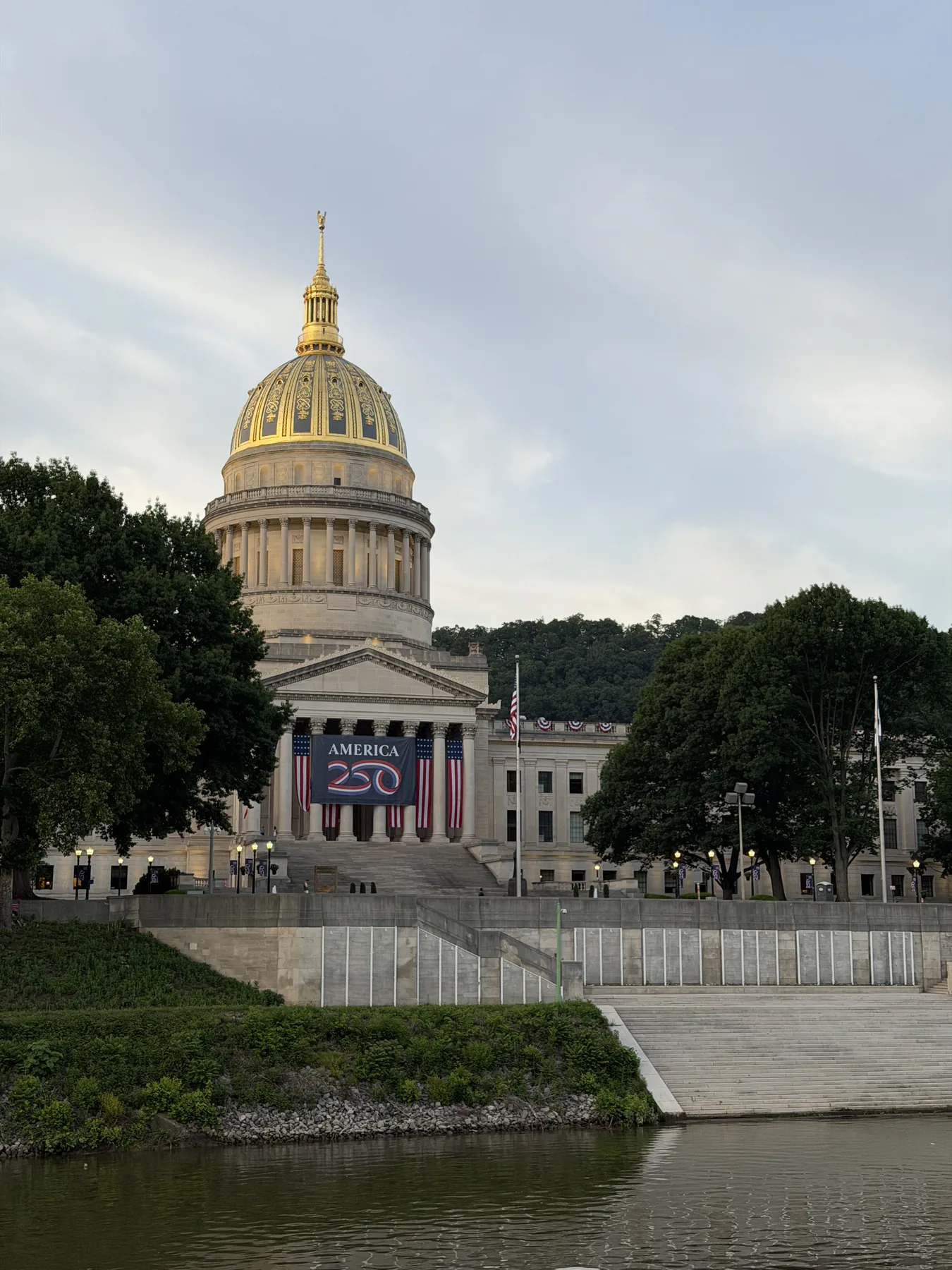
Historical West Virginia notices illustrate why each field matters. One instruction ran from sunrise to sunset on a single date. Another began at noon and ended at sunset on a specified date. Other orders have begun at noon and continued until sunset on the day of interment. Those are three different schedules, even though a short headline might describe all three simply as “flags lowered.”
An event-based endpoint deserves special attention. If a release says “until sunset on the day of interment” but does not yet identify that day, do not invent an end date. Monitor the official page or the responsible agency until the funeral information is settled. Record who verified the date and when; a calendar entry without its source can become wrong if arrangements change.
The physical procedure is also specific. Under 4 U.S.C. § 7(m), raise the U.S. flag briskly to the peak for an instant before lowering it to the half-staff position. Before taking it down, raise it to the peak again and then lower it ceremoniously. Half-staff is approximately halfway between the top and bottom of the staff, rather than merely a few feet below the finial. See the illustrated half-staff position guide for placement details.
Finally, separate the release’s publication date from its effective start. A notice can be posted before an observance begins, or after a noon start has already occurred. The operative sentence—not the page timestamp by itself—controls the schedule. Keeping the five fields together prevents the two most common mistakes: lowering at the wrong property and leaving flags lowered after the stated endpoint.
What Real West Virginia Orders Reveal About Geographic Scope
Past orders provide a useful grammar for reading future ones. The examples below have expired and are included only to show how small wording changes alter the covered locations.
| Historical example | Flags named | Geographic and property wording | Practical lesson |
|---|---|---|---|
| David McKinley, April 2026 | United States and West Virginia state flags | Capitol Complex and all state facilities throughout West Virginia | This was a statewide state-facility instruction. |
| Larry D. Kump, March 2026 | United States and West Virginia state flags | Capitol Complex and all state facilities throughout Berkeley County | The county phrase limited the non-Capitol portion. |
| Don Perdue, October 2025 | Flags | Capitol Complex and all state buildings in Wayne County | The notice used a property class within one county. |
| Tim Armstead, August 2025 | Flags | State facilities throughout West Virginia | The statewide phrase was not county-limited. |
The Capitol Complex frequently appears alongside a county. That construction does not turn the county instruction into a statewide one. It means the Charleston complex is included and the additional covered state sites are within the named county. Likewise, “all state facilities” is not automatically the same as every courthouse, city hall, school, business, or home in West Virginia. Ownership and control still matter.
Do not substitute biography for scope. An honoree may have served the entire state, lived in one county, or represented several communities. Those facts explain the tribute but do not define the covered poles. Only the directive’s operative language does that. When an article and attached proclamation are both available, read the proclamation as well; it can provide the most formal expression of the flags, sites, and times.
The examples also show why a distant flag can look different without anyone making a mistake. A state office in Berkeley County, a federal office in Charleston, and a privately managed building in Huntington may each be subject to a different instruction or voluntary policy. Before reporting an apparent error, identify the property owner and compare that pole with the notice written for it.
Federal and West Virginia Instructions Can Overlap
A national proclamation and a West Virginia order can run at the same time, whether for the same person or for unrelated reasons. Treat them as parallel instructions. Check the national flag status for the federal timeline and the state page for the West Virginia timeline, then apply the one or ones relevant to the property you manage.
An expired August 2026 example shows the method. The White House issued a proclamation directing the U.S. flag to half-staff on federal property and at U.S. facilities abroad through sunset on September 1. West Virginia issued its own notice naming the U.S. and West Virginia flags at the Capitol Complex and all state-owned facilities through 6 p.m. that day. The honoree and end date aligned, but the texts still named different property systems and flags. Neither notice should now be used as a live instruction.
When timelines do not align, maintain two rows in the facility log. One row should contain the federal source, covered pole, start, and end; the other should contain the West Virginia source, covered flags, property, start, and end. At each transition, ask whether another active instruction still requires half-staff display. Do not return a flag to full-staff merely because one of two overlapping observances ended.
There is an important statutory detail, but it should not be generalized. Section 7(m) provides that when a governor issues a qualifying proclamation because an Armed Forces member from the state died while on active duty, the U.S. flag at federal installations in the covered area is to follow that proclamation. That defined rule does not mean every state memorial order automatically binds every federal facility. Federal managers should follow their agency’s chain of instruction; GSA-operated properties also follow GSA flag policy.
The site’s half-staff calendar can help identify fixed commemorative dates and upcoming changes, but a calendar is not a substitute for a new proclamation. Unscheduled orders may be issued quickly, and event-based endpoints may be clarified later. For operational certainty, preserve the official documents and check both levels again before the first lowering and before the expected return to full-staff.
Operational Checklist for West Virginia Facilities and Households
Before the observance starts
- Open the live West Virginia and national status pages, then save the controlling official notice.
- Write down the flags, property, county or statewide scope, start, and end.
- Identify every pole at the site, including shared halyards and indoor displays.
- Assign one person to perform the change and another to verify it.
- Inspect the flag, halyard, cleats, lighting, and access area before the effective time.
Do not improvise repairs or work at height merely to meet a deadline. A damaged pole, jammed halyard, electrical hazard, or severe weather calls for the property’s normal safety procedure and qualified personnel. Document the problem and notify the responsible agency. Respectful display does not require unsafe work.
While flags are at half-staff
Raise the U.S. flag to the peak first, pause briefly, and lower it to the correct half-staff position. If the U.S. and West Virginia flags share one halyard, the U.S. flag remains above the state flag; do not create a position in which another flag is superior. With adjacent staffs, the U.S. flag is raised first and lowered last, and no other flag should be above it or to its right. The guide to other flags during a half-staff observance covers common multi-pole layouts.
Keep the notice in the shift log and note the time of the change. For overnight display, provide proper illumination. In weather that could damage a flag, use the site’s approved all-weather flag or follow its display policy. Recheck if the official source announces an extension, revised endpoint, or broader geographic scope.
At the end
Verify that the endpoint has actually arrived in the local time zone. If it depends on interment, confirm the event date rather than relying on the original publication date. Raise the flag to the peak before lowering it for the day, or return it to full-staff if it will remain displayed. Close the record with the source and completion time so the next shift does not repeat an expired instruction.
A household or small business can use the same short workflow without building a formal compliance system: check both live pages, read the official order, confirm that participation is appropriate for the property, display the flag correctly, and set a reminder for the end. On a fixed angled staff that cannot be lowered, do not bunch the flag halfway down the pole; consult established flag guidance for an appropriate mourning ribbon or bow and ensure the flag remains displayed respectfully.
West Virginia Flag Status FAQ
Why are flags at half-staff in West Virginia today?
The reason can be a presidential proclamation, a West Virginia governor’s order, a scheduled national observance, or an instruction limited to a particular property or county. Check the live West Virginia flag status, open the linked official notice, and match its geography and dates to the flagpole in question. This article intentionally does not preserve a changing daily answer.
Does a West Virginia order apply in every county?
Not necessarily. Some notices cover state facilities throughout West Virginia; others cover the Capitol Complex plus state buildings in a named county. The presence of “West Virginia” in a headline is not enough. Read the operative location sentence.
Must a home or private business follow the governor’s order?
An order’s binding operational scope is the public property it identifies. A private owner may choose to participate respectfully, but should distinguish that voluntary observance from a direction governing a state facility. Organizations with their own flag policies should also follow the person responsible for their property.
Why is one nearby flag at half-staff while another is at full-staff?
The poles may belong to different authorities. A federal building, state office, county property, city facility, school, and private business can receive or adopt different instructions. Timing matters too: one order may begin at noon while another begins at sunrise.
Is “half-mast” wrong in West Virginia?
People understand both terms, but half-staff is the standard U.S. term for a flag on a land-based staff and is the term defined in 4 U.S.C. § 7. “Half-mast” is traditionally associated with ships and naval usage. Searchers often use the phrases interchangeably, so the verification process is the same.
How can I find yesterday’s West Virginia flag reason?
Start with the state status page and governor news archive, then search by the date and words such as “flags lowered” or “half-staff.” Confirm the result’s effective dates, not just its publication date. The calendar helps with scheduled observances; an unscheduled memorial still requires the original proclamation or governor release.
What if an official page and an observed flag disagree?
Recheck the official page directly, identify who owns the pole, and compare the instruction’s effective time and geography. A cached result may be stale, or a county-limited notice may explain the difference. For a suspected site-data issue, use the correction contact with the source URL, property location, and observation time. For a government facility’s physical display, contact the agency that manages it.
The dependable answer is always source-specific: identify the issuer, flags, property, start, and end. Once those five facts match your location, the correct action becomes clear.
Comments
Comments are reviewed before publication.
Sign in with Google to join the discussion.
Loading comments…