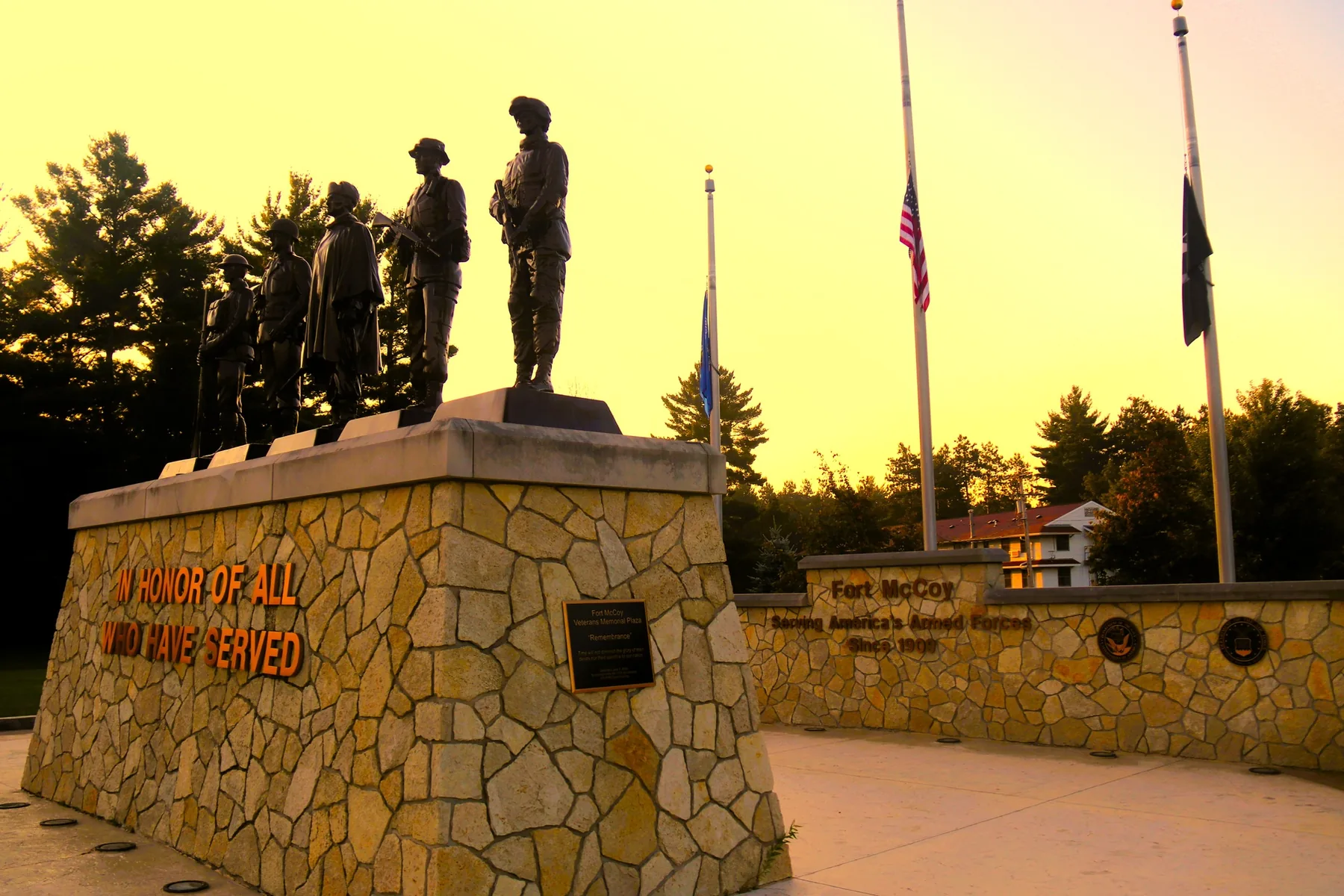
When the U.S. flag goes to half-staff, the safest one-line answer is that domestic subordinate flags should not be left above it. State, city, school, company, agency, and organization flags in the same outdoor display are commonly lowered with it. On a shared halyard, they remain beneath the U.S. flag. On adjacent poles, a facility normally moves its domestic display together under its written policy.
But ?lower every flag? is not a complete universal rule. The U.S. Flag Code establishes position and precedence for state, local, and society flags; it does not contain one sentence saying that every kind of flag must always mirror every U.S. half-staff order. Agencies often add an explicit paired-lowering instruction. The Postal Service, for example, tells its facilities that all other flags must fly at half-staff when the U.S. flag does.
Foreign sovereign flags are the major exception. They use separate, equal staffs under international protocol, and official Army guidance recognizes that the U.S. flag may be at half-staff while another nation?s flag remains at full staff. Lowering a foreign flag needs authority or protocol applicable to that nation; American mourning alone is not enough.
This guide separates four questions that are too often blended together: what the Flag Code says, what works on one halyard, what to do on several poles, and when an organization?s own rules control. It assumes you have already confirmed that a half-staff period applies to the U.S. flag at your location. If that is uncertain, first check whether the notice is an order, authorization, or invitation using the guide to who actually lowers flags after a death or tragedy.
The Short Answer by Flag and Pole Setup
Start with the kind of flag and the hardware. ?Other flags? is not one legal category, and a rule written for a shared halyard does not automatically answer a diplomatic display on separate poles. The following defaults fit the Flag Code?s hierarchy and common public-facility practice, but a binding facility manual or a directive naming particular flags controls that property.
| Display | Usual action during U.S. half-staff | Reason |
|---|---|---|
| State, city, school, company, agency, or society flag on the same halyard | Move it with the group and keep it below the U.S. flag. Remove it temporarily if dignified spacing or ground clearance is impossible. | The U.S. flag must remain at the top of that shared group. |
| Domestic non-sovereign flags on adjacent staffs | Normally lower them as the facility?s policy directs so none appears in a superior position; many agencies lower the entire group together. | The U.S. flag retains the position of honor, and named facility policies often make paired lowering explicit. |
| Foreign national flag on its own staff | Do not lower it solely because the United States is mourning. Obtain diplomatic or event protocol. | Sovereign national flags use separate, equal staffs; one country does not impose its mourning on another. |
| Indoor flags or fixed wall-mounted staffs | Do not slide or angle them into a fictional half-staff position. Follow the organization?s mourning-display policy or leave them in normal dignified placement. | Half-staff describes a position on a staff capable of hoisting and lowering. |
This explains why two apparently contradictory statements can both be correct. USPS can tell a post office that ?all other flags? must be at half-staff because it is administering a domestic facility display. At an overseas military installation, the Army can lower the U.S. flag while an allied nation?s flag remains at full staff because equal-sovereign protocol applies.
If a proclamation says ?United States and state flags,? follow that wording. If it directs ?all flags at state facilities,? the property operator follows the broader instruction. If it mentions only the U.S. flag, do not assume that silence abolishes your facility?s standing rules for accompanying flags. Check the manual, property manager, protocol office, or issuing notice before improvising.
What the U.S. Flag Code Actually Says
Four parts of 4 U.S.C. ? 7 matter. Subsection (c) says another flag or pennant should not be above the U.S. flag or, at the same level, to its right, subject to a narrow naval-chaplain exception. Subsection (e) puts the U.S. flag at the center and highest point when a group of state or local flags and society pennants is arranged on staffs.
Subsection (f) addresses the hardware most readers have. On one halyard, the U.S. flag ?should always be at the peak.? In that sentence, peak describes its topmost precedence within the shared display. It does not cancel a half-staff order by commanding the U.S. flag to remain at the physical top of the pole. The U.S. flag and any flags beneath it can move down as a group while the American flag remains highest in that group.
For adjacent staffs, subsection (f) says the U.S. flag is hoisted first and lowered last. A state, city, locality, or society flag may not be above it or to the U.S. flag?s right. ?The flag?s own right? is the position an observer normally sees on the left. Those precedence rules continue during mourning; half-staff is not permission to give the neighboring flag the honor position.
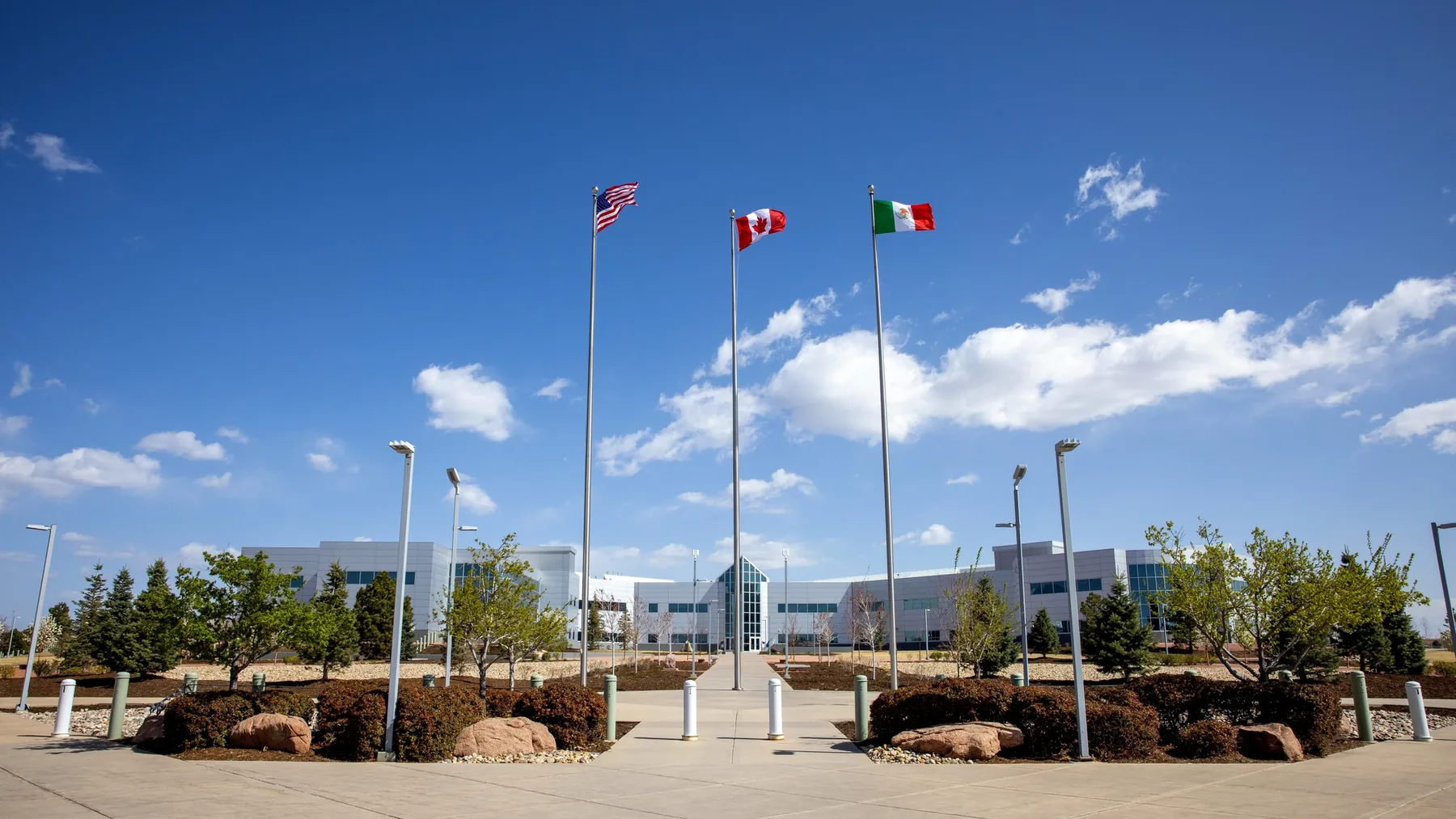
Subsection (g) then changes categories. Flags of two or more nations use separate staffs of the same height and should be approximately equal in size. International usage does not put one nation above another in peacetime. That is why a foreign national flag cannot simply be treated like a company or state flag beneath the United States.
None of this gives Texas a special height privilege. The National Park Service specifically addresses that myth: Texas and every other state may fly at the same physical level as the U.S. flag on separate poles. On the same pole, any state flag belongs below the U.S. flag. Equal-height poles do not erase precedence, and they do not turn a state into a foreign sovereign.
Finally, distinguish etiquette law from workplace instructions. The Congressional Research Service describes most Flag Code display provisions for private citizens as declaratory or advisory because they lack explicit enforcement mechanisms. A government employee, contractor, school custodian, or business operator may still have a binding job, lease, safety, or facility policy. The Code supplies the national framework; the property?s lawful policy supplies the operational command.
Same Halyard: Keep the U.S. Flag Above the Others
A shared halyard creates a vertical group. The U.S. flag stays at the top of that group, followed by the state, city, agency, school, company, or society flag in the approved local order. GSA policy also requires additional flags on its shared staffs to be no larger than the U.S. flag. Never move a subordinate flag above the American flag just to give each one its own idea of ?halfway.?
To begin the mourning display, raise the U.S.-led group briskly to the pole peak for an instant, then lower it ceremoniously until the U.S. flag is in the half-staff position. The accompanying flags remain below it. Secure the halyard only after checking that every flag hangs freely and that wind cannot drive the lowest fabric into the ground, roof, landscaping, vehicles, or pole hardware.
Clearance is often the real problem. A short pole may accommodate one flag at half-staff but not two or three beneath it. The Flag Code gives no official number of inches to place between flags. Do not bunch them tightly, overlap them, shrink the U.S. flag?s position upward, or let the lowest flag touch something below. Temporarily remove one or more subordinate flags and display the U.S. flag correctly when the hardware cannot support a dignified group.
At the end of the order, raise the entire group to the peak before making any final downward movement. If the flags will stay displayed, restore the group to full staff with the same order. If they are coming down for the day, lower ceremoniously and detach the lowest flag first as it comes within reach, keeping the U.S. flag controlled and off the ground. Formal facilities should use their staffing and safety procedure rather than asking one person to manage several large flags in wind.
This workflow is for non-sovereign accompanying flags. Foreign national flags should not share the halyard in the first place; they belong on separate equal staffs. For a closer explanation of peak-first movement, hand positioning, and common mistakes, use the full guide to lowering and returning a flag from half-staff.
Separate Adjacent Staffs: Lower the Domestic Display as a Group
With several poles, each flag can reach the midpoint of its own staff. For a domestic group, the ordinary facility practice is to lower the state, local, agency, POW/MIA, or organization flag when the U.S. flag lowers. The U.S. flag keeps the honor position, is raised first, and is lowered last. This avoids the jarring result of a subordinate flag remaining prominently above the national flag during American mourning.
That practice is explicit at many public facilities. The USPS Administrative Support Manual says other flags on separate staffs are displayed at the same level or lower and that all other flags are at half-staff when the U.S. flag is. District of Columbia policy similarly lowers the DC flag when the U.S. flag is lowered at covered District facilities. California directs its state flag to be displayed in the same manner as the American flag at state buildings.
Those examples show how organizations implement the Flag Code; they do not create one operating manual for every property in America. A university may name its campus, institutional, and athletics flags. A city may direct only municipal buildings. A governor?s notice may name the U.S. and state flags and invite counties, schools, businesses, and residents to join. Read the nouns in the order rather than expanding its scope by assumption.
Different-height poles require judgment from the responsible facility office. Putting every flag at the mathematical midpoint of its own pole may leave a flag on a taller side pole visibly above the U.S. flag. Do not invent a nationwide six-inch or one-flag-width offset; the Flag Code supplies no such measurement. Use the approved facility configuration, lower the companion farther if its governing policy permits, relocate it, or remove it temporarily so the display does not signal superior precedence.
Operate the poles in a deliberate sequence. Raise the U.S. flag to its peak and set it at half-staff before completing the accompanying display, while respecting any local ceremonial commands. At closing, handle companion flags without leaving them aloft after the U.S. flag has been removed; ? 7(f)?s rule is that the U.S. flag is hoisted first and lowered last. When the mourning period expires, restore the approved full-staff arrangement and record the change for the next shift.
Foreign National Flags Are the Important Exception
A foreign nation?s flag represents another sovereign, not a subordinate organization. Section 7(g) says national flags are displayed on separate staffs of the same height, should be approximately equal in size, and are not placed one above another in peacetime. A shared U.S.-over-foreign arrangement is therefore the wrong starting configuration.
American mourning changes the U.S. flag, not another country?s official status. The Army Institute of Heraldry states this plainly for overseas military facilities, vessels, and stations: when the President directs the U.S. flag to half-staff, it is flown that way whether or not another nation?s flag remains at full staff alongside it. The unequal vertical positions during that limited period express two sovereign decisions; they are not an insult or a claim of superiority.
There can be a separate reason for both flags to lower. The host nation may decree official mourning, an international ceremony may have an agreed protocol, or the authority responsible for each national flag may issue compatible instructions. State Department rules allow chiefs of mission to respond through defined channels to receiving-state mourning. That is coordinated diplomatic practice, not a private operator deciding to lower a visiting country?s flag as a courtesy.
At a U.S. city hall, university, hotel, stadium, or corporate campus displaying foreign flags, contact the event organizer or protocol office. Record which country owns the mourning decision, which poles are in the official display, and when each instruction ends. If qualified guidance is unavailable, do not manufacture equality by lowering every foreign flag; consider temporarily removing a courtesy display only if the owner?s policy permits and the event is not underway.
International organizations and tribal-government flags also deserve specific review. Their legal and ceremonial status does not necessarily match a state flag, company banner, or foreign national flag in every setting. Use the organization?s governing agreement, host-facility manual, and protocol contact. The practical boundary is simple: domestic hierarchy answers domestic subordinate flags; sovereignty and negotiated protocol answer sovereign displays.
POW/MIA, Military, Agency, Religious, School, and Company Flags
The name printed on a flag does not tell you its entire mourning rule. Start with the entity that owns the display and the policy that authorizes that flag to be there. A federal property manual, military regulation, state protocol, school policy, lease, or event plan can specify more than the general Flag Code.
POW/MIA and other statutory flags
The POW/MIA flag has statutory recognition and required display locations, but implementation still varies by facility. USPS tells its facilities to put it below the U.S. flag on one staff or at the same level or lower on a separate staff, and to fly it at half-staff when the U.S. flag is lowered. State Department policy gives an explicit precedence of U.S., POW/MIA, then Hostages and Wrongful Detainees flag. Apply the rule for the site you operate, not an isolated caption copied from another agency.
Military colors and positional flags
A unit color carried in a ceremony is not a vertical outdoor flagpole display. Army guidance says colors carried by troops are not placed in mourning unless ordered by the President or Secretary of the Army; when authorized, prescribed black crepe may be used. Command regulations also govern installation flags, personal flags for officials, and joint-base ceremonies. A civilian half-staff checklist should not be substituted for those commands.
Agency, school, religious, and company flags
These are normally non-sovereign flags for U.S. precedence purposes. On outdoor adjacent poles, many organizations lower them with the national flag. On a shared halyard, they remain below it. Indoors, however, fixed staffs do not become half-staff merely because the outdoor pole does. The organization may use a memorial ribbon, remove a flag, change a lobby display, or leave indoor flags in their normal positions.
A school principal or company owner can decide what happens to the school or company flag, subject to governing rules. That choice does not create a presidential or gubernatorial order for the U.S. flag. Likewise, GSA?s process for approving an agency pennant controls a GSA property, and USPS?s prohibition on ordinary state/local flags at postal facilities controls USPS?not the neighboring courthouse or a private storefront.
When policy is silent, preserve the U.S. flag?s honor position, avoid unsafe improvisation, and ask the person responsible for the property. Write the answer into the local operating checklist afterward. Consistency is better than forcing every emblem into a physical half-staff position for which it was never designed.
A Practical Multi-Flag Checklist
- Verify the operative notice. Read the original presidential, governor, DC mayor, or authorized agency document. Copy the start, end, reason, geographic reach, named properties, and the exact flags it addresses. Use the current U.S. flag status as a cross-check, not as a replacement for the source.
- Identify who controls the property. A federal lease, military command, state agency, city, school district, university, or private employer may route instructions differently. Find the current facilities or protocol manual and the person authorized to interpret it.
- Inventory the display. List each flag and mark it as domestic non-sovereign, foreign sovereign, statutory/special, or carried/indoor. Record whether it uses the same halyard, an adjacent pole, a fixed staff, or ceremonial equipment.
- Check the hardware before moving anything. Stop if a pole is loose, corroded, jammed, electrically hazardous, or exposed to unsafe wind or lightning. USPS maintenance guidance sensibly requires poles to be anchored, structurally sound, and able to hoist and lower effectively.
- Choose the correct configuration rule. Keep domestic same-halyard flags beneath the U.S. flag. Follow the property?s paired-lowering rule on adjacent staffs. Send foreign-national questions to protocol rather than automatically lowering them.
- Perform and verify the movement. Use the peak-first U.S. procedure, maintain clearance, and view the display from the normal public approach. Confirm no domestic companion appears above or in the U.S. honor position and no fabric touches anything below.
- Schedule restoration immediately. Put the end time, time zone, responsible person, and source link in the shift log or work order. A correct morning lowering followed by a forgotten restoration is still an incorrect display.
If instructions conflict, pause the nonessential part of the display and escalate. Do not alter the stated duration because a repost summarizes it differently, and do not risk injury to create a ceremonial appearance. GSA policy, for example, treats prescribed periods and locations as controlled operational details, not suggestions for individual staff to edit.
A simple facility record should preserve the notice, the flags moved, the person who completed the change, any foreign-protocol answer, and the restoration check. That small audit trail makes the next observance faster and prevents a new shift from ?correcting? a display that was already following a valid exception.
Frequently Asked Questions
Can a state flag remain at full staff beside a half-staff U.S. flag?
For a domestic facility display, the usual and often written policy is to lower the state flag too, so it does not appear above the U.S. flag. Read the state order and property manual. If they are silent, preserve U.S. precedence and ask the responsible operator rather than assuming that a full-staff state flag is acceptable.
Can the state flag stay beneath the U.S. flag on the same pole?
Yes, if there is enough space for a dignified display. The U.S. flag remains topmost on the shared halyard and the state flag stays beneath it as the group moves. If the lower flag would touch the ground, roof, or another object, temporarily remove it instead of crowding the flags.
Does a company have to lower its company flag?
Its own policy may require or choose that action, and lowering domestic companion flags is common. The company controls its company banner, not the authority or duration of an official U.S. half-staff period. It should keep the company flag out of a superior position and follow any lease or campus rules.
What happens to a foreign national flag?
It normally remains governed by its own sovereign or event protocol. Official Army guidance confirms that a U.S. flag can be at half-staff alongside another nation?s flag at full staff. Do not lower the foreign flag solely because of an American order; contact a protocol officer when the display is official.
Is Texas the only state allowed to fly its flag at the same height as the U.S. flag?
No. The National Park Service identifies that as a myth. Any state flag may fly at the same physical height on a separate adjacent pole, with the U.S. flag in the honor position. On one shared halyard, the U.S. flag remains above every state flag.
Which flag is raised first and lowered last?
The U.S. flag is hoisted first and lowered last when displayed with state, city, locality, or society flags on adjacent staffs. During a half-staff transition, follow the site?s ceremony commands while preserving that precedence and ensuring other domestic flags do not remain in a superior position.
Comments
Comments are reviewed before publication.
Sign in with Google to join the discussion.
Loading comments…