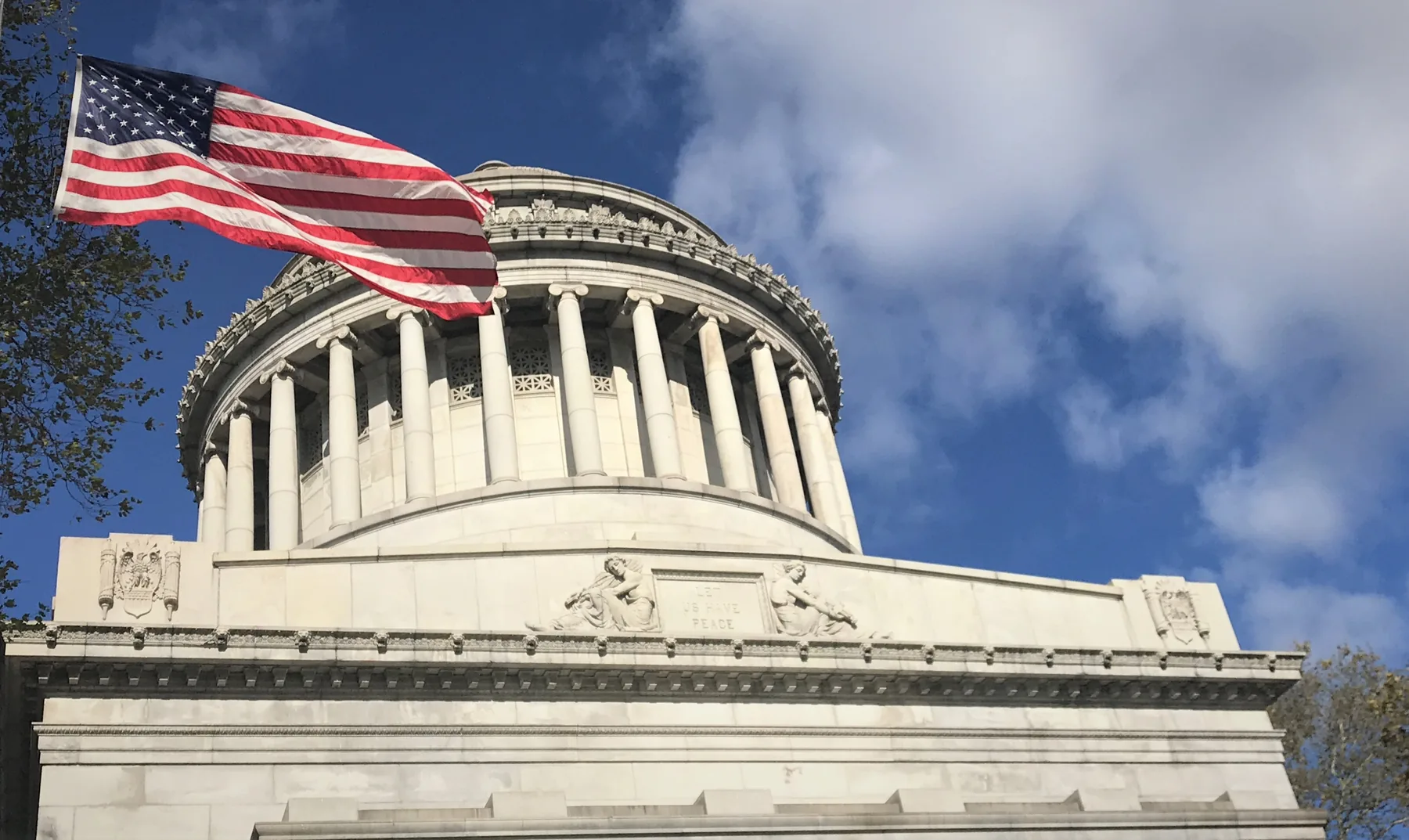
The U.S. Flag Code is federal statutory text, mainly in Title 4, Chapter 1, but most of its everyday display and respect provisions guide private citizens rather than create a general ticket, fine, or criminal penalty. It explains when and how the flag should be displayed, where the union belongs, how the flag is treated around other flags, and which uses are considered disrespectful. State law and binding rules for military units, agencies, schools, employers, associations, or event facilities can still add duties. This guide uses the current text through August 19, 2026, including the December 2024 amendment to horizontal ceremonial displays. For the official PDF, use the House Office of the Law Revision Counsel's current Title 4 release, not an undated handout alone.
Is the U.S. Flag Code a law, and who has to follow it?
Yes, the Flag Code appears in the United States Code. Section 5 says the codified rules and customs are established for civilians and civilian groups that are not required to follow regulations issued by an executive department. Sections 6 through 10 then address occasions for display, position, respect, conduct during ceremonies, and presidential authority to modify the customs.
Calling it “the law” does not mean that every sentence operates like a traffic statute. The Congressional Research Service's flag-law analysis explains that most Flag Code provisions have no explicit enforcement mechanism. Courts would generally treat provisions without such a mechanism as declaratory and advisory. That is why a private homeowner is not ordinarily issued a federal penalty because a porch flag remained unlit after dark.
The opposite shorthand—“the Flag Code is not a law”—is also inaccurate. Congress enacted the text, and the Code supplies the national standard that agencies, veterans groups, schools, businesses, and households use for respectful practice. Separate federal or state flag statutes exist, and First Amendment decisions affect whether some misuse or desecration laws can constitutionally be enforced. Those issues are not resolved by treating every sentence containing “should” as a crime or by pretending the statute does not exist.
Your role and location can change the practical answer. A service member may be under military regulations. A federal employee or contractor may have an agency operating instruction. A school custodian may have a district policy, and an event organizer may have venue rules. A condominium or homeowners association can also impose reasonable time, place, or manner restrictions even though federal law protects an owner's ability to display the flag in important circumstances.
Use this decision order: first read the current Flag Code for the national baseline; then identify any state law, agency directive, command regulation, workplace rule, lease, or event plan that governs the particular display. When no additional rule applies, the Code is best understood as the authoritative etiquette standard for voluntary private practice—not a universal federal penalty schedule.
What changed in the Flag Code in 2024?
Congress changed one important sentence about carrying the flag flat or horizontally. Before December 23, 2024, Section 8(c) said the flag should never be carried flat or horizontally and should always be carried aloft and free. Section 1703 of Public Law 118-159 inserted an exception for a display that is necessary in limited circumstances, performed respectfully, and part of a military or patriotic observance. The operative words are “limited circumstances,” not a blanket cancellation of the older rule.
This amendment accommodates ceremonial presentations such as a very large flag supported by participants on a field during an appropriate observance. It does not turn a flag into a tablecloth, ceiling covering, seat, costume, parade carrying cloth, or ordinary horizontal decoration. A display still has to qualify as part of a military or patriotic observance and be conducted respectfully. Event organizers should not assume that any sporting or public event automatically satisfies every condition.
The same public law also directed the Department of Defense to support recruiting through public outreach events during patriotic and military observances, including flag displays regardless of size or position. That direction specifically allows horizontal positioning only if the flag never touches the ground, floor, water, merchandise, or anything else beneath it. That DOD policy instruction applies to military outreach; it is useful context, but it should not be rewritten as a general right for every private display.
If you are planning a large ceremonial presentation, use enough trained handlers to keep the fabric continuously supported and clear of everything below it. Rehearse the entry, hold, and exit; identify what happens in wind or rain; and assign one person to stop the presentation if safe, respectful handling becomes impossible. Also follow the military command, venue, athletic association, or event authority responsible for the ceremony.
Many older flag guides and web pages still reproduce the pre-2024 sentence as an absolute ban. They can remain helpful for unaffected customs, but they should not be the only authority for this issue. Compare them with the current text of 4 U.S.C. § 8 or the current House U.S. Code release before making a claim about horizontal ceremonial displays.
When can you fly the American flag at night or in bad weather?
The traditional outdoor schedule is sunrise to sunset. Section 6(a) applies that custom to flags displayed on buildings and stationary flagstaffs in the open. It also expressly allows a flag to remain up 24 hours a day when a patriotic effect is desired, provided the flag is properly illuminated during darkness. A homeowner or business therefore does not have to lower a flag every evening if suitable lighting stays on.
The Code does not prescribe a particular bulb, lumen count, color temperature, or beam angle. In practice, “properly illuminated” should mean the flag remains plainly visible and recognizable after dark, not that a distant porch light happens to be on. Aim a dedicated fixture so it lights the full flag through its normal range of movement, check for shadows caused by landscaping or the building, and use a timer or photocell so the light does not accidentally switch off overnight.
Weather has a separate rule. Section 6(c) says the flag should not be displayed on days of inclement weather except when an all-weather flag is displayed. Check the manufacturer's material description rather than assuming every nylon-looking flag is designed for continuous outdoor exposure. A cotton burial or presentation flag, for example, may be especially vulnerable and is not a good everyday storm flag.
“All-weather” is permission to withstand ordinary exposure, not a command to leave the flag aloft through every hazard. Severe wind can tear seams or turn hardware into a projectile; ice can overload a pole; and lightning can make handling unsafe. Lower the flag before conditions deteriorate when that can be done safely. If a sudden storm arrives, do not ask someone to climb, use a metal ladder, or work beside a conductive pole during lightning merely to follow etiquette.
Build the habit around two quick checks: at sunset, either lower the flag ceremoniously or confirm its light is working; before poor weather, confirm the flag is rated for exposure and the pole, halyard, clips, and stitching are sound. These steps put the exact rules in 4 U.S.C. § 6 into a repeatable routine without inventing technical requirements that the statute does not contain.
How should the flag be displayed on poles, walls and with other flags?
Start by locating the union—the blue field of stars—and the flag's own right. On a staff projecting from a building, the union belongs at the peak of the staff unless the flag is at half-staff. Against a wall, whether the flag hangs horizontally or vertically, the union should be uppermost and on the flag's own right. To a person facing the display, that means the union appears in the upper-left corner. In a window, judge the orientation from the observer's position in the street.
When two flags are crossed against a wall, the U.S. flag occupies its own right, which is the observer's left, and its staff passes in front of the other staff. On a speaker's platform, a flat flag belongs above and behind the speaker. A flag on a staff holds the position of honor at the speaker's right as the speaker faces the audience. These perspective changes explain why memorizing only “put it on the right” causes mistakes.
For state, city, locality, or organization flags on one halyard, the U.S. flag goes at the peak. On adjacent staffs, it should be raised first and lowered last, and none of those flags should be above it or to its right. In a group radiating from several staffs, the U.S. flag is at the center and highest point. The flag-position guide provides a practical companion when you also need to distinguish full-staff from half-staff placement.
National flags use a different rule. In peacetime, flags of two or more nations should fly from separate staffs of the same height and be approximately equal in size. International custom rejects placing one nation's flag over another. Do not apply the “U.S. flag highest” rule for state or organizational flags to a diplomatic display and accidentally suggest that another nation is subordinate.
Processions and vehicles have their own details. In a procession, the U.S. flag is on the marching right or in front of the center of a line of flags. It should not be draped across the hood, top, sides, or back of a vehicle. If displayed on a motorcar, its staff is fixed firmly to the chassis or clamped to the right fender. A parade float likewise uses a staff or another arrangement allowed by Section 7; the flag is not vehicle decoration.
A useful setup sequence is: identify the audience's viewpoint, place the union, choose the rule for the type of companion flag, then test the display from where people will actually see it. For complex ceremonies, compare the plan with the current text of 4 U.S.C. § 7 instead of relying on a mirrored social-media graphic.
Does the Flag Code ban flag clothing, costumes and advertising?
The etiquette answer is strict, but the legal answer needs context. Section 8 says the flag should never be used as wearing apparel, bedding, or drapery. It also says no part of the flag should be used as a costume or athletic uniform, and it discourages using the flag for advertising, placing advertising signs on its staff or halyard, and printing it on disposable items such as napkins or boxes.
Those words do not create a simple nationwide criminal ban on every T-shirt that has stars and stripes. Most of Section 8 supplies advisory customs without a general enforcement mechanism. An actual display flag cut into a cape or sewn into a costume also presents a clearer etiquette problem than a garment manufactured with a patriotic pattern. The Flag Code does not provide a detailed test for every stylized commercial design, so claims that all flag-themed clothing is either expressly approved or federally illegal go beyond the text.
There are also separate laws. Section 3 of Title 4 contains misdemeanor language for specified advertising, marking, and merchandise conduct within the District of Columbia. States may have their own misuse provisions, and agency, school, employer, league, or uniform policies can govern what a person may wear. The Congressional Research Service treats advertising and merchandise statutes as a distinct legal issue, including unresolved constitutional questions. Check the relevant jurisdiction and policy before giving legal advice about a specific product or campaign.
The Code itself recognizes limited uniform uses. A flag patch may be affixed to the uniform of military personnel, firefighters, police officers, and members of patriotic organizations. A lapel flag pin, described as a replica, should be worn on the left lapel near the heart. These permissions do not displace a command's or employer's rules about patch size, orientation, placement, or authorized uniforms.
For respectful decorating, preserve an actual flag as a flag. Use purpose-made red, white, and blue bunting—blue above, white in the middle, red below—for a speaker's desk, platform front, railing, or general decoration. Choose apparel designed as apparel rather than cutting up a flag, do not add a logo or slogan to a flag, and keep commercial signage off the flagpole hardware. That approach follows the Code without pretending its etiquette sentences are a universal apparel prosecution guide.
What do the respect rules say about the ground, upside-down flags and disposal?
Section 8 says the flag should never touch anything beneath it, including the ground, floor, water, or merchandise. Plan enough clearance when raising, lowering, folding, and storing it, and have a second person assist with a large flag. If it touches the ground accidentally, the Code does not say it must instantly be burned. Pick it up respectfully, inspect it, and clean, dry, or mend it if appropriate. Retire it only when its condition means it is no longer a fitting emblem for display.
Displaying the flag with the union down has a very specific meaning in the Code: a signal of dire distress in an instance of extreme danger to life or property. It is not described as the ordinary orientation for political disagreement, institutional trouble, or generalized national concern. Whatever First Amendment questions a particular display may raise, readers asking what the Flag Code prescribes should receive the Code's narrow distress standard.
When a flag is faded, badly frayed, torn beyond a reasonable repair, or otherwise unfit, Section 8(k) says it should be destroyed in a dignified way, preferably by burning. “Preferably” matters: the statute does not require every owner to conduct a private fire ceremony. Open-burning restrictions, wildfire danger, building rules, synthetic fumes, and lack of a safe site can make home burning inappropriate.
A practical option is to give the flag to a Veterans Service Organization or an established community retirement program. VA's burial-flag guidance says a VSO can accept a flag in any condition and retire an unserviceable one. A good-condition burial flag may also be donated to a national cemetery with an Avenue of Flags. Call first, because local collection arrangements and accepted flag types vary.
Keep a retired flag separate from ordinary trash while arranging the handoff. Fold it neatly if its condition allows, use a clean container, and tell the receiving organization if it is oversized, wet, contaminated, or made from an unusual material. If you participate in a ceremony, follow the organizer and fire authority rather than improvising. Dignity, complete handling, and safety serve the Code's purpose better than an unsafe attempt to reproduce a ritual at home.
How does the Flag Code connect to half-staff orders?
Section 7(m) supplies both the physical procedure and much of the authority framework. “Half-staff” means one-half the distance between the top and bottom of the staff. First raise the flag briskly to the peak for an instant, then lower it to the half-staff position. Before taking it down for the day, raise it to the peak again and then lower it ceremoniously. The procedure is part of the Code even when a separate proclamation supplies the reason and dates.
The President can direct national or federal half-staff observance, while governors of states, territories, and possessions and the Mayor of the District of Columbia have authority described in Title 4 for specified deaths within their jurisdictions. That state-level authority includes present or former state officials and qualifying active-duty Armed Forces members or first responders who die in the line of duty. A city mayor outside D.C. does not automatically have the same Title 4 authority simply because a local statement uses the words “half-staff order.” See the fuller guide to who can order flags to half-staff when authority is uncertain.
Coverage is as important as the issuer. Read whether an order binds federal buildings, state facilities, a particular agency, or another defined set of properties, and whether private residents and businesses are directed, requested, or simply invited to participate. Also confirm the geographic area, effective time, and end point. Do not extend an order because a copied post lacks the final date, and do not assume a national directive applies only in the deceased person's home state.
Some observances are built into recurring rules. On Memorial Day, the flag is at half-staff until noon and then raised to the top for the remainder of the day. That noon transition should not be confused with an all-day proclamation. Use the site's half-staff calendar to plan recurring observances, while still checking current orders for events that could not have been scheduled in advance.
For today's operational decision, check the current half-staff status and then open the underlying federal or state notice. Record five things: issuer, reason, covered area, covered property, and exact end time. Once confirmed, use the peak-to-half-staff-to-peak sequence. This separates the Code's enduring handling method from the time-sensitive proclamation that activates it.
Where can you download the official U.S. Flag Code PDF?
For a compact official copy, download the GPO PDF of Title 4, Chapter 1. It contains Sections 1 through 10, including display, position, respect, ceremony, and presidential-modification provisions. The 2024 edition incorporates the December 2024 change to Section 8(c), so it is safer for horizontal ceremonial displays than a pre-2024 handout.
For the most current release, use the House Office of the Law Revision Counsel's U.S. Code download page. Find “Title 4 — Flag and Seal, Seat of Government, and the States,” select PDF, download the ZIP archive, and open the PDF inside it. As of this guide's August 19, 2026 cutoff, the page identifies the current release point as Public Law 119-102, dated July 12, 2026, except Public Law 119-101. Read that currency line whenever you return because release points advance.
Do not mistake an agency brochure, veterans-organization poster, commercial etiquette sheet, or search-result excerpt for the official Code PDF. Those aids can be easier to scan, but they may omit amendment notes, narrow exceptions, executive documents, or effective-date information. Keep the current PDF as the authority and use plain-language guidance as a companion.
If you save a local copy, include the edition or release point in its filename and note the download date. Recheck the live text before publishing policy, training staff, or planning an unusual ceremony. For more practical explanations that separate standing rules from current orders, browse the site's flag guidance library.
Comments
Comments are reviewed before publication.
Sign in with Google to join the discussion.
Loading comments…