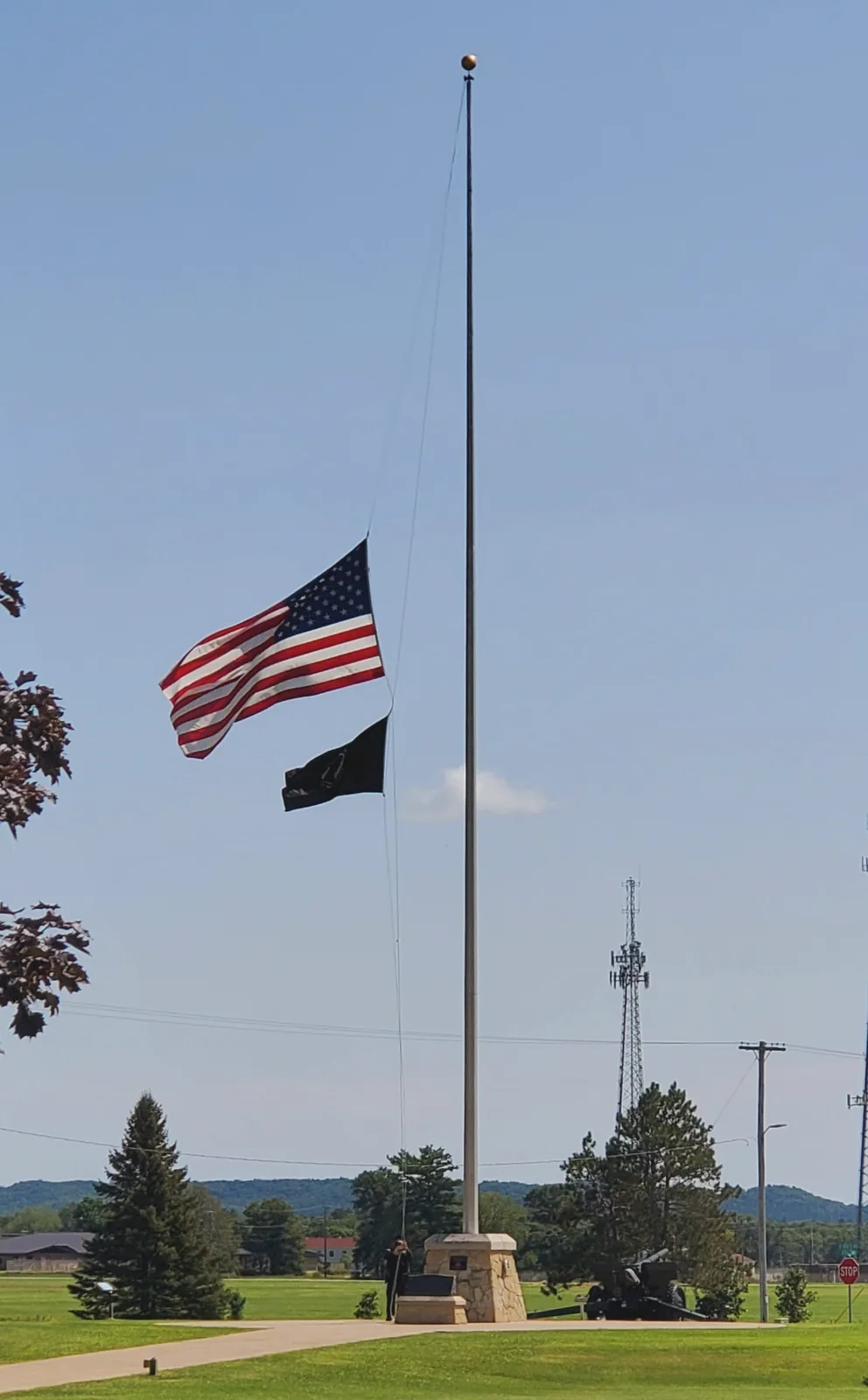
A President can lower federal flags through a document formally titled a proclamation. The sentence inside it may still say, “I hereby order.” That does not turn the proclamation into an Executive Order; it means the proclamation contains an operative presidential command. News reports often shorten all of this to “the President issued an order,” which describes what happened without identifying the document series.
An Executive Order can also direct flag display, and presidents have used that form historically. But an Executive Order is not a mandatory legal wrapper for every half-staff period. Congressional Research Service analysis explains that the conventional boundaries among executive orders, proclamations, and memoranda are not clean substantive boundaries. Whatever the title, a presidential directive needs valid constitutional or statutory authority to have legal effect.
There is also a layer that predates any breaking-news notice: 4 U.S.C. § 7(m). It supplies standing rules for named deaths, durations, locations, recurring observances, and additional presidential instructions. A facility operator therefore needs to separate four things: the standing statute, the formal presidential instrument, the command and scope written inside it, and the agency notice that implements it.
This guide explains how those layers fit together and how to verify a White House flag action without guessing from its headline. It is an evergreen document guide, not a live status notice. For the flag position right now, use the current U.S. flag status after checking the original presidential source linked there.
The Short Answer: Read the Command, Not Just the Label
The document title tells you which presidential instrument series you are reading. It does not, by itself, tell you whether the words inside are merely commemorative, operational for federal agencies, or both. The authority clause, command, covered locations, and effective period do that work.
| Term you see | What it means here | What a flag operator should read next |
|---|---|---|
| Presidential proclamation | A formally titled presidential instrument. It may announce an observance, make requests, issue operational directions, or combine those functions. | Look for “order,” “direct,” or “request,” then identify the property and dates attached to each verb. |
| Executive Order | A formally titled and usually numbered presidential directive, often addressed to executive officials or agencies. It can affect flag display, although that is not the usual label on modern event-specific notices. | Check the cited authority, numbered sections, recipients, effective date, and any amendment or revocation language. |
| Presidential order or direction | A functional description of a presidential command. It is not necessarily the formal title of the document containing it. | Find the underlying signed action rather than treating a news article’s word “order” as a document citation. |
| 4 U.S.C. § 7(m) | The standing statutory half-staff framework enacted by Congress and amended over time. | Match the person or observance, duration, geography, and decision-maker to the current text. |
Proclamation 9461, issued after the 2016 attack in Orlando, shows why the distinction matters. The Federal Register identifies its presidential document type as “Proclamation.” Its operative text then says the President “hereby order[s]” the U.S. flag to half-staff at the White House, on federal public buildings and grounds, at military posts and naval stations, and on federal naval vessels through a stated sunset. A second sentence directs the same display at U.S. facilities abroad. Calling this a presidential order is accurate as a description of the command; calling it an Executive Order would misidentify its formal type.
The reverse shortcut is also unsafe. Executive Order 9715, issued in 1946 after Chief Justice Harlan Fiske Stone died, formally used the Executive Order series and directed the national flag to half-staff. So the correct rule is not “proclamations lower flags, Executive Orders never do.” It is: identify the instrument, then read what it commands and the authority under which it acts.
This substance-first approach follows the Congressional Research Service’s careful formulation. Executive orders, proclamations, and memoranda have conventional differences, but no clean title-based boundary determines all their legal effects. A valid source of presidential authority remains necessary, and a statute can sometimes require a particular form. In flag practice, both the standing Flag Code and the specific presidential text matter.
What 4 U.S.C. § 7(m) Already Decides
A half-staff proclamation does not operate on an empty page. Section 7(m) of Title 4 provides a standing federal framework for mourning display. It describes the half-staff position and peak-first procedure, sets the Memorial Day morning rule, identifies several offices whose deaths trigger prescribed periods, addresses presidential instructions for other officials and foreign dignitaries, and recognizes defined governor and District of Columbia authority.
The duration depends on the office. The current text prescribes 30 days from the death of a President or former President; 10 days from the death of a Vice President, Chief Justice or retired Chief Justice, or Speaker of the House; death through interment for several other named offices; and the day of death plus the following day for a Member of Congress. It also names Peace Officers Memorial Day, subject to its Armed Forces Day exception. For all categories and geographic details, use the half-staff calendar and duration calculator and confirm against the current statute.
The section’s wording matters. It says that, “By order of the President,” the flag shall be lowered upon the death of principal figures, and it refers to presidential instructions or orders for other officials and foreign dignitaries. That language recognizes presidential direction, but the same subsection also supplies the durations. A later White House document may confirm the death, identify the facilities, give overseas instructions, and coordinate other honors without creating the entire mourning rule anew.
Proclamation 3044 is the historic bridge. President Dwight D. Eisenhower issued it in 1954 to create uniform rules across executive departments and agencies and to guide the public. It listed federal locations, officials, durations, and discretionary instructions for other deaths. Proclamation 3948 amended part of that framework in 1969. The Office of the Law Revision Counsel now reproduces Proclamation 3044 under “Executive Documents” following § 7, while the current statutory subsection reflects later codification and amendments.
That history produces two practical rules. First, do not wait for a brand-new “executive order” before recognizing a recurring statutory observance such as Memorial Day morning. The standing rule already exists, although an annual proclamation may repeat or request the observance. Second, do not assume every tragedy or prominent death automatically fits a named statutory category. When it does not, an event-specific presidential direction is the evidence of a nationwide federal lowering.
The 2018 proclamation announcing former President George H.W. Bush’s death illustrates the overlap. The 30-day period matched the standing rule, while the proclamation formally announced the death, directed the flag across listed federal properties and overseas facilities, ordered military honors, and appointed a National Day of Mourning. “Statute or proclamation?” is therefore often the wrong either-or question. The statute provides the durable rule; the proclamation applies, communicates, and implements it for the event.
Why Modern Half-Staff Notices Are Commonly Proclamations
A proclamation is well suited to public mourning because one short instrument can do two jobs. It can speak to the public about the person or event being honored, then give federal operators a precise instruction. That is a pattern of modern practice, not a rule that legally forbids another presidential form.
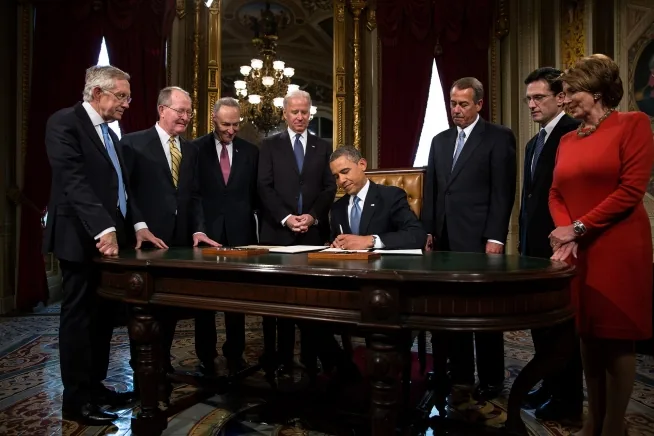
The operative paragraph is usually easy to recognize. It identifies the mark of respect, cites authority vested in the President, uses words such as “I hereby order,” lists covered federal locations, and states an end time. A following paragraph commonly directs the parallel display at U.S. embassies, consular offices, military facilities, and other facilities abroad. The signature and “in witness whereof” clause complete the formal proclamation.
The 2025 proclamation honoring Pope Francis follows that structure. It is labeled “Proclamations” on the White House site and “A Proclamation” in its text. It then orders the flag lowered at the White House and specified federal properties through sunset on the day of interment, and directs the same period at U.S. facilities abroad. The proclamation is commemorative in subject and operational in content; those roles are compatible.
Proclamation 9461 after the Orlando attack shows the same architecture with a calendar date rather than an interment condition. It states the event, invokes presidential authority, orders the domestic federal display, fixes sunset on June 16, 2016, and directs overseas implementation. The wording also shows why a nationwide response to a tragedy is not automatic: without a standing statutory trigger, the official action is what supplies the federal scope and duration. The related guide explains when flags are—or are not—automatically lowered for fallen service members, first responders, and tragedy victims.
For source checking, the current White House page is often the fastest primary release. The Office of the Federal Register publishes presidential documents and supplies durable metadata such as document type, proclamation number, Federal Register citation, and publication date. FederalRegister.gov is a convenient XML presentation and links to the official GovInfo PDF; its own legal-status notice says the web presentation is informational. That distinction matters when a researcher needs the formal published record rather than a copied news excerpt.
What an Executive Order Is—and When It Can Lower Flags
An Executive Order is a formally titled written instrument through which the President directs executive policy or administration. Modern orders are normally numbered and published in the Federal Register. Those formal markers help researchers identify the document, but they are not an independent grant of presidential power.
The Congressional Research Service explains the controlling limitation: an Executive Order’s legal effect must stem from the President’s constitutional powers or authority Congress has expressly or implicitly delegated. A valid directive can have the force and effect of law within its lawful reach. That is different from saying an Executive Order is a statute, applies to every private person, or becomes valid merely because the heading says “Executive Order.” Scope and authority still matter.
Executive Orders have lowered flags. In Executive Order 9715, President Harry S. Truman directed 30 days of half-staff display on U.S. public buildings and at diplomatic posts after Chief Justice Harlan Fiske Stone died. In Executive Order 11193, President Lyndon B. Johnson ordered flags lowered through the day of Winston Churchill’s interment and expressly relied on section 4 of Proclamation 3044. The second example is especially useful: an Executive Order implemented authority structured by an earlier proclamation.
Those examples establish possibility, not a present-day requirement. A President may use the Executive Order form when appropriate, and a statute could require a specific instrument in another subject area. But the modern half-staff notices most readers encounter after a death or tragedy often appear in the proclamation series. There is no need to relabel them as Executive Orders to make the federal instruction real.
That is why the search phrase “latest executive order on flags” can produce the wrong answer. Search the White House’s official presidential actions for the person, event, “flag,” or “half-staff,” then inspect the page’s formal category. Confirm the enduring publication record in the Federal Register when available. Only after identifying the original instrument should you use a secondary half-staff order archive to compare dates or locate related notices.
“Presidential Order,” “Direction,” Memorandum, and Announcement
“Presidential order” can mean two different things in ordinary writing. Capitalized and followed by a number, “Executive Order” points to a formal document series. Lowercase “the President ordered” usually reports the function of a sentence: the President gave a command. A proclamation can contain that command without changing document families.
The verbs inside Proclamation 9461 make the point. The President “hereby order[ed]” the domestic federal display and “also direct[ed]” the same display at U.S. facilities abroad. Those are two operative verbs in one proclamation. Neither the word order nor the word direct is proof that a separate numbered Executive Order exists.
A presidential memorandum is another possible written directive. Congressional Research Service materials caution that the forms overlap and that substance and lawful authority control. For half-staff research, however, do not assume a memorandum exists merely because a report uses “directive.” Identify the document the White House actually issued. If it is a memorandum, cite it as a memorandum; if it is a proclamation, preserve that label.
An announcement or press statement requires similar care. It may be an authentic presidential communication and may accurately report a decision. It may also omit the operational details a flag custodian needs: whether the action is an order or request, which property is covered, when it begins, and whether “until sunset” refers to a fixed date or the day of interment. Use the announcement to locate the full signed or officially released action whenever possible.
Finally, an agency notification is an implementation layer. A federal property office, military command, embassy, or other agency may circulate instructions so local custodians carry out the presidential action. The notice can translate a national end time into local operations or identify responsible personnel. It does not become a second presidential proclamation merely because it repeats the President’s words. Check that the agency notice cites the correct action and does not silently alter its dates or scope.
The clean citation formula is therefore: formal instrument + operative verb + exact scope + effective period. “The proclamation ordered federal flags lowered until sunset on [date]” conveys both the document type and what it did. “An executive order lowered the flags” should be reserved for a document formally identified as an Executive Order.
How to Verify a White House Flag-Lowering Action
Start with the White House presidential-action page because it can appear before every downstream archive or agency notice has been updated. Confirm that the page is on the official domain and read the category printed near the title. “Proclamations,” “Executive Orders,” or “Presidential Memoranda” identifies the release type; the broader navigation label “Presidential Actions” does not.
Then extract six fields from the actual text:
- Formal type and title. Record the displayed category, title, signature date, and any proclamation or Executive Order number available in the published record.
- Authority clause. Note the Constitution, statutes, or standing presidential framework the action invokes. Do not treat ceremonial background paragraphs as the authority clause.
- Operative verb. Separate “order” and “direct” from “request,” “call upon,” “encourage,” or “invite.” A single proclamation can use different verbs for different audiences.
- Covered property and geography. Look for the White House, public buildings and grounds, military posts, naval stations and vessels, territories and possessions, and overseas U.S. facilities. Do not silently add state, municipal, or private property.
- Start and end. Capture the time zone if stated and distinguish a fixed date from an event condition such as sunset on the day of interment.
- Later action. Search for an amendment, extension, suspension, or superseding direction before relying on the first version you find.
For the durable record, search the Federal Register by the exact title or person. NARA describes the Federal Register as the official journal of the U.S. Government. Its daily publication includes proclamations, Executive Orders, and other presidential documents. FederalRegister.gov provides a searchable web rendering; a published document page links to the official electronic PDF on GovInfo and displays useful metadata such as presidential document type and citation.
Timing matters. A public-inspection PDF is a preview scheduled for publication, while a published record has a Federal Register citation and publication date. The Daily Compilation of Presidential Documents is another NARA index for White House materials and can help recover a proclamation number or formal category when an old White House link moves.
Only after those checks should you use a news report, social post, email alert, or secondary archive. They are valuable for discovery and fast notification, but they can paraphrase “proclamation” as “order,” omit the overseas paragraph, or round an end time to “through Friday.” A facility custodian should work from the original text or an authenticated agency instruction that cites it.
Can an Order Be Extended, Shortened, or Overridden?
Read the end condition literally. “Until sunset, June 16” ends at sunset on that date. “Until sunset on the day of interment” cannot be converted to a calendar date until the interment date is known. A facility should not add a courtesy day, return to full staff early for an unrelated ceremony, or substitute a convenient closing time.
GSA’s Public Buildings Service policy makes that operational rule explicit for its covered properties: a prescribed half-staff period cannot be adjusted unless a presidential order or proclamation, or a statute, authorizes the change. The same policy has defined paths for local and agency-specific requests, which illustrates why a manager’s sympathy alone does not create unlimited authority over every federal building.
A later official action can amend the first one. After the 2000 attack on USS Cole, a presidential proclamation extended the half-staff display by expressly amending the earlier proclamation and replacing its original end date. That is much stronger evidence than a social post saying “flags will stay down longer.” Keep both instruments in the event record so the change is traceable.
Executive Orders can also be modified or revoked by a sitting or later President, subject to the lawful source of authority and any controlling statute. But do not generalize that proposition into “the President can ignore any statute by issuing a new order.” A later presidential instrument can change prior executive direction within presidential authority; changing a statutory rule ordinarily requires legislation or authority the statute itself provides.
Different instructions are not always an override. A governor may control state property, a mayor or agency head may have defined local authority, and a private owner may voluntarily participate. Their flags can follow a different schedule because the properties and issuers differ, not because one document erased the other. The guide to who can order flags to half-staff maps those jurisdiction boundaries.
Before restoring full staff, check for a later action by exact title, an amended end time, and an authenticated facility alert. If none exists, follow the original end condition. Operators should document the source and restoration time rather than relying on what neighboring flagpoles happen to do.
Frequently Asked Questions
Is a presidential proclamation the same as an Executive Order?
No. They are different formal instrument categories and are identified differently in White House and Federal Register records. Their functions can overlap, however. Either can contain an executive directive when supported by lawful presidential authority. Preserve the official label when citing the document.
Can a proclamation legally order federal flags lowered?
Yes. A proclamation can include an operative command to executive officials and federal facilities. The Department of Justice’s Office of Legal Counsel has explained more broadly that a presidential directive styled differently from an Executive Order can have the same substantive legal effect. The limiting questions remain authority, content, and scope; the word proclamation does not automatically make every sentence binding on every person.
Does every half-staff period need a new presidential proclamation?
No. Standing law already prescribes recurring displays and rules for named categories. Memorial Day until noon is the clearest example. Section 7(m) also specifies durations after deaths of named principal officials. An event-specific proclamation may formally announce the event, confirm locations, coordinate overseas display, or address a discretionary case outside those standing triggers.
Can the President use an Executive Order to lower flags?
Yes. Executive Orders 9715 and 11193 are historical examples. Their existence proves the form is available, not that it is required today. If a modern White House page labels a half-staff action a proclamation, it should be cited as a proclamation even though its body says “I hereby order.”
Where is the official record of a presidential flag action?
Begin with the White House presidential-action page for the immediate release. Then locate the published presidential document in the Federal Register and, for the official electronic format, its GovInfo PDF. The Daily Compilation of Presidential Documents can help with category and numbering. Agency notifications are useful for implementation, but should identify the underlying action.
How do I find the “latest executive order on flags” without missing a proclamation?
Remove the assumed document type from the first search. Search the official White House site for flag, half-staff, the honoree, or the event. Open the result and read its formal category. Then search the exact title in the Federal Register. If it is a proclamation, there may be no corresponding Executive Order—and none is needed merely to convert the word “order” in its operative text into an effective federal direction.
The reliable bottom line is simple: law supplies the standing framework; the presidential instrument supplies any event-specific direction; the operative text supplies the scope and time; and agencies implement it on covered property. Read all four layers before moving a flag.
Comments
Comments are reviewed before publication.
Sign in with Google to join the discussion.
Loading comments…