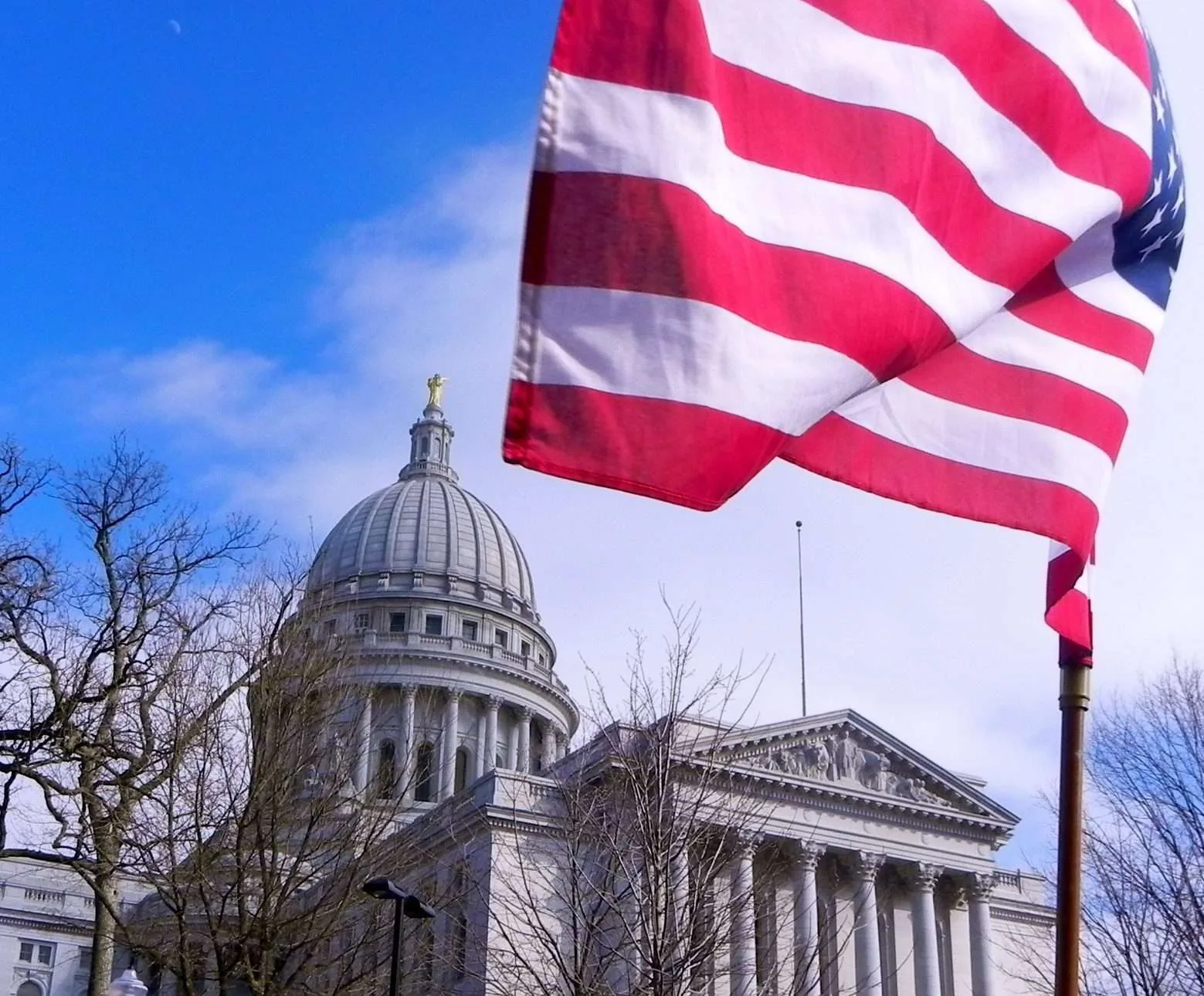
Wisconsin displayed the United States and Wisconsin state flags at half-staff on Saturday, May 23, 2026, after Governor Tony Evers signed Executive Order #295 to honor Wisconsin emergency medical services professionals who died in the line of duty. The order covered flags at state buildings, grounds and military installations from local sunrise through local sunset. That one-day period is over; it is an archived instruction, not a rule for the day you are reading this. The signature, announcement and display occurred on three consecutive dates, which is why search results can appear inconsistent. Readers who need a present answer should check the live Wisconsin half-staff status and then open the latest government document before moving a flag.
What happened to Wisconsin flags on Saturday, May 23?
Executive Order #295 created a single, defined tribute. Governor Evers directed the two named flags to the half-staff position as a mark of respect for EMS professionals who had given their lives while serving Wisconsin communities. The official Governor bulletin described EMS work as essential to health and safety and emphasized both the profession's daily risks and the sacrifice of those who did not return from that service.
The paperwork has three dates, but only one is the display date:
- Thursday, May 21: the execution date printed on the signed order.
- Friday, May 22: the Governor's bulletin was issued, and the order appeared in the official index.
- Saturday, May 23: the actual half-staff period ran from sunrise to sunset.
This sequence is normal for an advance instruction. A signed document can precede the public announcement, and both can precede the time when a facilities team acts. For an archive, “issued May 21,” “announced May 22” and “effective May 23” answer different questions. The correct response to “Why were flags down on Saturday?” is the EMS line-of-duty tribute, not the date printed beside a search result.
The sunset endpoint also settles the order's present status. EO #295 did not establish a continuing remembrance period, an annual automatic rule or a lowering that lasted until the following Monday. Once local sunset arrived on May 23, its operative window ended. Another order could have applied later, but it would need its own issuer, reason, scope and timing.
That distinction matters because flag pages remain searchable long after a ceremony. An accurate historical page can become bad operational guidance if the date is stripped away. Treat this article as the explanation of a completed event. For current action, use the live state route, locate the newest Wisconsin or presidential notice, and confirm its ending time rather than assuming the most visible old result is still active.
What exactly did Executive Order #295 specify?
The signed page is short, but it contains every operational field a flag manager needed. Reading those fields separately prevents an announcement headline from being mistaken for the order itself.
| Order field | What EO #295 said | Practical meaning |
|---|---|---|
| Issuer | Governor Tony Evers | A Wisconsin gubernatorial directive, identified as Executive Order #295 |
| Flags | United States and State of Wisconsin flags | Both named flags at covered state locations followed the lowering |
| Purpose | Respect for EMS professionals who died in the line of duty | A service-and-sacrifice tribute, not a general weather or mourning signal |
| Covered places | All buildings, grounds and military installations of the State of Wisconsin | The mandatory text was tied to state facilities; H2 4 explains the boundary |
| Effective period | Sunrise to sunset on Saturday, May 23, 2026 | One daylight display period, ending that evening |
The order used sunrise and sunset rather than fixed clock times. A custodian therefore needed the local times for the flagpole's location. A Madison schedule should not be treated as the official minute for Superior, Green Bay or La Crosse. The operational task was to have the flags at half-staff for the locality's daylight window, not to begin at midnight or leave them lowered overnight.
EO #295 prescribed the result and period. The familiar movement sequence comes from federal flag-display guidance: raise the U.S. flag briskly to the peak for an instant, lower it to half-staff, and raise it to the peak again before lowering it for the day. A facility displaying the Wisconsin flag on a neighboring staff should coordinate both poles while preserving the U.S. flag's precedence. Our half-staff position guide explains the physical placement and common pole setups.
For a work order, the safest translation is a five-part record: save the signed PDF; note the issuer and order number; list each named flag and covered pole; obtain local sunrise and sunset; and assign the raising and restoration steps. That record is more reliable than a screenshot because it preserves the limits as well as the command. It also makes the sunset restoration auditable: staff can show that a dated tribute was carried out without allowing an expired direction to drift into the next day.
Why did Wisconsin choose the final day of EMS Week?
May 23 was not simply a convenient Saturday. National EMS Week ran from Sunday, May 17, through Saturday, May 23 in 2026, and the Wisconsin EMS Association's published schedule designated that closing Saturday as EMS Remembrance Day. Its purpose was to remember EMS personnel who died in the line of duty and acknowledge the families affected by that loss. EO #295 made the state's flag display align with that remembrance theme.
The placement at the end of the week added focus to a broad observance. Earlier theme days highlighted clinician wellness, public education, responder and patient safety, pediatric care, bystander lifesaving skills and recognition of exemplary service. The Saturday lowering changed the tone from celebrating the profession's many forms of work to honoring the people who lost their lives doing it. That explains why the order's language was narrower than “honor all EMS”: it specifically identified the line-of-duty fallen.
The national setting was wider still. NHTSA's Office of EMS described the 2026 theme as “Improving Outcomes, Together” and emphasized cooperation across EMS, 911, hospitals, public health, fire departments and law enforcement. Wisconsin's professional association likewise addressed the people who keep that system working, including emergency medical responders, EMTs, advanced EMTs, paramedics, dispatchers, educators and volunteers. Those descriptions give context to the profession, but they do not change the beneficiary named in the flag order.
That boundary is important for memorial accuracy. The order and supporting pages do not publish a definitive list of Wisconsin names, agencies or incidents. A community should not infer a roster from social media, an old news story or a national memorial database and present it as the official scope of EO #295. If an agency wants to name an individual during a ceremony, it should verify the spelling, service affiliation and line-of-duty status with the family and the responsible agency.
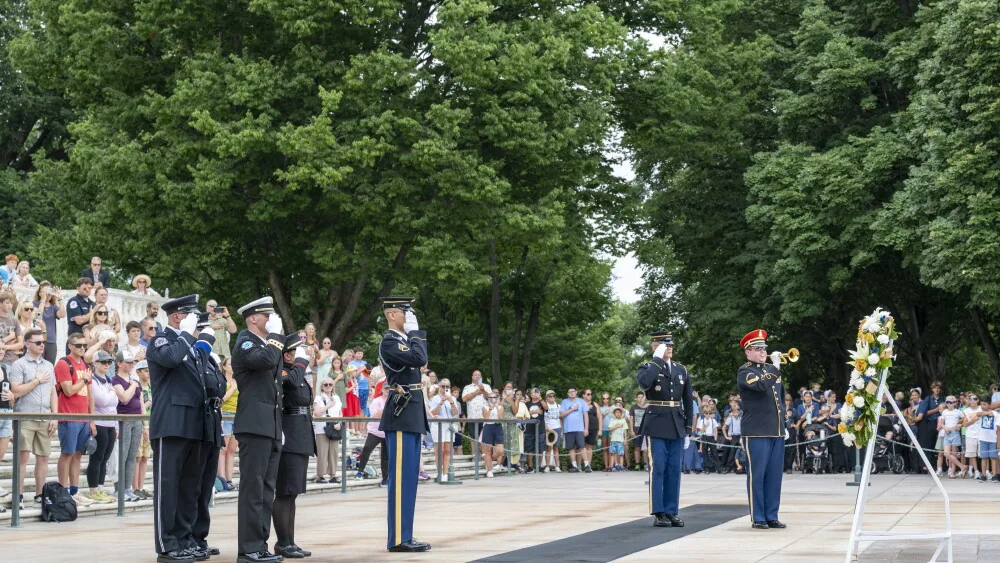
A respectful local observance could pair the flag display with a brief moment of silence, a verified honor roll, a family liaison, or a memorial scholarship. It could also explain the daily EMS work behind the symbol—responding on roadways and in homes, coordinating patient handoffs, training for high-risk calls and serving communities that may rely on volunteer responders. The flag lowering is most meaningful when the public understands both parts: a week recognizing a living system of care, and a final day reserved for those who did not come home from that service.
Which flagpoles were inside the order's scope?
EO #295 expressly applied to the U.S. and Wisconsin flags at “all buildings, grounds, and military installations of the State of Wisconsin.” The final words matter. They identify state facilities and state installations; they do not say that every flagpole geographically located inside Wisconsin was under the same direct command.
| Flagpole owner or location | How to read EO #295 | Best action at the time |
|---|---|---|
| Wisconsin state-owned or state-operated facility | Inside the order's express facility scope | Follow the signed order and the responsible state agency's instructions |
| Municipal or county property, or a public school | Not named as a state facility in the operative sentence; Wisconsin DMA recommends participation under gubernatorial orders | Confirm policy with the city, county, district or facility authority |
| Private school, business, nonprofit or home | Not a state-controlled pole; voluntary participation follows official guidance and owner policy | Verify the order's date and display both flags consistently |
| Federal installation or facility | Do not assume a state EMS order alone controls the pole | Use the federal facility's chain of command and any applicable presidential or agency instruction |
The Wisconsin Department of Military Affairs draws a useful line between authority and participation. Its public guidance says local governments, schools, private businesses and individuals should lower their flags under a Governor's executive order. That is meaningful state guidance, but “should participate” is not the same phrase as the mandatory state-facility language printed in EO #295. A careful article should preserve both statements instead of flattening them into “all Wisconsin flags were legally required.”
Federal facilities require particular care. The Flag Code allows a governor to proclaim half-staff for a first responder who dies in the line of duty. A separate sentence makes a governor's Armed Forces death proclamation binding on federal installations in the covered state. Wisconsin DMA describes that military-death rule on its guidance page. EO #295 was a collective EMS remembrance, not an Armed Forces death order, so this article does not treat it as a command to federal buildings.
“Military installations of the State of Wisconsin” also should not be casually rewritten as “every military base in Wisconsin.” A mixed state-federal site may have different controlling authorities for different poles. The custodian should identify who owns or operates the pole, preserve the signed state order, and ask the installation or agency public-affairs office when the chain of command is unclear.
For a homeowner or business, participation was a respectful way to join the observance, but accuracy still mattered. Lower only during the specified daylight window, keep the U.S. flag in the proper position relative to other flags, and restore the display at sunset. Scope determines who must act; the official date and display rules determine how anyone choosing to act should do so.
How was May 23 different from Memorial Day on May 25?
Wisconsin had two separate flag instructions over the long weekend, not one continuous lowering. EO #295 covered the EMS tribute on Saturday. EO #296 covered Memorial Day on Monday. Each had its own purpose, number and end time, and neither order made Sunday a bridge between them.
| Date | Controlling event | Half-staff period | What happened at the endpoint |
|---|---|---|---|
| Saturday, May 23 | EO #295, EMS line-of-duty remembrance | Local sunrise through local sunset | Flags returned to their ordinary position or were retired for the day |
| Sunday, May 24 | No coverage from EO #295 or EO #296 | No half-staff period created by these two orders | Follow any other current authority, not an assumed weekend extension |
| Monday, May 25 | EO #296, Memorial Day | Local sunrise until noon | Flags rose to full staff at noon and remained there through the rest of the display day |
The most visible difference was noon. Federal flag guidance calls for the U.S. flag to remain at half-staff only until noon on Memorial Day and then be raised to the top. Wisconsin's official EO #296 bulletin repeated that sunrise-to-noon schedule. By contrast, the EMS order kept the covered flags at half-staff until sunset because May 23 was not operating under the Memorial Day noon rule.
The honorees also differed. The Saturday observance remembered EMS professionals who died in the line of duty. Memorial Day is the nation's annual observance for military personnel who died in service, and Wisconsin's announcement honored fallen service members and the loved ones they left behind. Both are solemn, but combining them erases the reason each order was issued.
For a facilities team, the clean handoff would have been: close EO #295 after restoring the flags Saturday evening; treat Sunday according to whatever authority was actually current; then open EO #296 as a new work order Monday morning and schedule the noon raising. A calendar label alone cannot communicate those transitions. Use our half-staff calendar as a discovery tool, then open the underlying order for its exact beginning, ending and scope.
This comparison also explains why a photo taken Monday afternoon could correctly show a full-staff flag even though it was Memorial Day. The noon raising was part of the observance, not an early cancellation. Conversely, a full-staff photo on Saturday afternoon would have conflicted with EO #295 at a covered facility because that order continued until sunset.
How should you check Wisconsin flag status after an archived order?
Start by treating every status answer as time-sensitive. EO #295 remains a valid historical record, but its sunset endpoint means it cannot answer whether flags should be lowered now. An archive explains a past display; a current-status hub identifies what may be active; the newest signed order supplies the controlling details.
- Record the check time. Note the date, local time and time zone before relying on a status. An order can be issued after an earlier page visit.
- Open the current Wisconsin hub. Use the Wisconsin flag status page to begin, then follow its official government route rather than stopping at a search snippet.
- Check both state and national authority. A Wisconsin governor's order and a presidential proclamation can have different subjects, scopes and endpoints. Determine which applies to the pole you manage.
- Open the actual signed document. Match the issuer, order number and date. A notification email, news headline or archive card is useful discovery, but it may abbreviate the operative sentence.
- Extract the five operational fields. Write down the reason, named flags, covered facilities, start and end. If the order says sunrise or sunset, use the locality of the flagpole.
- Save an audit copy and assign restoration. Keep the PDF or official URL with the work order and name the person responsible for returning the flags at the endpoint.
Wisconsin DMA's flag page is especially useful because it separates current status from archived orders and offers notification subscriptions. Those alerts cover Governor's Office and White House orders relevant to state buildings and jurisdictions. Still, an alert is a prompt to verify, not permission to ignore the attachment. If the alert and the PDF seem different, use the signed language and seek clarification from the issuing office.
The Governor's executive-order index is a second cross-check. Order numbers prevent two events with nearby dates from being merged, as EO #295 and EO #296 illustrate. The index can also reveal a later order that supersedes a facilities schedule. Because the list is dynamically loaded and archive layouts can change, retain the direct document URL in the facility record.
Do not rely on a status sentence copied without its observation time. At our Aug. 19, 2026 research check, Wisconsin DMA's page showed no active lowering order; that was a snapshot, not an evergreen promise. A new death, tragedy or commemoration can produce a new instruction later the same day. The method above remains useful even when the answer changes.
Finally, close the loop after the event. Confirm the flags were restored, record any deviation caused by weather or equipment, and remove temporary calendar reminders so an expired event does not repeat automatically next year. The lesson from May 23 is simple: preserve the honor by preserving the limits. The correct flags, place, date and endpoint are all part of the tribute.
Comments
Comments are reviewed before publication.
Sign in with Google to join the discussion.
Loading comments…