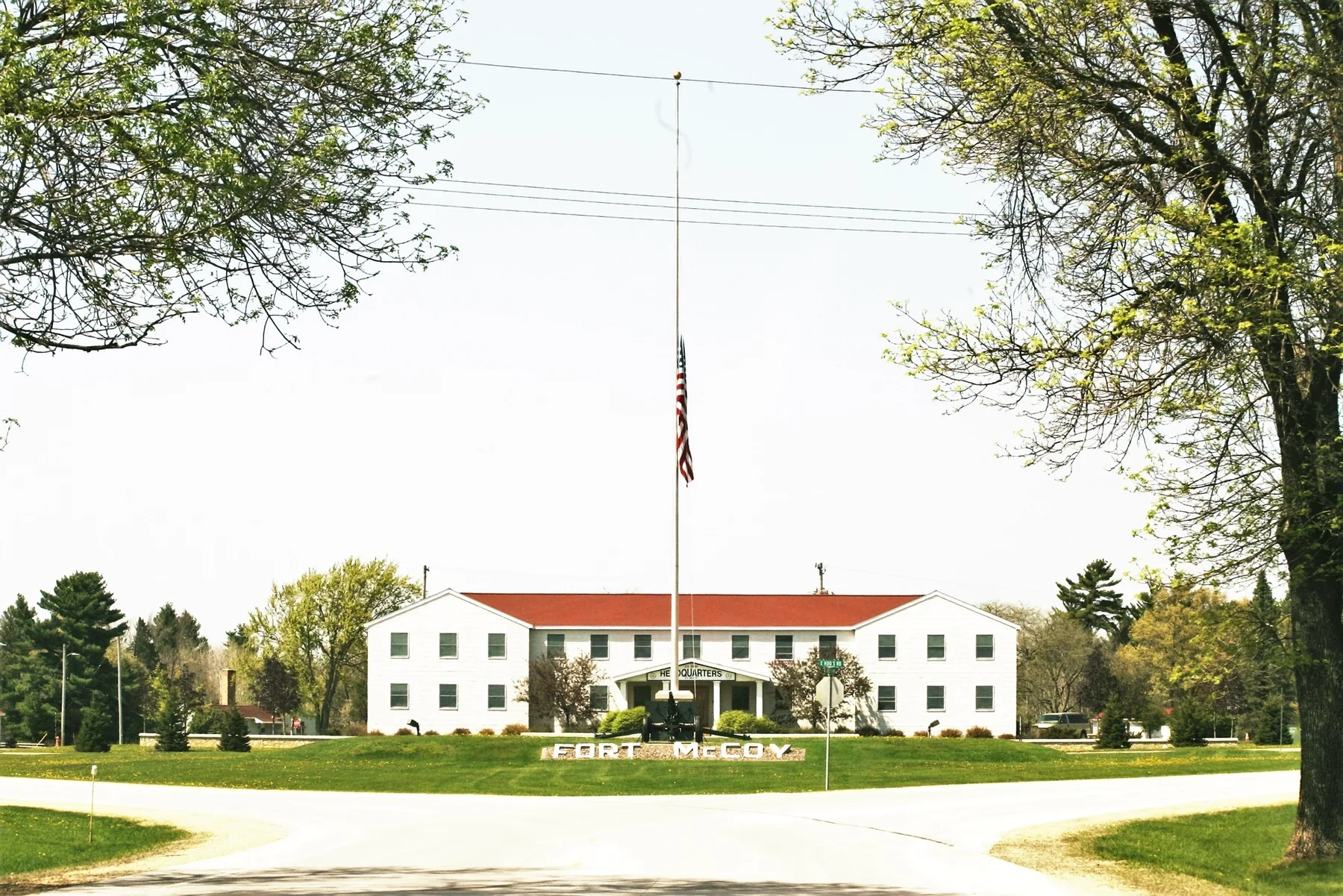
The U.S. flag should be flown at half-staff when a scheduled national observance requires it or when an applicable government authority issues a mourning directive. Those occasions most often mark the death of an official, service member, or first responder; a major tragedy; or a designated day of remembrance. Before lowering a flag, confirm four details: who issued the instruction, which locations it covers, when it begins, and exactly when it ends. A federal and a state directive can have different scopes, and Memorial Day can change from half-staff to full-staff in the middle of the day. For a live answer, start with today's U.S. half-staff status and open the linked official notice.
The Short Rule: Check the Occasion, Authority, Scope, and Time
A reliable half-staff decision is not based only on seeing another lowered flag. Work through these four questions:
- What is the occasion? Determine whether it is a scheduled observance, an officially ordered mourning period, or an unconfirmed report.
- Who issued the instruction? Look for a presidential action, governor's notice, statute, or an instruction from the agency or organization responsible for the property.
- What does it cover? Read whether the notice names federal buildings, state facilities, a county, a particular agency, or another defined group.
- What are the time boundaries? Note the start date and whether the order ends at noon, sunset, a stated clock time, or interment.
This distinction matters because an official order for state buildings is not automatically worded as an order for every private residence or business. Likewise, a notice that ended yesterday does not support lowering a flag today. Use the half-staff calendar and order lookup to check a date, then follow the original authority for the final decision.
Scheduled U.S. Half-Staff Observances
Some half-staff displays follow recurring rules in 4 U.S.C. ? 7. Others depend on a new proclamation for that year. Do not assume that every patriotic holiday is a half-staff day: many holidays are days when the flag is prominently displayed at full-staff unless another valid directive applies.
Memorial Day changes at noon
Memorial Day has the best-known time-of-day exception. Under the U.S. Flag Code, the flag is displayed at half-staff from the morning only until noon. It is then raised briskly to the peak and remains at full-staff for the rest of the day. A person checking the same pole at 10:00 a.m. and 2:00 p.m. can therefore see two different correct positions.
Peace Officers Memorial Day has an exception
Peace Officers Memorial Day is observed on May 15. Federal law provides for the flag to be displayed at half-staff on government buildings, but the Flag Code includes an exception when May 15 also falls on Armed Forces Day. Checking the calendar for the particular year is safer than copying an undated list.
Other remembrance days need the current authority
Patriot Day, National Pearl Harbor Remembrance Day, and the National Fallen Firefighters Memorial Service are frequently associated with half-staff display, but the controlling mechanism is not identical in every case. Some rely on an annual presidential proclamation, some on a statute tied to an observance, and the firefighters memorial service can fall on a changing date. Confirm the current year's entry in the U.S. half-staff calendar and read its official link.
Mourning After the Death of an Official
Federal law establishes baseline mourning periods for certain offices. These periods help explain why some directives last a fixed number of days while others end at interment.
| Office | Usual federal period | Important scope note |
|---|---|---|
| President or former President | 30 days from the day of death | Federal buildings, grounds, naval vessels, and specified U.S. facilities abroad |
| Vice President, Chief Justice or retired Chief Justice, Speaker of the House | 10 days from the day of death | Follow the federal notice and affected-facility instructions |
| Associate Justice, Cabinet secretary, former Vice President, or governor | From death until interment | Location rules differ by office and jurisdiction |
| Member of Congress | Day of death and following day under the general rule | Additional location-specific federal display may continue until interment |
Treat this table as a federal baseline, not as a substitute for the actual directive. ?Until interment? is tied to burial, not merely to the beginning of a funeral or memorial service. A proclamation may also name a particular ending time or clarify where the flag must be lowered.
Presidential, Governor, and Agency Orders Are Not Identical
Federal orders
A presidential half-staff proclamation normally states its scope in concrete terms. It may name the White House, federal public buildings and grounds, military posts, naval stations and vessels, U.S. territories, and federal facilities abroad. The precise list matters. A nationwide federal directive sets the federal status, but readers should still verify its stated ending time.
State orders
A governor can issue a state half-staff directive under state authority and in circumstances recognized by federal law. State notices often instruct state agencies or all state buildings and grounds, while encouraging residents, schools, municipalities, and businesses to join voluntarily.
California's 2026 Memorial Day proclamation is a useful example of careful scope reading. It ordered flags at half-staff on state buildings and grounds throughout California and invited Californians to participate in remembrance. That wording should not be silently changed into a legal claim about every privately owned pole. For a current order, check the California half-staff status and the linked governor's notice.
Agency and facility instructions
Federal department and agency heads may also direct half-staff display on buildings, grounds, or vessels under their jurisdiction in appropriate circumstances. A military installation, federal office, school district, city, county, police department, or corporate campus may have an internal policy that tells the person responsible for the flag when to act. The policy does not necessarily change the status of unrelated property outside that organization.
Does a Half-Staff Order Apply to a Home, School, or Business?
The answer depends on the wording and the property's governing rules. Federal and state directives directly instruct the government locations within their stated authority. The Congressional Research Service describes most Flag Code display provisions for private citizens as advisory and without an explicit federal enforcement mechanism. That does not mean every organization is free of requirements: state law, agency rules, school policy, an employer's protocol, or a property agreement may provide additional instructions.
For a home, school, or business, use this practical check:
- Read the original order and identify whether your property is expressly included.
- Check the policy of the organization that owns or controls the flagpole.
- If participating voluntarily, match the official start and end time rather than choosing a different mourning period.
If the directive is ambiguous, ask the issuing office or the facility administrator. A respectful display begins with accurately following the tribute that was actually announced.
How Long Should the Flag Stay at Half-Staff?
There is no single duration for every occasion. Some federal mourning periods are set by office, Memorial Day changes at noon, and special orders may end at sunset, at a stated clock time, or at interment. To avoid keeping a flag lowered too long or raising it too early:
- Record the effective date. An announcement date may differ from the first display date.
- Find the start boundary. Many notices begin immediately or at sunrise, not automatically at midnight.
- Find the end date and boundary. ?Through Friday? is incomplete unless the notice also says sunset, close of business, or another time.
- Check the location and time zone. Sunrise and sunset are local, and a clock-time order may name a particular zone.
- Do not alter the period locally. A facility should follow the controlling order, statute, and its authorized policy.
The calendar and duration calculator can help organize the dates, but an unusual or special-event order still controls over a generic estimate.
How to Raise and Lower the Flag Correctly
Half-staff is not reached by raising the flag only halfway. The ceremonial sequence is part of the display:
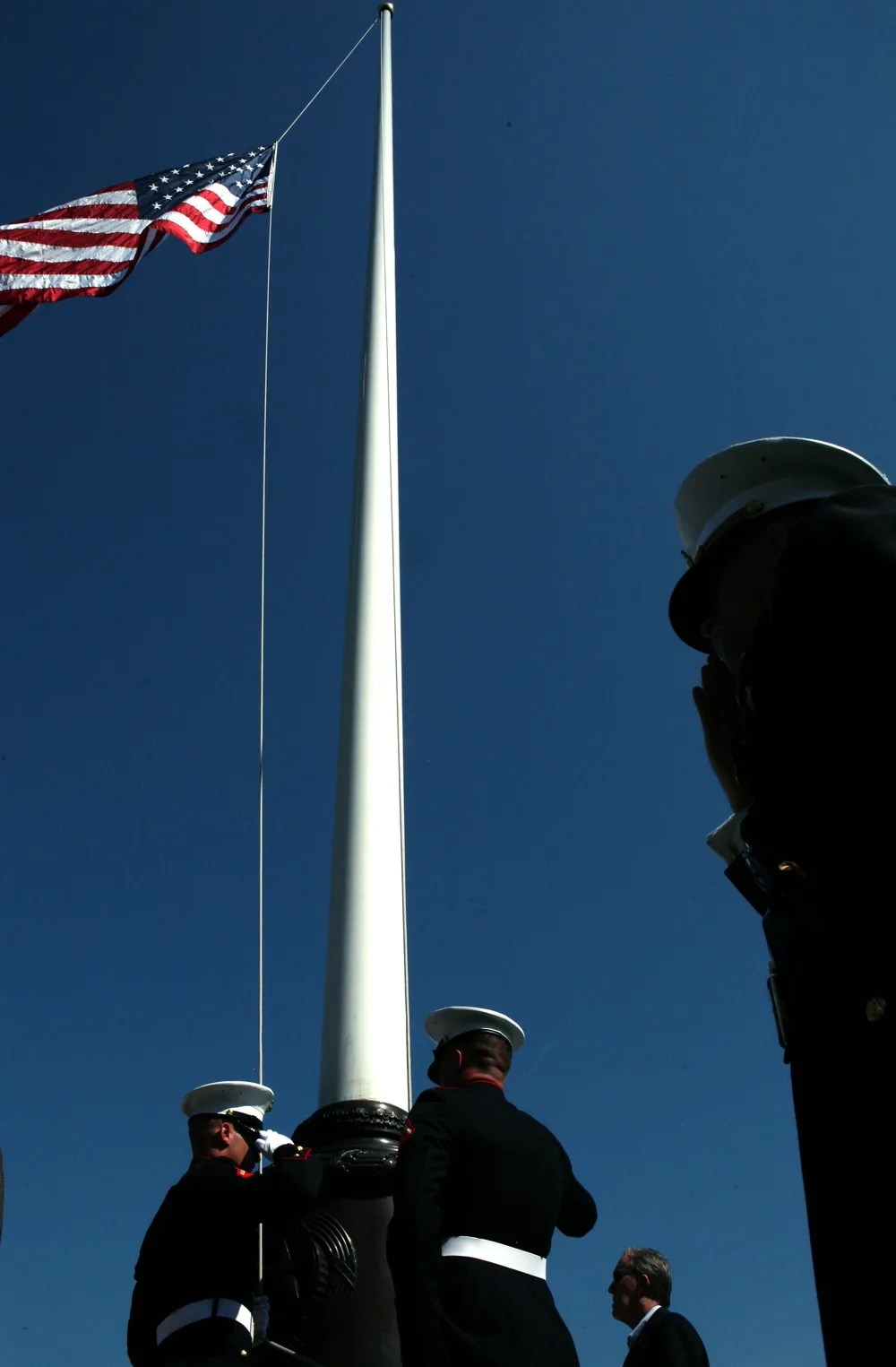
- Raise to the peak. Hoist the flag briskly all the way to the top for an instant.
- Lower to half-staff. Bring it down slowly and ceremoniously to the proper position.
- Return to the peak before removal. At the end of the display period or the day, raise it to the top again before lowering it completely.
VA guidance generally places the midpoint of the flag's vertical hoist halfway between the top and foot of the staff. Pole design, marked institutional positions, and military or maritime protocol can require more specific handling. Use the half-staff flag position calculator for a movable pole and follow an authorized facility marking when one is provided.
A fixed angled staff attached to a wall cannot create a literal half-staff position because the flag cannot travel along a halyard. Do not improvise a misleading position; follow the policy of the issuing authority or organization for an approved alternative.
Half-Staff or Half-Mast?
Half-staff is the term used in the U.S. Flag Code and is the clearest wording for a flag displayed on land in the United States. Half-mast is also widely used by the public and is traditionally associated with ships or maritime settings. Someone searching ?when to fly the flag at half mast in the USA? is generally asking the same practical question, so the controlling order matters more than correcting the searcher's vocabulary.
What to Do When the Status Is Unclear
A missing or delayed notice is not proof that the flag should be at full-staff. It may mean only that no fresh official confirmation is available. Use this verification order:
- Check the White House or applicable federal authority for a nationwide directive.
- Check the governor or official state status page for a state-specific order.
- Check the county, city, agency, school, employer, or facility notice if the display appears local.
- Confirm the effective period and scope before acting.
Half Staff Today separates officially ordered, scheduled observance, and not confirmed information so that an absence of evidence is not presented as certainty. Return to the live status page whenever your question is about today rather than the general rule.
Frequently Asked Questions
Is every federal holiday a half-staff day?
No. The Flag Code names many holidays as appropriate days to display the flag, but most are not automatic half-staff observances. Check the specific date and any current proclamation.
Can a governor lower the U.S. flag?
A governor can proclaim half-staff display within the governor's jurisdiction in circumstances recognized by federal and state authority. Read the order to learn which government properties it covers and whether private participation is invited.
Should a state flag remain at full-staff when the U.S. flag is lowered?
Other flags should not be displayed in a position superior to the U.S. flag. Government and organizational policies commonly coordinate state and other flags with the lowered U.S. flag. Follow the active order and the facility's multi-flag protocol.
Can the flag remain at half-staff overnight?
If a flag remains displayed after dark, it should be properly illuminated. The active directive still determines whether its position is half-staff or full-staff during the overnight period.
What if my wall-mounted flag cannot be lowered?
A fixed staff cannot produce a true half-staff position. Consult the issuing authority or your organization's policy before using a mourning ribbon, streamer, or another alternative, because practices differ by setting.
Comments
Comments are reviewed before publication.
Sign in with Google to join the discussion.
Loading comments…