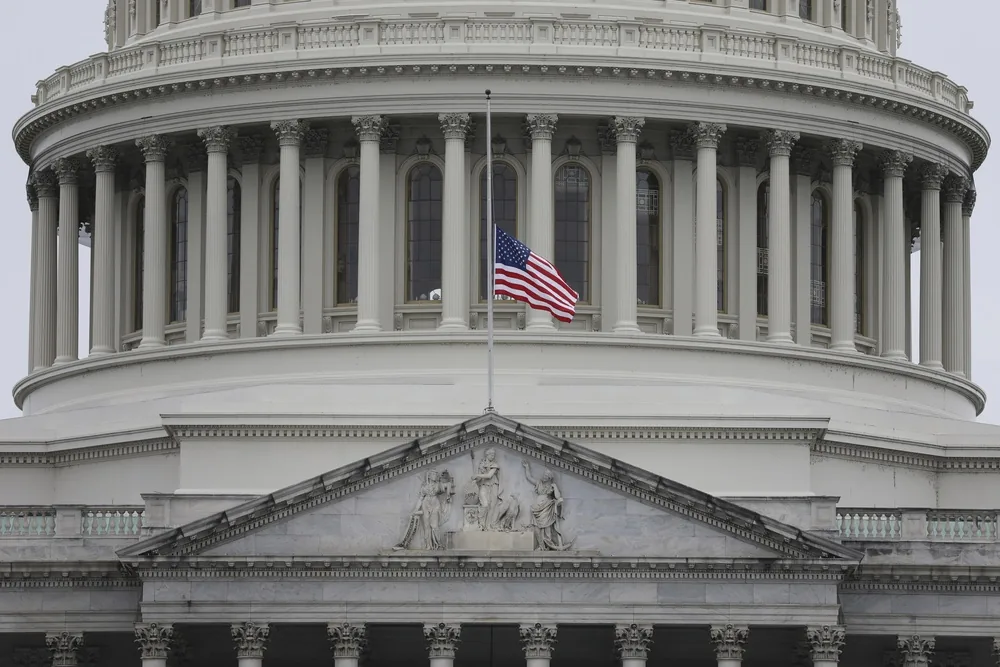
There is no single verified government email, app, or text service that covers every federal, state, and local half-staff order. The most reliable setup uses more than one channel: monitor White House actions for nationwide orders, subscribe to your governor or state facilities office when it offers alerts, and use a current-status page to catch overlapping instructions. A commercial app can be a convenience, but it is not the issuing authority.
That distinction matters because a correct alert must identify the flag, property, start time, and end time—not merely say “lower flags.” Some state subscriptions offer email and SMS; other states publish only a newsroom post. Employee systems, such as a federal agency intranet, may not be open to the public. This guide shows how to assemble free official sources, test any alert before acting, and hand the process to a school or business team. For an immediate check, begin with today's U.S. half-staff status and open the cited government notice.
What Counts as an Official Half-Staff Notification
An official notification originates with an authority responsible for the flags or property named in it. At the national level, that usually means a presidential action published by the White House. At state level, it may be a governor's proclamation, directive, flag-status page, or facilities bulletin. The mayor of the District of Columbia also has defined authority. An agency can publish operational instructions for buildings under its control.
The document should answer four questions: who issued it, which flags and properties it covers, when it begins, and when it expires. The White House order honoring Pope Francis in 2025, for example, expressly named federal public buildings, military posts, naval stations, vessels, and U.S. facilities abroad, with an end tied to sunset on the day of interment. A state directive can have a narrower geographic or property scope.
Email, SMS, an app, social media, and an aggregator are delivery methods. They may reproduce an official order accurately, but they do not gain the issuer's authority simply by sending it quickly. Follow the link to the original page. If the alert provides no primary link, search the responsible government site using the person's name, “half-staff,” and the current year before changing a workplace flag.
“Official” also does not mean “universal.” An employee notice may be authoritative inside one agency but unavailable or irrelevant to a private business. A governor's notice may direct state facilities while only inviting residents to join. The Half Staff Today blog explains these authority differences; use the issuing text for the final operational decision.
How to Subscribe to Free Government Email Alerts
Search the governor, secretary of administration, department of military affairs, or state facilities website for “flag alerts,” “flag status,” or “flag lowering.” A legitimate public subscription should sit on a government page or link from one. North Carolina's Department of Administration offers a mailing list specifically for orders affecting state facilities. Minnesota's governor site offers half-staff notifications, and Wisconsin's Department of Military Affairs describes its GovDelivery notices as free.
Do not assume a general governor newsletter includes flag orders. Select the narrowest available topic—such as Flag Notifications—and finish any confirmation step sent to your inbox. Add the sending domain to an organizational allowlist, then save the official subscription page in your procedure manual. For examples of how state coverage differs, compare the Minnesota flag status and North Carolina flag status pages.
Email setup checklist
- Use a shared operational mailbox rather than one employee's personal address.
- Choose the flag-specific topic when one exists and retain the welcome/confirmation email.
- Create a rule that marks messages from the official sender as urgent without automatically executing them.
- Forward to a trained primary and backup flag operator.
- Test access quarterly and after staff turnover; resubscribe if the state changes platforms.
Delivery is not guaranteed to be instantaneous. Spam filtering, a late-issued order, or a weekend can delay action. Pair email with a morning check of the official status page. When a message arrives, open the primary notice and read the scope and expiration instead of acting from the subject line.
Privacy expectations also differ. GovDelivery forms may request an email address, mobile number, or name so subscribers can receive updates and manage preferences. Give only the information required by the official form and use its preference center to change or cancel delivery.
Can You Get Official Half-Staff Text or App Alerts?
In some states, yes—but the option is state-specific. Wisconsin's Department of Military Affairs publishes an SMS keyword for its flag notifications, and Washington's official GovDelivery form allows a subscriber to choose email or SMS/text message. Because programs and short codes can change, copy instructions only from the current government page. Do not rely on a keyword preserved in an old blog post.
A nationwide Wireless Emergency Alert is not a routine flag-notification service. FEMA describes WEA categories for imminent threats, public safety, AMBER alerts, tests, and national emergencies. The sources reviewed for this guide do not show routine half-staff orders being delivered through WEA. A silent subscription message from a state notification platform is a different system from the loud, geographically targeted emergency alert on a phone.
Government agencies may also build internal alerts. USPS, for example, announced that its employee intranet displays a green bar when postal facilities must lower the flag; the linked article supplies the reason and duration. That is official operational communication for USPS employees, not a public app that every business can install.
How to judge a half-staff app
- Identify the developer. A listing in an app store does not make an app governmental.
- Check whether each notice links to the White House, governor, or agency record.
- Confirm coverage for your state and whether local orders are excluded.
- Review the last update, notification permissions, privacy disclosures, and recent reliability reports.
- Keep an official email/page backup; never make an app the only operational trigger.
Push alerts are useful for speed, but speed cannot repair missing scope. Treat the app or text as a prompt to verify. A two-minute source check is safer than lowering every flag on a campus because a notification displayed a short, context-free title.
How to Find Your Governor's Flag Status Page
There is no standard state URL. Virginia places current national and state flag status under the governor's constituent services. New Jersey uses the Department of State, Pennsylvania uses the Department of General Services, and Wisconsin uses the Department of Military Affairs. Utah and Arizona maintain governor/state status lists. Search the official state domain rather than guessing a path.
- Search for the state name plus governor flag status half-staff.
- Prefer a `.gov` result that identifies the responsible office and current status.
- Find its archive, subscription, RSS, or notification link, if offered.
- Bookmark both the current page and the archive/order detail page.
- Record the office's contact method for a genuinely ambiguous instruction.
A strong state page separates current position from historical notices. Virginia displays national and state status and links to an order archive. New Jersey publishes current full/half-staff information, scheduled statutory dates, a subscription list, and archived notifications. Arizona offers filters by notice type or year. These are useful patterns, not requirements every state page must follow.
Read the property language carefully. “All state facilities” is not the same as every county building, school, business, or home. A notice may invite other organizations to join without compelling them. Likewise, a city or county can have a local mourning instruction that never appears in the governor's statewide feed. Facility managers should therefore add their municipal or district communication channel when local orders are operationally relevant.
Finally, check the page's last-updated date and open the newest detail. A homepage badge can lag behind a newly posted order, while an archive can contain a later correction or extension. Save the detail URL with your action log so another employee can reconstruct why the flag moved.
Verify Every Alert Before Lowering a Flag
An alert is ready for action only when you can match it to a current primary record. Open the White House, governor, or responsible agency link and capture six fields: issuer, reason, covered flags or properties, start, end, and source URL. If one is missing, keep checking. The headline alone rarely tells a facilities team enough.
Expiration deserves special attention. An order can end at sunset on a stated date, at sunset on the day of interment, or at another expressly defined time. The 2025 White House order for Pope Francis used the day of interment rather than a date known in the original text. A forwarded screenshot may therefore become stale even when its original sender was reliable. Look for an update, extension, rescission, or later order in the issuer's archive.
Six-field verification card
- Issuer: identify the named president, governor, mayor, or agency.
- Reason: record the person, event, or observance.
- Scope: note federal, state, agency, local, or voluntary language.
- Start: capture both the date and any time instruction.
- End: write the exact sunset, noon, interment, or date language.
- Source: save the direct government URL and access time.
Compare the instruction with the half-staff calendar. A recurring observance can explain an alert, but the calendar must not be used to invent a broader scope than the governing rule. Event-specific mourning orders require their own source and dates.

Do not treat social reposts, cropped images, or an old email chain as final authority. They can alert you that an order may exist. They cannot show whether the order was corrected, whether it applies to your property, or when full-staff display resumes. If the primary page is temporarily unavailable, check the issuer's newsroom and archive, preserve the alert, and escalate to the designated facilities contact rather than guessing.
Build a Reliable Alert Workflow for a School or Business
The most dependable workflow assigns the decision to a role, not a person's memory. Name one flag coordinator and at least one backup. NASA uses a Flag Protocol Officer as a single point of contact, while the District of Columbia routes written instructions through facilities management to agencies that include public schools. A private school or business can borrow that structure without claiming government authority.
A simple operating procedure
- Send state subscriptions and internal reports to a shared mailbox monitored every operating day.
- Have the coordinator open the primary order and complete the six-field verification card.
- Notify the trained operator for each building, including a start instruction and a full-staff return instruction.
- Require an acknowledgement or completion time from each location.
- Log the source URL, decision, operator, action time, and planned end.
- Set a calendar reminder before expiration and close the record only after flags return to full staff.
Plan separately for nights, weekends, holidays, and locked campuses. USPS operational guidance illustrates why: a facility closed on Memorial Day may need action at the prior close and a defined return when it reopens. Your organization should decide in advance who can access the pole, whether a flag is illuminated for overnight display, and how a backup receives late instructions. Do not improvise access or safety procedures after an alert arrives.
Use two independent checks for high-visibility sites. The shared inbox is the push channel; the issuing government's page and Half Staff Today's current-status dashboard are the pull checks. If they conflict, the primary order controls for the property it names. Pause, compare timestamps and scope, and contact the issuer or your organization's designated authority when ambiguity remains.
Train operators in the physical procedure before they are on call. They should know how to raise the flag to the peak before lowering it to half-staff, protect it from the ground, handle companion flags under the organization's governing rules, and repeat the peak step before final lowering. Keep keys, halyard instructions, and a flashlight available, but never create an unsafe after-hours expectation.
Review the workflow twice a year and after turnover. Test the mailbox, remove departed recipients, confirm official bookmarks, inspect the halyard, and run a tabletop exercise using an archived order. A short rehearsal exposes missing access, unclear ownership, and forgotten full-staff reminders without turning a real memorial instruction into a rushed experiment.
Half-Staff Alert FAQ
Are official half-staff email alerts free?
Several government programs reviewed for this guide are free to subscribers, including Wisconsin's GovDelivery option. Check the current enrollment page because each jurisdiction operates its own service. Normal mobile carrier messaging or data charges can still apply to SMS delivery.
What should I do if the notification arrives late?
Open the primary order, confirm that its display period is still active and applies to your property, then follow your organization's authorized procedure as soon as practicable. Record the actual receipt and action times. Do not backdate the log or extend the display beyond the official end to “make up” missed hours.
How do I stop email or text alerts?
Use the unsubscribe or preference link supplied by the government notification platform. Oregon's official list, for example, provides a page for changing options or unsubscribing. If a shared address is changing owners, add and test its replacement before removing the old recipient so the facilities team does not create a coverage gap.
Does a governor's alert include cities, schools, and private businesses?
Only if its text says so. One Virginia order expressly applied to state and local buildings and grounds. Other orders direct state-owned facilities while encouraging individuals and businesses to participate, as a Minnesota notice did. “Encouraged” and “ordered” are not interchangeable. A school district or city may also issue an operational instruction through its own chain.
What if an order says “until interment” but gives no date?
Keep monitoring the issuer's detail page, archive, or follow-up alerts. A 2026 Pennsylvania notice used an interment-based end before the date was announced. Do not substitute a guessed funeral date. Schedule a daily review and update operators when the government supplies the ending date or a new order.
When should the flag return to full staff?
Follow the exact end in the controlling record: it may say sunset, noon, a clock time, a named date, or the day of interment. Create the return task when you create the lowering task. The annual half-staff calendar can clarify recurring observances, while the current-status page helps catch event-specific changes. Neither replaces the original order's scope and expiration.
Can I rely on one app if it has good reviews?
No app rating establishes governmental authority or complete coverage. Keep at least one primary government source and one independent monitoring path. Use an app for discovery and speed, then verify the record before lowering or returning a flag.
Comments
Comments are reviewed before publication.
Sign in with Google to join the discussion.
Loading comments…