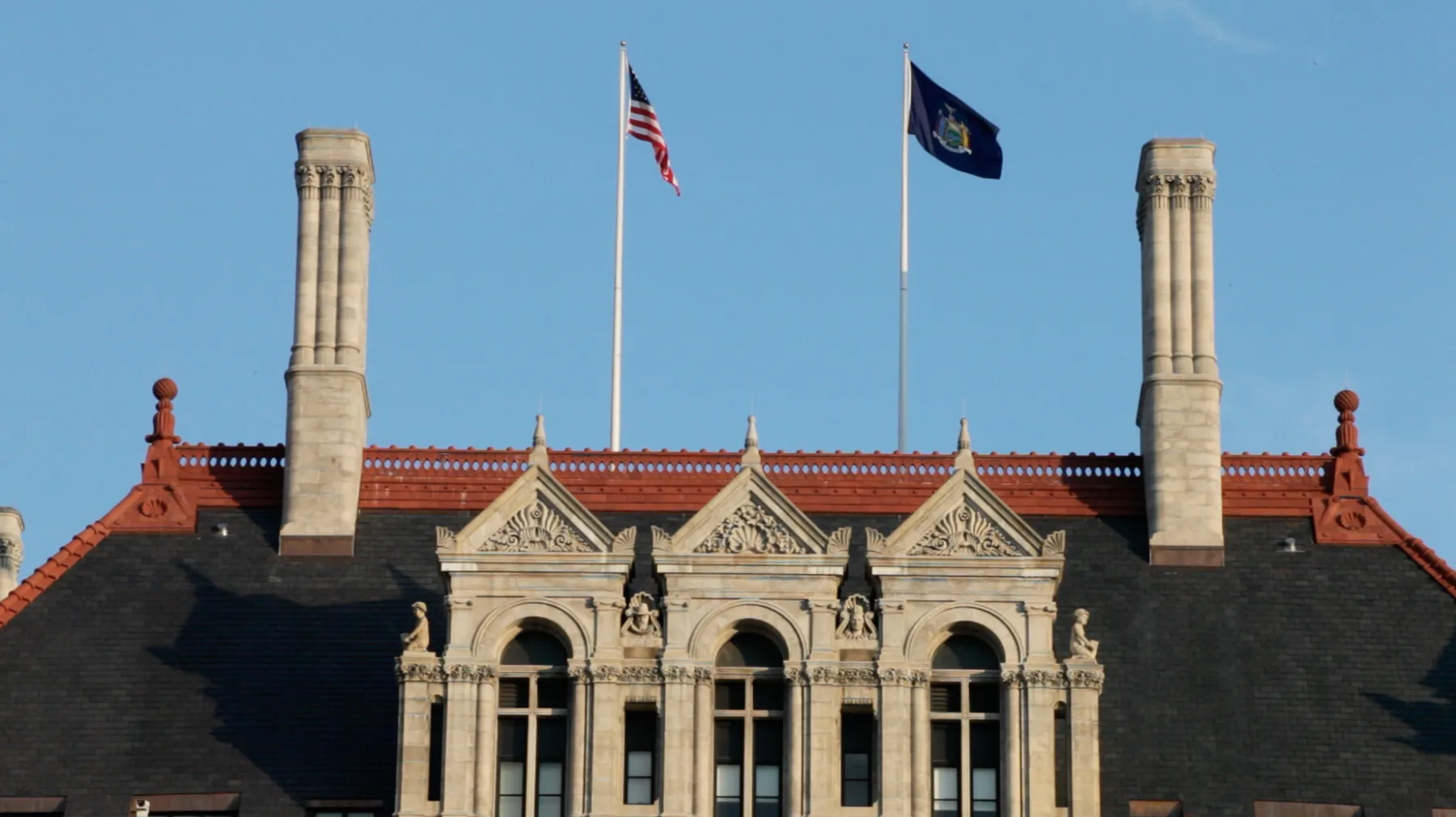
If you are asking why the flag is at half-staff today in New York, begin with the live New York flag status, then open the original government notice. In U.S. land-based usage, half-staff is the standard term, although many people search “half mast.” Before changing a flag, confirm three things: who issued the instruction, which buildings or flagpoles it covers, and when it ends. A New York State office, New York City building, town hall, school, federal facility, and private business can follow different authorities. The quick status is your starting point; the issuing Governor, OGS, White House, city, or local-agency text is the record that controls scope and timing.
Where to Check New York's Flag Status Today
Start with the New York live status and order history. It gives a quick dated signal and keeps New York and federal information separate. Then follow the link to the original issuer. For a state action, that usually means the Governor's pressroom or New York Office of General Services guidance. For a national action, compare the original White House Presidential Action with the current U.S. status.
The complete answer needs more than “half-staff.” Capture the reason, issuing authority, affected properties, effective moment, and ending instruction. A proclamation published today may begin tomorrow. A one-day state notice may overlap a longer federal period. The headline can be broad while the operative sentence is limited to state government buildings.
- Confirm that the status page and notice refer to today's New York date.
- Open the government page, not just a search snippet, repost, or screenshot.
- Match the property you manage to the notice's exact scope.
- Record the start and end language before sending instructions to staff.
If sources appear inconsistent, compare their update times and jurisdictions. OGS explains state-building practice; the Governor issues state directions; the White House supplies federal proclamations; a city or town documents its own action. A fast status page helps you find the right record, but the issuing source tells you what the record actually requires.
What the OGS “Flags on State Buildings” Policy Controls
The New York Office of General Services policy is a strong official reference, but its title must be read with its jurisdiction. OGS says it arranges display of the national and state flags on exterior facilities under its jurisdiction. Its FAQ is even more direct: OGS is responsible for flags on the Capitol and other OGS-managed public buildings.
For those facilities, the page describes normal operations. National and state flags are flown throughout the year when weather permits. Rain, sleet, or high wind can prevent display, and flags are held until conditions improve when weather is inclement at raising time. OGS also says illuminated flags may fly 24 hours. These details help explain why no flag is visible at an OGS building, but absence because of weather is not the same as full-staff status.
OGS policy is not a statewide ownership map
A county office, school district, town hall, lodge, independent organization, or city facility is not converted into an OGS-managed building merely because it stands in New York. OGS says flags at individual schools, counties, towns, organizations, and municipalities are supervised and controlled by their locality. It adds that most local governments generally follow federal and state leadership, but following a lead is different from OGS operating the pole.
New York Public Buildings Law also gives the Commissioner of General Services duties concerning flags at the Capitol and meeting places in public buildings under the Commissioner's supervision and control. Executive Law Article 19 supplies broader public-building display rules. Together, these sources establish a framework; the current Governor notice supplies the event-specific direction.
- Use OGS policy for the Capitol and an OGS-managed facility.
- Use the responsible state agency or facility manager for another state property.
- Use the city, town, county, school district, or organization for its own flagpole.
- Return to the New York status page to compare the statewide and federal signals.
This ownership check matters before anyone concludes that a local flag is “wrong.” Two nearby government buildings may be managed by different public bodies and receive instructions through different channels.
How to Read a New York Governor Half-Staff Order
A Governor's flag release is short, but every operational field matters. First note when the page was published; that is not necessarily the day the lowering begins. Then find the directive sentence and identify the issuer, affected buildings, position, start, end, honoree, and reason. Save the page URL with those fields so the person who restores the flag is working from the same instruction.
A useful modern example is Governor Kathy Hochul's March 26, 2026 notice honoring Major Sorffly Davius. Its headline described flags at half-staff “across New York State,” but the operative text directed flags on all State government buildings to half-staff on Friday, March 27, from sunrise to sunset. The date, one-day duration, covered property, and purpose are all explicit.
That distinction prevents a common reading error. “Across New York State” does not necessarily mean every flagpole physically located within the state's borders. When the controlling sentence says “State government buildings,” apply it to that stated government-property class. A municipal office, federal courthouse, school, business, or residence should check its own authority and policy rather than silently expanding the Governor's words.
Do not assume every order ends at sunset the same day
New York notices do not all use the same endpoint. A March 2024 order for fallen New York National Guard members began at sunrise on March 11 and continued “until interment.” That requires an event-based follow-up, whereas the Davius notice supplied a fixed sunset endpoint. Other releases can specify several dates or a different restoration instruction.
Before acting, copy the operative sentence rather than paraphrasing it from memory. If the endpoint is an event, locate the issuing office's update and do not substitute an estimated funeral time. If another federal or state notice overlaps, compare both instructions and preserve the longer applicable requirement for the property concerned. The New York status page is the quickest place to begin that check, while the original release remains the authority for its exact scope.
Recurring Dates Are Different From Special Mourning Orders
Some New York half-staff days come from established annual practice rather than a new death notice. The OGS state-building policy lists four recurring observances. On Memorial Day, flags are at half-staff only until noon and then raised to the top for the rest of the day. They remain at half-staff for Pearl Harbor Remembrance Day on December 7 and Patriot Day on September 11. Peace Officers Memorial Day on May 15 is also listed, unless May 15 falls on Armed Forces Day.
That means an operator should not wait for a fresh Governor press release before recognizing every recurring date. It also means “this date is on the calendar” is not a complete operational instruction. Memorial Day has a noon transition, and the May 15 rule has a specific exception. Check the half-staff calendar for planning, then confirm the current state page before the day arrives.
Annual observance and special order can overlap
A President or Governor may issue a separate mourning direction whose dates include a recurring observance. Treat the two records independently: identify which applies to the property, note each ending instruction, and follow the applicable direction that remains in force. For example, the normal Memorial Day movement to full-staff at noon should not be assumed if a separate, applicable order clearly continues beyond noon.
Executive Law § 403 identifies September 11 and December 7 in New York's half-staff rules and also recognizes special mourning periods designated by the President or Governor. OGS adds the operational Memorial Day and Peace Officers Memorial Day details for its facilities. The sources complement each other, but neither a generic calendar entry nor an old announcement should be used to invent today's result.
- Recurring rule: verify the date, time transition, and exception.
- Special order: verify the issuer, property scope, and exact endpoint.
- Overlap: retain both records and restore only when no applicable instruction remains.
The live New York flag status is where to check whether another notice changes the day's practical answer. The annual calendar is a planning tool; a current, property-specific order is the event record.
New York City, Towns, Schools and Local Agencies Can Differ
New York State and New York City are not interchangeable flag authorities. OGS explicitly says flags at individual schools, counties, towns, organizations, and municipalities are supervised and controlled by their locality. Many local governments follow federal and state leadership as a practical matter, but that shared choice does not make every local pole an OGS pole.
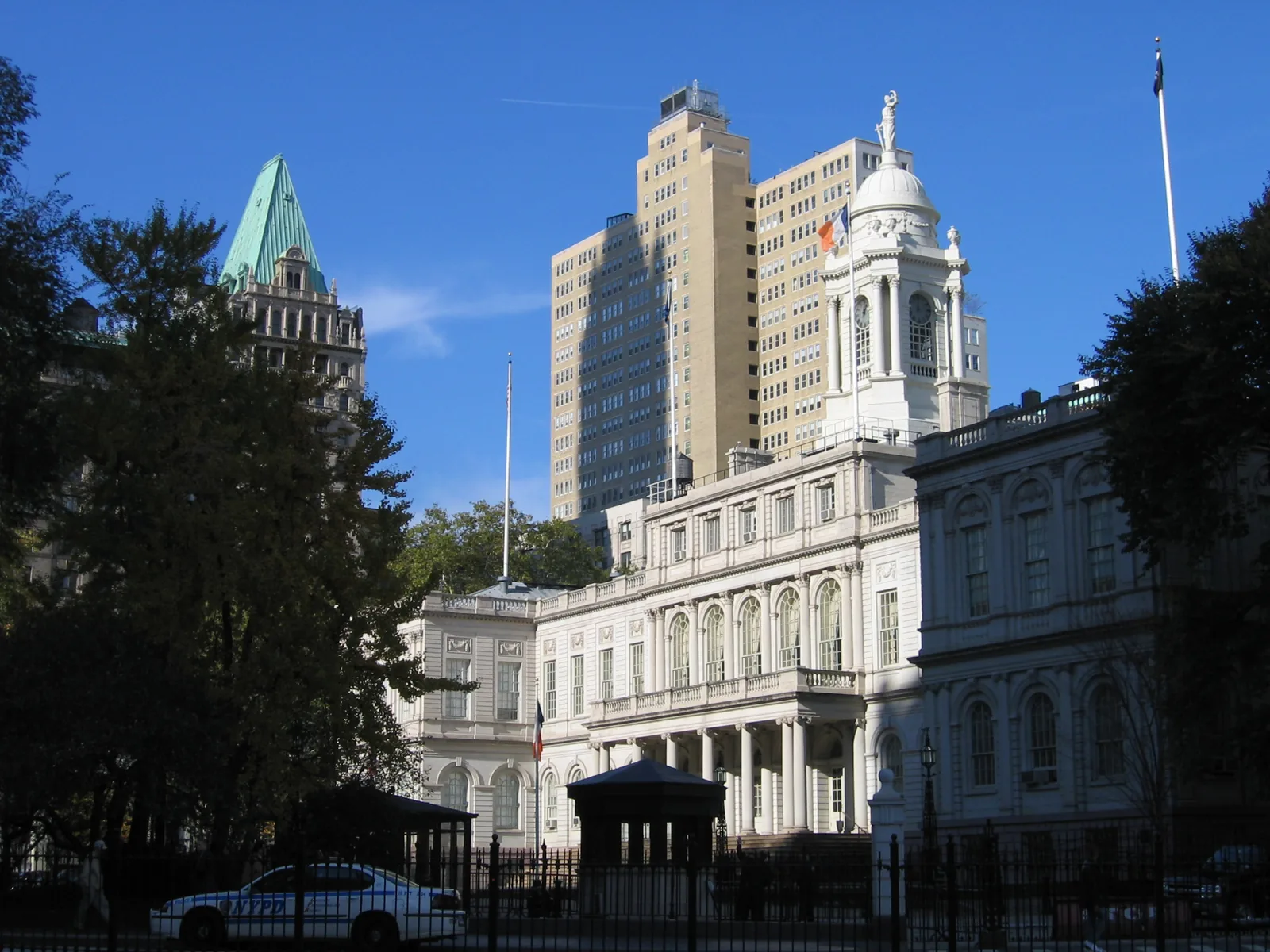
New York City may also issue a municipal direction for its own properties. In an April 2025 mourning notice after the Jet Set nightclub tragedy, the Mayor's Office said all flags on all City buildings and stationary flagstaffs throughout the five boroughs were lowered from sunrise on April 12 through sunset on April 13. That is broad within the stated City system, yet it does not by its words take control of an Albany-managed state office, a federal courthouse, a private building, or an independent institution located in the five boroughs.
Local records can add the missing operational layer
The Town of Brighton, for example, maintains an official Flag Status page with dated entries and a link to the OGS state policy. That kind of page shows how a municipality can communicate its implementation while still consulting state guidance. A school district, county, fire district, or public authority may instead use an administrator's notice, facilities message, board page, or direct instruction to site staff.
New York Executive Law § 403 also refers to commemorating a local servicemember, official, or public servant who, in the opinion of the local agency concerned, contributed to the community. Read that as a reason to identify the local agency, not as permission to assume that any observer can issue an official public-building order.
- Ask who owns or operates the pole.
- Find that body's original notice or contact its facilities office.
- Compare the local instruction with the state and federal signals.
- Follow the scope and ending time that apply to that property.
A local lowering can therefore be valid while nearby state buildings remain at full-staff, and the reverse can also occur. The apparent mismatch is often jurisdictional, not an error.
Why a Flag You See May Not Match the State Page
When an observed flag does not match the New York status page, do not begin by declaring the display incorrect. Begin with time and ownership. Check the observation date and local time, then identify whether the site is a federal courthouse, state office, New York City building, town facility, school district, firehouse, or private property. Those labels point to different instruction chains.
Next confirm which flag you are looking at. A state, municipal, organizational, or memorial flag can be positioned differently from the U.S. flag, and distance can make a flag caught in calm air appear lower than it is. Review the original order's operative sentence rather than assuming that “New York” in a headline covers the site.
Operational explanations are possibilities, not official findings
There may be a mundane explanation. OGS says inclement weather—including rain, sleet, or high wind—can prevent flag display at facilities under its policy. A pole may also be undergoing maintenance, a flag may have been temporarily removed, or site staff may not yet have completed a scheduled movement. A private organization may voluntarily honor a person or event. These are troubleshooting possibilities; only the facility can confirm what happened at a particular pole.
- Federal courthouse: check the applicable White House action and federal building manager.
- State office: check the Governor/OGS text and the responsible state facility.
- NYC or town building: check the Mayor or municipal issuer.
- School, fire district, or authority: check that entity's administration.
- Business or home: ask the owner; do not infer an official order from a private choice.
Compare the New York page with the U.S. status, save the relevant source links, and contact the facility if the display still appears inconsistent. Report the pole's address, observation time, and property type. That evidence is more useful than a distant photo with no timestamp.
How to Verify the Ending Time and Return to Full-Staff
Copy the ending phrase exactly. “From sunrise to sunset” is a fixed one-day instruction; “until sunset” needs its effective date; a multi-day notice needs the final date; and “until interment” depends on an event. Memorial Day has its own noon transition. These phrases are not interchangeable, and none should be shortened to “all day” in a staff message.
Use the location of the flagpole, not the location of the person reading the notice. Sunrise and sunset vary across New York and across the year. The U.S. Naval Observatory provides a date-and-location rise/set service; a facility's established official time source may also be used. Record the locality and time zone with the calculated time so a later operator can reproduce the decision.
Event-based and overlapping notices need another check
If an order runs until interment, locate the issuing office's funeral, interment, or restoration update. Do not guess from an obituary or assume the ceremony and interment occur at the same moment. If no usable endpoint is published, contact the issuer or facility chain and document the response. The correct entry in an operations log is “endpoint awaiting confirmation,” not an invented time.
Also compare concurrent federal, state, and applicable local records before restoring. One may end at sunset while another continues. List each notice separately, its scope, and its endpoint. Restore the property only after no instruction that applies to it remains active. The calendar and New York status page help identify possible overlap, but the original texts decide it.
For the physical movement, New York Executive Law § 403 says a flag going to half-staff is first hoisted to the peak for an instant and then lowered. Before it is lowered for the day, it is again raised to the peak. If the mourning period ends while the flag remains displayed, raise it from half-staff to the peak; see the illustrated half-staff position guide for the proper placement.
- Write the original end phrase and source URL.
- Resolve local date, noon, sunset, or confirmed event as required.
- Check later amendments and overlapping applicable notices.
- Assign the restoration and confirm completion.
A Two-Minute New York Notice Checklist
Use this check before lowering, at a shift handoff, and before restoration. It turns a search result into a property-specific instruction and leaves enough detail for another operator to audit the decision.
- Open the live New York page and the federal status.
- Open the original Governor, OGS, White House, NYC, or local notice.
- Record the issuer, publication time, reason, and exact operative sentence.
- Match “state government,” “City,” federal, school, or local language to the property.
- Record the effective date, start, endpoint, locality, and time zone.
- Check recurring dates, later updates, and overlapping applicable orders.
- Assign the lowering/restoration and use the position guide.
- Confirm the completed movement in the facility log.
A compact record can read: source URL; issuer; property/pole; U.S. or other flag; reason; start; end; operator; completion time; second checker. Preserve the source URL instead of copying only a headline, because the page body carries the decisive scope and timing.
Stop the fast workflow when a field is missing. An unclear “through services” endpoint, contradictory restoration time, or uncertain property owner requires a call to the issuer or facility manager. Mark it unresolved and schedule a recheck. The two-minute checklist is a verification tool, not authority to fill gaps with assumptions.
New York Half-Staff FAQ
Is half-mast the same as half-staff in New York?
In ordinary conversation the terms point to the same mourning position, and “half mast” is common search language. For a U.S. flag on land, half-staff is the term used in 4 U.S.C. § 7, New York law, OGS policy, and Governor notices. A mast is traditionally associated with a vessel.
Does a Governor order apply to every home and business?
Read the actual directive. When it says “all State government buildings,” that is the operative property class; it does not by those words command every home or business in New York. Private owners often choose to follow an official mourning period, but should not represent a voluntary display as proof that the particular property was included in the government-building direction.
Does OGS control New York City flags?
No, not as a general rule. OGS says it is responsible for the Capitol and other OGS-managed public buildings, while municipal flags are under local supervision and control. A state-managed property inside New York City can still be within a state instruction, and a City building can be within a Mayor's notice. Identify the operator.
Can a town or school lower flags when state buildings are full-staff?
A locality may have its own applicable authority and policy. New York Executive Law § 402 expressly allows a school district to promulgate regulations for lowering to commemorate specified members of its school community. OGS also tells readers that schools, towns, counties, organizations, and municipalities are locally supervised. Check the adopted district or municipal instruction rather than assuming unlimited individual discretion.
Which flag should be lowered when several flags share a display?
The U.S. flag retains precedence. OGS and 4 U.S.C. § 7 say no state, city, locality, or society flag should be above or to the U.S. flag's right; on one halyard the U.S. flag stays at the peak relative to the others. Follow the issuer's wording for which flags are lowered and the site's approved arrangement. The position guide covers the physical U.S.-flag movement.
What should I do if the official sources disagree?
First compare jurisdiction, publication time, effective time, and whether one page is a later amendment. Give priority to the original issuer for the property, not an undated repost. Save URLs and timestamps, then ask the responsible facilities office or issuing press office if the conflict remains. Until clarified, state exactly what is known and unknown; do not merge two instructions into a new one. Recheck the New York status for updated links.
Comments
Comments are reviewed before publication.
Sign in with Google to join the discussion.
Loading comments…