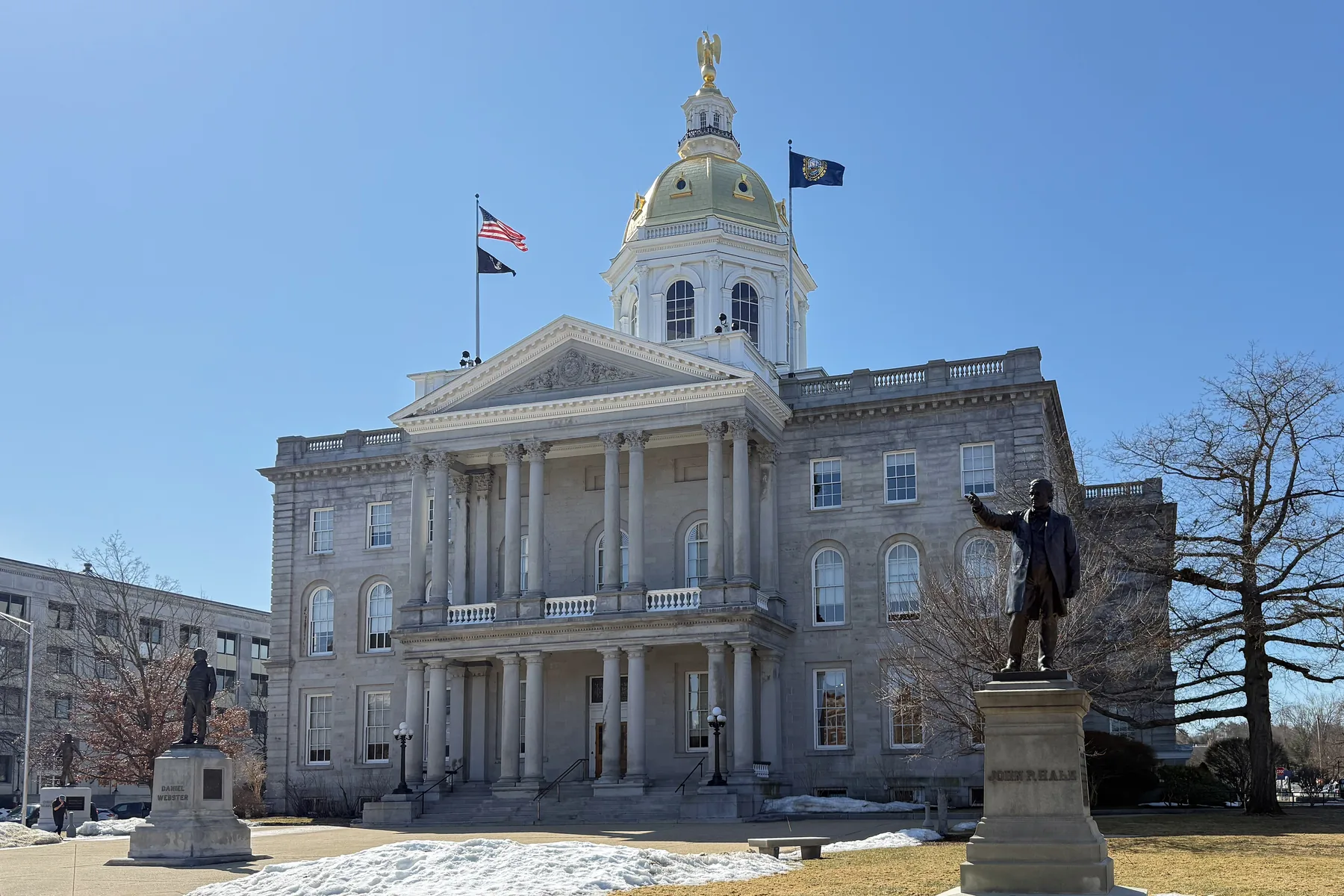
If you searched for “flag half-staff today NH,” start with the live New Hampshire flag-status page. It is the part of HalfStaffToday built to answer the date-sensitive question. This guide serves a different purpose: it shows you how to verify the alert, find the order behind it, determine which properties it covers, and know when the flag should return to full-staff.
Do not treat a missing alert as an automatic all-clear. A federal direction, a New Hampshire order, or a narrowly scoped military rule may apply, and the supporting page can occasionally be delayed or unavailable. The reliable answer comes from four details: the issuing authority, the effective dates, the locations covered, and the original government source.
Check New Hampshire’s Flag Status in Three Steps
A glance at a lowered flag in Concord, Manchester, Nashua, or a smaller town does not tell you who ordered it or how long the observance lasts. Work through the following three checks before changing a flag at a town office, school, workplace, or home.
- Open the New Hampshire status page and compare both layers. The New Hampshire page presents state evidence separately from the federal status. That distinction matters because a governor’s direction can apply in New Hampshire while the national flag position is full-staff, and a presidential order can affect federal sites nationwide even if no separate state notice appears. The U.S. status page provides the national layer and the order archive.
- Identify the issuer and the original source. Look for the office named as the authority, the notice’s publication date, and a link to the underlying order or proclamation. A screenshot, email subject line, social post, or third-party alert can tell you where to look, but it may omit a correction, a limited scope, or an unusual ending time. Open the source and save its URL or PDF if you are responsible for a facility.
- Read the scope, start, and endpoint literally. Confirm whether the wording names federal buildings, state facilities, a military reservation, one municipality, or a broader group. Then record when the observance begins and when it ends. “Until sunset,” “through the day of interment,” and “until noon” are different instructions. Do not substitute a familiar schedule for the words in the current order.
This approach also prevents a common timing error. The flag position can change during a calendar day. Memorial Day, for example, has a federal rule that places the flag at half-staff only until noon, after which it is raised to the peak. A special mourning order may instead run through sunset or through a stated date. The word “today” is therefore not enough; the time of day and the order’s endpoint can change the correct answer.
For a quick personal check, the three steps take only a minute. For an organization, they should become a small audit trail: record the time checked, the original URL, the locations covered, and the restoration time. That record helps the next shift avoid extending an expired observance or raising a flag while a valid order is still active.
Use a Source Ladder When the Governor Page Is Hard to Reach
An official page may be slow, temporarily unavailable, difficult to find through its navigation, or not yet indexed by a search engine. That is a reason to widen the search carefully—not a reason to guess. Use a source ladder that gives the greatest weight to the organization with authority to issue the instruction.
| Priority | Where to look | What it can establish | Main limitation |
|---|---|---|---|
| 1 | Governor’s original order or the White House proclamation | Issuer, reason, exact scope, start, and endpoint | The page may be temporarily unreachable or moved |
| 2 | Official archives and New Hampshire statutes | Durable text for federal or state rules and annual observances | A standing law does not prove that a new discretionary order is active |
| 3 | Another New Hampshire government page that reproduces the notice | Corroboration and a useful trail back to the issuer | A repost can omit an update or appear later than the original |
| 4 | Independent alert services, news reports, email, and social posts | A lead that identifies a person, event, or likely date | Discovery evidence, not the order itself |
For a possible federal order, search the White House Presidential Actions archive and open the full proclamation. For a recurring New Hampshire rule, consult the New Hampshire General Court’s published statute. If you are tracing a recent governor notice, an official city or agency repost can help confirm that the notice existed, but keep looking for the governor’s original wording.
The distinction between discovery and confirmation is essential. A search-result headline might say “flags to half-staff,” yet omit that the direction applies only at the State House, on one military reservation, or until a funeral ends. A repost may preserve yesterday’s instruction after the original was amended. Even a statute may describe when the governor must act without telling you whether the qualifying event or burial date has occurred.
When the primary page cannot be opened, label your conclusion honestly. “Official source temporarily unavailable; corroborating government notice found” is stronger than an unsupported yes or no. Save the secondary link and the time you checked, then revisit the issuing page. If the evidence conflicts, follow the narrowest defensible reading until the issuer clarifies the scope. That protects a facility from expanding an order beyond its words while also avoiding the false certainty of treating silence as full-staff.
What New Hampshire RSA Chapter 3-E Actually Requires
New Hampshire does more than simply point residents to custom. RSA Chapter 3-E establishes a state framework for the U.S. flag. Section 3-E:1 says that the flag at state facilities is to be displayed in accordance with federal law. Section 3-E:2 adopts the federal Flag Code in 4 U.S.C. sections 1 through 10 as New Hampshire’s flag code and then adds two specific half-staff provisions.
A required order for a New Hampshire combat death
Under RSA 3-E:2, the governor shall order the flag to half-staff when a member of the armed forces who is a New Hampshire resident dies in combat. The statute ties the display period to burial: the flag is lowered on the day of the service member’s burial and on the following day.
Every limiting word matters. The provision says “resident of New Hampshire” and “dies in combat”; it should not be paraphrased as an automatic two-day statewide rule after every military death. The start is not necessarily the date of death or the day a news report appears. A facility manager should locate the order and confirm the burial date rather than calculate the period from a headline.
A separate rule for a military reservation
The next subsection requires a standing order for a different circumstance. When a fallen service member is on a military reservation within New Hampshire, that reservation automatically flies the U.S. flag at half-staff until the fallen member is no longer within its confines. This is a location-specific condition with an event-based endpoint.
It would be a serious scope error to see a lowered flag on a reservation and announce that all New Hampshire facilities must follow the same timeline. The reservation rule does not, by itself, say that every state office, school, town hall, business, or residence must lower its flag. Likewise, RSA 3-E:1 separately says that U.S. flags used by the military for military purposes are exempt from Chapter 3-E. That exemption should not be blurred into the reservation provision.
Mandatory state rules and discretionary authority are not the same
The words “shall order” in the New Hampshire combat-death provision describe a state duty in its defined circumstances. Federal law also gives a governor authority to proclaim half-staff for certain deaths involving state officials, active-duty service members, and line-of-duty first responders. That federal wording includes situations in which a governor may proclaim an observance. It is authority to act, not evidence that an order is active today.
The practical takeaway is simple: use Chapter 3-E to understand the rule, then use the actual current order to determine today’s locations and times. Statutory authority answers “who can or must act?” The dated directive answers “what do we do now?”
New Hampshire’s June 6 and December 7 Half-Staff Observances
New Hampshire law identifies two annual remembrance dates with express half-staff language. They are easy to overlook if you consult only a national list, and they are also easy to overstate. The state statutes direct the governor to issue annual proclamations and say whom those proclamations should urge to participate.
June 6: New Hampshire D-Day Remembrance Day
RSA 4:13-bb provides that the governor shall proclaim June 6 each year as New Hampshire D-Day Remembrance Day. The proclamation is to call for appropriate ceremonies and activities and urge state agencies, academic institutions, interested organizations, groups, and individuals to fly the U.S. flag at half-staff. The stated purpose is to honor those who died as a result of their service in the Normandy invasion during World War II.
December 7: New Hampshire Pearl Harbor Remembrance Day
RSA 4:13-f follows a closely related pattern for December 7. The annual New Hampshire Pearl Harbor Remembrance Day proclamation is to urge state agencies, academic institutions, and interested organizations, groups, and individuals to fly the U.S. flag at half-staff in honor of those who died as a result of their service at Pearl Harbor.
The word urge matters for private operators. It describes an invitation in the required proclamation language, not a blanket statement that every homeowner or private business is legally compelled to participate. A state institution should follow its governing instructions, while a private operator should read the current proclamation and its own policy. In both cases, check the year’s notice for any operational detail instead of relying solely on an undated calendar graphic.
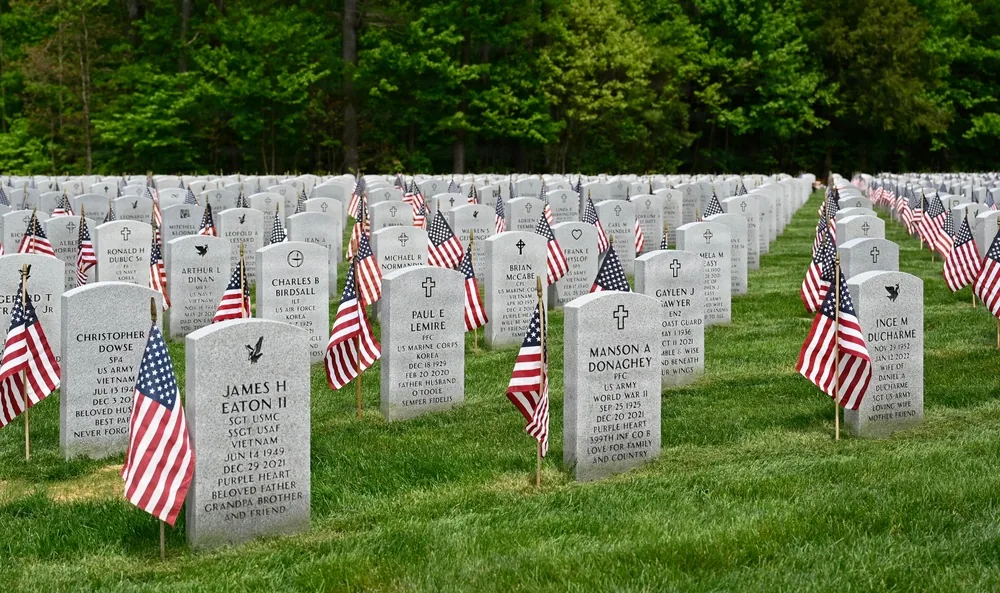
Do not infer half-staff merely because a day is commemorative. Chapter 4 contains many named observances that call for ceremonies, education, or recognition without telling people to lower the U.S. flag. Flag position follows the exact statute, proclamation, or order—not the solemnity of the title. Use the half-staff calendar to begin a date check, then open the government source linked for that year.
Which Buildings and Flags Does an NH Order Cover?
The answer begins with ownership and control, not with the nearest visible flagpole. Federal, state, municipal, school, military, and private properties can receive different instructions on the same day. Read the operative sentence of the order, then compare it with the policy governing your site.
| Site or flag | First authority to check | Key scope question |
|---|---|---|
| Federal building or installation in New Hampshire | Presidential proclamation and federal agency direction | Does the order name federal buildings nationwide or only a defined area? |
| New Hampshire state facility | Governor’s direction, RSA Chapter 3-E, and federal law | Is there a state order, a federal order, or both? |
| Town, city, or county property | Order wording plus local policy or administrator | Is local government directed, invited, or not mentioned? |
| Public school or college | State/order language and institutional policy | Does the notice expressly include schools or academic institutions? |
| Military reservation | Command direction and RSA 3-E:2’s standing rule | Is the condition limited to that reservation? |
| Business, nonprofit, or residence | Actual proclamation and the owner’s policy | Is participation requested, or is a binding rule actually identified? |
A nationwide presidential proclamation often lists covered federal properties in detail. A New Hampshire order may direct state-owned facilities and invite other organizations and residents to join. A local government may have a standing policy to mirror both, but that voluntary policy is separate from the source order. The same distinction applies to a school district or private employer.
There is one narrow federal interaction worth noting. Under 4 U.S.C. § 7, when a governor issues a qualifying proclamation because of the death of a member of the armed forces, the U.S. flag at federal installations in the area covered by that proclamation is also flown consistently with it. That does not mean every kind of state order automatically controls every federal site.
If you manage several properties, make a separate scope decision for each class. Record the controlling sentence next to each location instead of writing “all NH sites” in a work order. A lowered flag across the street may be a useful prompt to investigate, but it is not proof that your building is governed by the same authority or endpoint.
How Towns, Schools, Businesses, and Homes Should Respond
A repeatable process is more dependable than asking whoever happens to be near the flagpole. Organizations should designate one role—not necessarily one person—to monitor notices and keep the instruction available to the employees who raise and lower flags.
- Assign an owner. Name the facilities, administration, security, or front-office role responsible for checking alerts.
- Check both jurisdictions. Review New Hampshire and federal evidence, even if an email mentions only one.
- Save the source. Retain the government URL or PDF, the time checked, and any later correction.
- Map the scope. List which locations and flagpoles the operative wording covers.
- Schedule both actions. Create a lowering task and a separate restoration task in Eastern Time.
- Close the record. Note when the flag was restored and preserve the source with the facilities log.
Local governments and schools
A town office, school administrative unit, public school, or college should route the notice through its designated administrator and written policy. Do not assume that a message to “state agencies” necessarily addresses municipalities, or that a reference to “academic institutions” answers every governance question. If the scope is unclear, ask the issuing office or the organization’s counsel; a generic web guide cannot resolve a facility’s individual legal obligations.
Businesses and nonprofit organizations
A private organization may choose to follow federal and New Hampshire orders as a matter of policy and respect. Write that policy down. It should identify which orders the organization mirrors, who approves an exception, how multiple sites are notified, and who restores the flag. This prevents inconsistent responses between a Concord headquarters and branches elsewhere.
Homes and condominium communities
New Hampshire law protects U.S. flag display at a private residence while allowing reasonable restrictions concerning size or manner. The state condominium statute likewise protects an outdoor display consistent with the Flag Code and RSA 3-E, subject to reasonable rules. Those protections concern the ability to display the flag; they do not automatically compel a resident to lower it whenever a government facility does.
A homeowner who wishes to participate should use the same source-and-time check as a public operator. A condominium resident should also review safe mounting and applicable association rules. In every setting, the cleanest practice is to separate the respectful choice to participate from claims about legal compulsion.
Lower and Restore the Flag Correctly in New Hampshire
Once you have confirmed that an order applies, use the ceremony described in the U.S. Flag Code. Raise the flag briskly to the peak for an instant, then lower it ceremoniously to half-staff. Before taking it down at the end of the display period, raise it to the peak again and then lower it completely. “Half-staff” is defined as halfway between the top and bottom of the staff; it is not simply any visibly lowered position.
- Inspect the halyard, clips, pole, and weather conditions before beginning.
- Hoist the U.S. flag to the peak briefly.
- Lower it to the halfway position in a controlled movement.
- At the stated endpoint, return it to the peak if ordinary display continues.
- If the flag is coming down for the day, raise it to the peak first, then lower and secure it.
The half-staff flag position calculator can help with the physical midpoint on a pole, but it does not decide whether today’s order applies. Source verification comes first; measurement comes second.
Schedule the endpoint in New Hampshire local time
New Hampshire operates on Eastern Time, including the seasonal daylight-saving change. When an order provides a numbered time, enter it as a local-time task and include the time-zone label in messages sent to other locations. When it says “sunset,” use the sunset for the place the order governs unless the issuer specifies otherwise. When it says “interment,” do not guess the hour; wait for an authoritative schedule or an updated direction.
If two applicable orders overlap, the flag generally remains at half-staff until both have ended. For example, a federal order might expire before a New Hampshire direction that covers the same state facility. Track each source separately and restore only when no applicable instruction remains. If one order is amended, update its row rather than deleting the original record.
Remember the Memorial Day noon change
Memorial Day is the familiar exception to an all-day assumption. The federal rule calls for half-staff until noon only and then directs the flag to the top of the staff. A morning crew should hand the noon action to the employee who will actually be present; a calendar reminder that merely says “Memorial Day—half-staff” is incomplete.
Normal outdoor display is from sunrise to sunset. A flag may remain displayed around the clock when it is properly illuminated during darkness, but lighting does not alter the active position. If a wall-mounted or fixed-angle staff cannot produce a true half-staff position, consult the issuing authority and your organization’s policy before improvising an alternative.
New Hampshire Half-Staff FAQ
Is it “half-staff” or “half-mast” in New Hampshire?
For a flagpole on land in New Hampshire, half-staff is the standard U.S. term. Navy style traditionally uses half-mast on ships and at naval stations. Searchers and some public notices use the phrases interchangeably, so “why are flags at half mast today in NH?” expresses the same practical question. Preserve the wording of an official source when identifying it, but use half-staff for ordinary land-based guidance.
How do I check yesterday’s or tomorrow’s New Hampshire status?
Use the date and history controls on the New Hampshire status page. For yesterday, find an order whose effective period includes that date and check whether an intraday endpoint changed the answer. For tomorrow, treat a calendar entry as planned information: a new presidential or governor order can still be issued. Recheck close to the display date, particularly if you manage a public facility.
What if the governor’s original page is unavailable?
Do not translate a page error into “full-staff.” Record the failed check, inspect the White House archive for any federal order, look for another official New Hampshire government page that reproduces or links the notice, and check again later. Label the status unconfirmed until the issuing record or sufficiently authoritative evidence resolves it.
What if two flag alerts disagree?
Compare issuer, publication time, jurisdiction, covered properties, and endpoint. One alert may summarize a federal order while the other reports a New Hampshire order; both can be accurate for different sites. If they describe the same order, prefer the issuing government record over a repost or aggregator and look for an amendment. Preserve both URLs in your log so the conflict can be audited.
Does one lowered flag prove a statewide New Hampshire order?
No. It may reflect a federal direction, a governor’s order, the standing rule on a military reservation, a local policy, a private choice, or simply a failure to restore the flag after an earlier observance. A visible flag is a reason to investigate, not a substitute for the order.
Where can I research an older New Hampshire order?
Search the New Hampshire history interface by person, event, or effective date, then follow its original-source link. You can also search the White House Presidential Actions archive for national proclamations and New Hampshire government domains for state notices. If no result appears, say that the record was not found; do not state that no order existed.
What are the most common operating mistakes?
The recurring errors are trusting a screenshot without opening its source, applying a reservation-only rule statewide, missing a noon or interment endpoint, forgetting the peak-first ceremony, and creating a lowering reminder without a restoration reminder. A brief source log and two scheduled actions prevent most of them.
For the current answer, return to the live New Hampshire flag-status page. Use this guide to evaluate the evidence behind that answer, not as a dated substitute for it.
Comments
Comments are reviewed before publication.
Sign in with Google to join the discussion.
Loading comments…