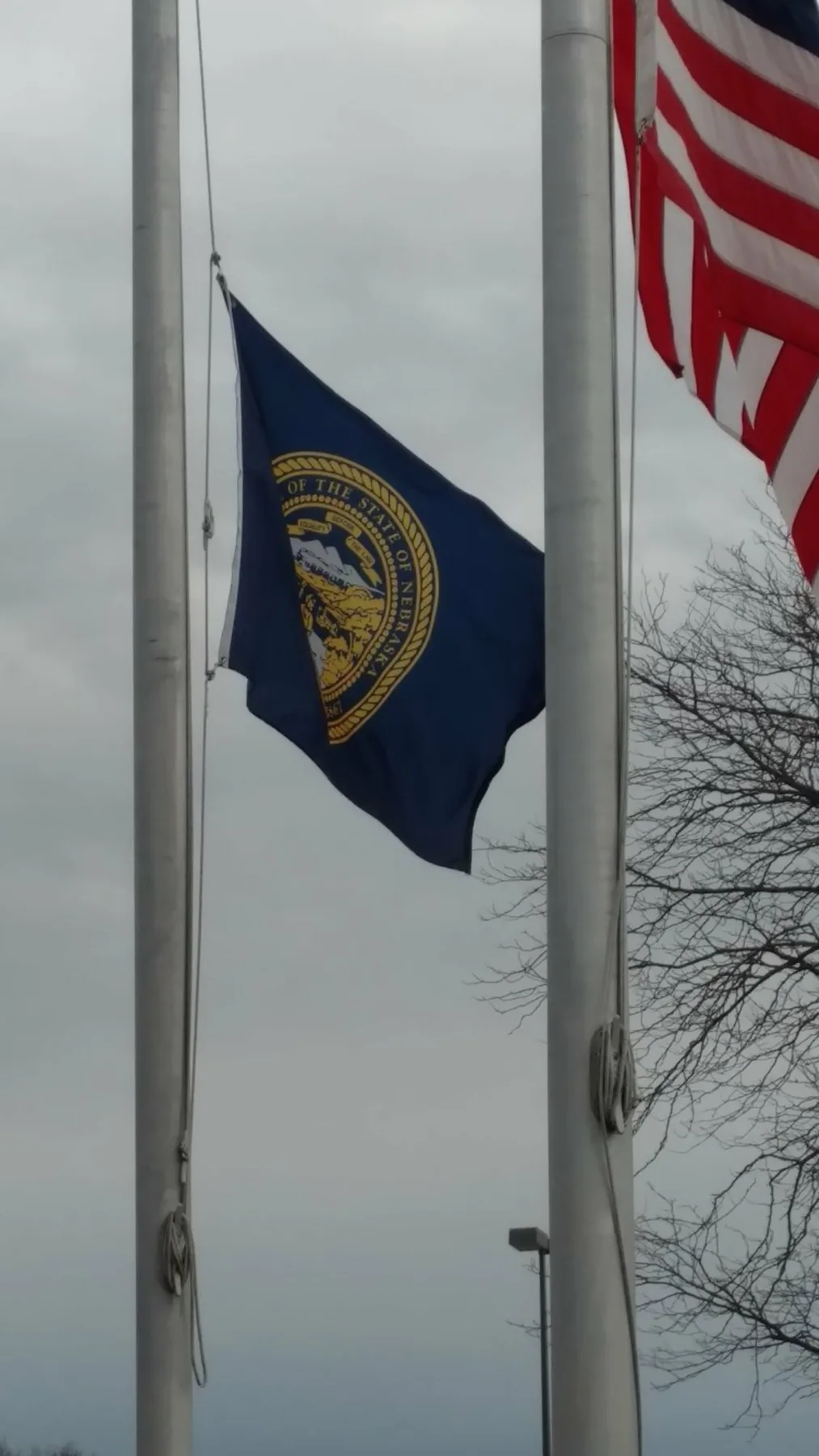
If you see a lowered flag in Omaha, Lincoln, Kearney, Grand Island, or elsewhere in Nebraska, start with the live Nebraska half-staff status, then open the cited government notice and read its location and end-time language. A presidential order, a Nebraska governor's order, and a locally limited instruction can apply to different properties on the same day. That is why one flag cannot reliably tell you the status of an entire city or state. This guide shows how to identify the controlling order, understand whom it covers, and respond correctly. Although many people search for “half mast,” the standard U.S. term for a flag on land is half-staff. Because flag orders change, use this article as a verification method—not as a permanent claim about today's position.
How to check Nebraska's flag status right now
The quickest dependable check takes about a minute, provided you look at both the state and national layers. Begin with the live Nebraska page rather than an undated search result or a social post. A useful status record should name the person or event being honored, the issuing authority, the effective period, the geographic scope, and an original government source.
- Check the live Nebraska result. Open the Nebraska half-staff status and history. Look for separate state and federal notices, because one may exist without the other or the two may end at different times.
- Open the primary notice. Follow the source to a Nebraska Governor's Office release for a state directive or to the presidential action for a national directive. A status tool organizes evidence; it does not issue an order.
- Match the location words. “All state-operated facilities” is very different from “City of Omaha facilities,” “Nebraska State Capitol Complex,” a legislative district, or a named building. Use the narrowest wording actually printed in the notice.
- Read the complete time window. Confirm the beginning as well as the ending. A direction may begin immediately, at sunrise, or on a later funeral date and may end at sunset or at a stated clock time.
- Check the flag owner if the order does not fit. A city, school, university, employer, cemetery, or private property owner may have a separate instruction or voluntary tribute. Contact that organization rather than assuming the entire city is under an order.
Also compare the current U.S. half-staff status when the Nebraska page shows no separate statewide instruction. A nationwide presidential order can explain flags at federal and many state or local sites even when there is no new Nebraska-specific announcement. If the source is missing, old, or vague, treat the reason as not confirmed until an issuing authority or the facility responsible for the pole verifies it.
Who can order flags to half-staff in Nebraska?
Authority depends on the government level and on who controls the flagpole. For a nationwide federal observance or period of mourning, a presidential proclamation or order sets the position at the federal locations it names. Nebraska's governor can issue a separate state directive. The Governor's Office flag policy says the governor has authority over flags at Nebraska state-operated facilities, so a release directed to those facilities has a clear operational audience.
Federal and statewide authority
Title 4 of the U.S. Code supplies the national framework. Section 7(m) identifies presidential half-staff orders for principal federal figures and permits a governor to proclaim the U.S. flag at half-staff within the state for specified deaths involving state officials, active-duty service members from the state, and first responders who die in the line of duty. It also contains a specific federal-facility consistency rule when a governor's covered proclamation honors an Armed Forces member from that state who died while serving on active duty.
That last point needs precision. It does not justify assuming that every Nebraska announcement automatically binds every federal installation for every reason. Federal property follows federal law and agency implementation procedures. GSA policy distinguishes nationwide, statewide, local, and agency-wide requests and routes notices to the facilities they cover. When the pole is at a post office, federal courthouse, military site, or other federal property, verify the federal or agency instruction as well as the Nebraska release.
At Nebraska state-operated facilities, read the governor's notice exactly. A directive may cover both the U.S. and Nebraska flags across all such facilities, or it may name a smaller group. The Governor's policy also says the Nebraska state flag is displayed at half-staff for the same period as the U.S. flag in this context.
What a mayor or facility can control
A city notice usually speaks to city-owned or city-operated property, not every flag inside city limits. Nebraska's policy allows the governor to delegate authority to a local official, such as a mayor, for a county, municipal, or city official's interment. A February 2026 release illustrates the boundary: the governor coordinated with Omaha's mayor and delegated authority for U.S. and state flags specifically at City of Omaha facilities on the named day. The release did not say that every home, business, state office, or federal building in Omaha was subject to that city-facility instruction.
Schools, universities, employers, veteran organizations, cemeteries, and private owners may also control their own poles and adopt internal memorial practices. They can choose to participate when an official request encourages the public, but lowering a privately controlled flag does not create a government order. The practical rule is simple: identify the owner, locate the instruction issued to that owner, and never expand its scope beyond the words on the page.
Why Omaha, Lincoln, Kearney and Grand Island may not match
City names help you search, but they do not define an order's legal or operational boundary. The decisive words are the facility nouns in the notice. Nebraska's published policy contemplates orders covering all state-operated facilities, only the Nebraska State Capitol Complex, a legislative district, or even one state facility. A person in Lincoln could therefore see a flag lowered at the Capitol while a city building or private store a few blocks away follows a different instruction.
Omaha and Kearney provide an unusually clear example. In February 2026, the Governor's Office published separate releases connected to the same deceased Nebraska civic leader. One authorized lowering U.S. and state flags at City of Omaha facilities; another granted Kearney's mayor permission to order flags at city facilities. Both were effective on February 21, the day of interment. The matching date and honoree did not turn either notice into an all-Nebraska directive.
| Where you see the flag | Sources to check first | Scope words that matter |
|---|---|---|
| Omaha | Federal status, Nebraska order, then official Omaha notice or facility management | “City of Omaha facilities,” named agency, or all state-operated facilities |
| Lincoln | Federal and Nebraska status; Governor's Office for the Capitol; City of Lincoln for city property | “Nebraska State Capitol Complex,” “state-operated facilities,” “city-owned or operated” |
| Kearney | Federal and state status, then official Kearney or facility notice | “City facilities,” named property, district, or statewide |
| Grand Island | Federal and state status, then City of Grand Island communications or the pole owner | Named city facilities, county property, school, employer, or statewide |
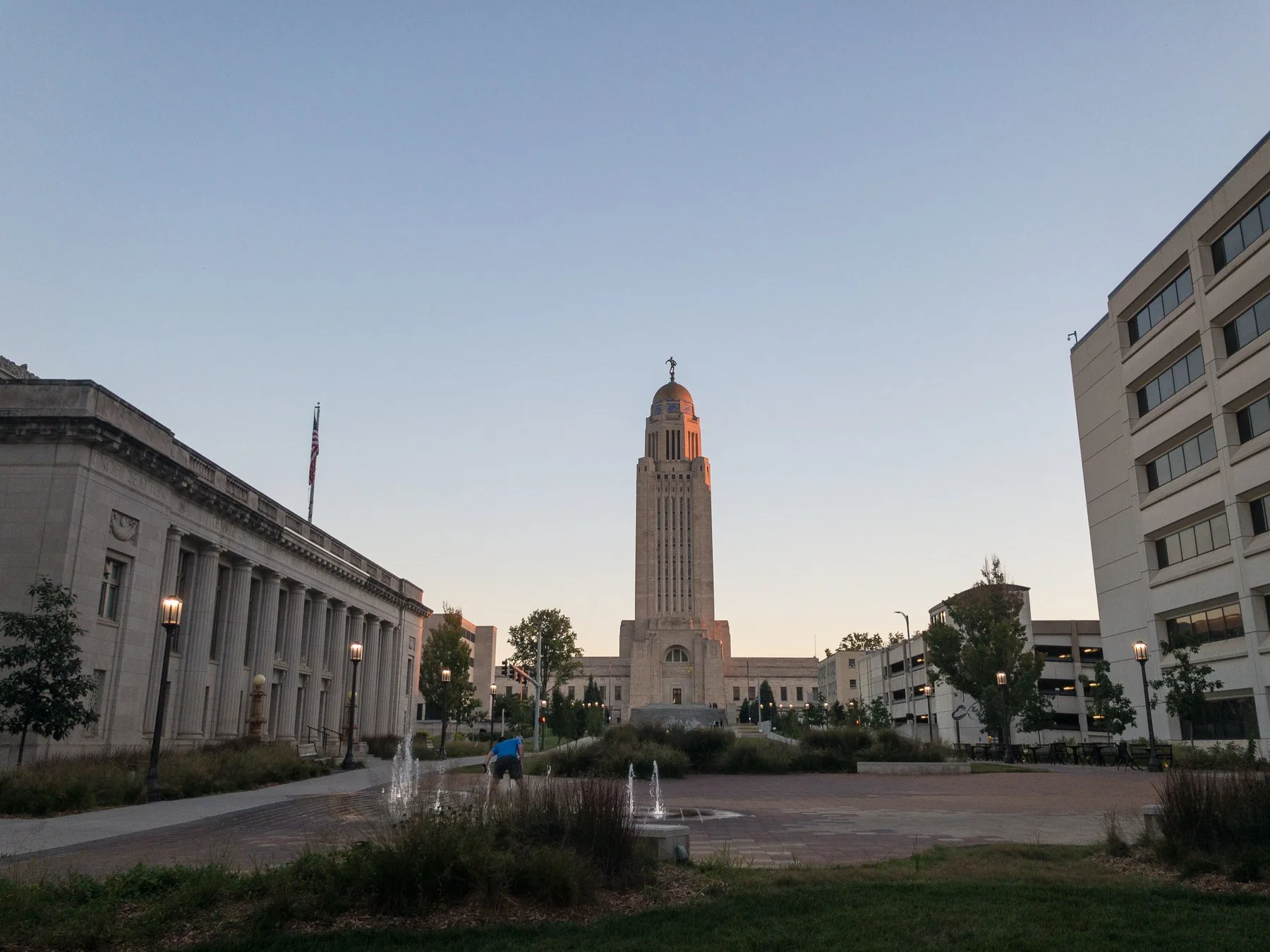
Lincoln requires one extra distinction because it is both a city and the state capital. A reference to the Capitol Complex is not shorthand for all of Lincoln. Separately, Lincoln's published City Flag Protocol authorizes the mayor or a designee to raise or lower the city flag on city-owned or city-operated property and at the County-City Building. That municipal protocol should not be silently converted into a claim about every U.S. flag in Lancaster County.
For Grand Island, begin with the same Nebraska status and order history, but do not stop at a city-name search if the statewide evidence does not fit. Check the City of Grand Island's official communications or contact the school, hospital, employer, cemetery, county office, or other organization that controls the observed pole. An absent statewide order can coexist with a genuine local tribute; it simply needs local evidence.
The safest reading habit is to finish this sentence from the notice: “This instruction applies to ______.” If the blank says city facilities, do not fill it with the entire metropolitan area. If it says the Capitol Complex, do not fill it with all Lincoln businesses. If it says all state-operated facilities, do not automatically include private homes or city-owned property. Geographic precision is what turns a plausible answer into a verified one.
Why two nearby Nebraska flags can show different positions
Two flags on the same street can be correct in different positions because jurisdiction follows the property and the instruction, not proximity. A federal courthouse may be implementing a federal or agency notice. A Nebraska office may be following a governor's order to state-operated facilities. A city hall may have a municipal instruction, while a nearby business participates voluntarily or follows its own memorial policy.
Jurisdiction matters
Official policies recognize scopes smaller than a state. Nebraska's Governor's Office policy includes examples involving the Capitol Complex, an elected district, and even a particular state facility. GSA policy separately accounts for nationwide, statewide, local, and agency-wide requests at federal properties. Lincoln's city protocol speaks to its City flag on city-owned or operated property. These layers explain why “both buildings are in Lincoln” is not enough to establish that both poles have the same instruction.
Flag identity matters too. One property may display a U.S. flag, Nebraska flag, city flag, POW/MIA flag, or organizational flag on separate staffs. Before concluding that positions conflict, identify which flag you are comparing and whether the order expressly addresses it. Nebraska's rules for public-school display, for example, require U.S. and Nebraska flags on school grounds during school days according to U.S.-flag display standards, but that standing statute does not tell you the reason for a particular day's lowering.
A lowered flag is a clue, not proof of an order
A flag can also remain down because an operator received a notice late, misunderstood the return time, could not safely service the pole, or chose a voluntary tribute. Those are possible explanations, not facts you can diagnose from the sidewalk. Conversely, a full-staff flag does not prove that no order exists; the property may be outside its scope or still awaiting implementation.
If a mismatch matters for your work or event, document four details: the address, the type of property, the flags displayed, and the observation time. Compare them with the order's exact audience and effective window. If the discrepancy remains, ask the building manager, city communications office, school administration, or other responsible operator which instruction they are using. That courteous inquiry is more reliable than reposting a photograph with an unverified claim of disrespect or rule-breaking.
How to read start times, end times and sunset instructions
A flag notice has at least three relevant dates: when it was published, when lowering begins, and when lowering ends. They are not necessarily the same. A release issued on Thursday might direct flags down on Saturday, the day of interment. Another instruction may take effect immediately. Record the operational window, not merely the webpage date.
- “Immediately” means the covered location should implement the direction when it receives and can safely act on the valid notice; do not rewrite it as sunrise the next day.
- “From sunrise to sunset” describes a single-day display period. The return to full-staff is at the end of the covered day's display, not at an arbitrary office-closing time.
- “Until sunset” includes the final named date through sunset. For operations, use the sunset at the flag's location and the facility's approved time source.
- “On the day of interment” ties the order to the funeral schedule named or confirmed by the issuer. It does not mean the press-release publication day.
- An exact clock time controls when one is supplied. Preserve the stated time zone rather than assuming that every reader shares it.
Omaha, Lincoln, Kearney, and Grand Island use Central Time, but Nebraska crosses the official boundary between the Central and Mountain zones. This matters for statewide directions that end at sunset: western locations may reach sunset at a different clock time. A facilities note should therefore include the property address and local time zone, especially when one team manages poles in several Nebraska counties.
Memorial Day is the major timing exception readers should memorize. Under 4 U.S.C. § 7(m), the U.S. flag is displayed at half-staff only until noon and then raised to the top for the rest of the day. A Nebraska Governor's Office notice for Memorial Day may restate that sunrise-to-noon schedule. Do not extend the morning position to sunset simply because many other observances use an all-day window. The half-staff calendar can help identify recurring dates, but the notice for a special order still controls its own period.
Finally, check for overlap. A short Nebraska or city instruction can begin or end while a longer federal order remains active, and a later notice may extend, narrow, or supersede an earlier one. Before moving the flag back to full-staff, re-open both the state and federal records and look for an update. Keep a copy of the source, covered facilities, start instruction, return instruction, and the name of the person responsible for the change. That small log prevents yesterday's valid direction from becoming today's accidental error.
What schools, businesses and homeowners should do
The right response begins with the kind of property you manage. A government facility may receive an instruction through an official chain, while a homeowner or business normally chooses whether to join a public request unless another applicable rule or organizational policy says otherwise. This overview is practical guidance, not a legal opinion for a particular facility.
Public institutions
Nebraska law gives public schools a specific display context. Revised Statute 79-707 requires the U.S. and Nebraska flags to be prominently displayed on public-school grounds on each day school is in session, according to U.S.-flag display standards. The provision includes publicly supported postsecondary institutions in its definition. Revised Statute 90-102 separately describes display of the Nebraska state flag at public administrative buildings and places it under or to the left of the U.S. flag.
Neither statute is a self-updating answer to “why today?” A school or public institution should still obtain the current directive, confirm that its property is covered, and send the complete start and return instructions to the employee who operates the pole. A useful internal message includes:
- the issuing office and direct source URL;
- the honoree or observance, without unsupported additions;
- the exact flags and facilities covered;
- the effective date, start time, end time, and time zone; and
- a contact for questions or weather and access problems.
City, county, and state sites should use their agency's established communication chain. If a press release and an internal facilities message appear to conflict, pause and ask the issuing office or designated administrator instead of choosing the broader interpretation.
Private and community flag owners
A homeowner, business, church, veterans group, or community organization may voluntarily join an official period of mourning. First verify the government request and its period; then decide under the organization's own policy who will lower and restore the flag. Preserve the distinction between “officially ordered for state facilities” and “the public is encouraged to participate.” The second phrase is an invitation, not evidence that every privately owned pole is out of compliance if it remains full-staff.
Plan safe access before committing to a display. Assign the return time at the moment you assign the lowering. If the pole cannot create a genuine half-staff position, do not guess at a decorative substitute and call it an official rule. Consult the organization's protocol or a qualified flag supplier, and consider respectfully taking the flag down when accurate positioning and safe operation are not possible. For an adjustable pole, the flag position calculator can help translate the halfway rule into a measured position.
Whatever the owner type, keep the official notice with the facilities log until the flag is restored. That record helps the next shift understand why the change occurred and protects against the two common mistakes: returning the flag too soon or leaving it lowered after the instruction has expired.
How to lower and return a flag correctly
Once you have confirmed that an order or organizational decision applies, use a deliberate sequence. Half-staff is not simply “somewhere below the top.” Title 4 defines it as halfway between the top and bottom of the staff, while a marked facility position or specialized military protocol may provide the operational measurement.
- Inspect the setup. Confirm the correct flag, halyard, attachments, access area, weather, and halfway position before moving anything. Do not attempt a roof or pole operation without the site's required safety controls.
- Hoist to the peak. Raise the U.S. flag briskly all the way to the top and pause for an instant. Do not stop at halfway during the initial ascent.
- Lower ceremoniously. Bring the flag down slowly to the correct half-staff position. Check that it hangs freely and cannot touch the roof, ground, water, or nearby objects.
- Maintain the display for the stated period. If the flag remains outside after dark, general federal guidance calls for proper illumination. Use an all-weather flag when conditions require one, and follow site safety policy during severe weather.
- Return to the peak before removal. At the order's end, raise the flag briskly to the top for an instant. If it will be taken down for the day, lower it ceremoniously only after that return to the peak.
For several flags on one halyard, Nebraska's Governor's Office lists the order from top to bottom as the U.S. flag, Nebraska flag, and other flags. The U.S. flag should remain above state, city, and organization flags on that shared staff. With adjacent staffs, coordinate the display so a state or local flag does not appear superior to the lowered U.S. flag, and follow the active instruction for each flag.
Foreign national flags require separate care. Do not automatically lower another country's flag under a U.S. domestic order or place one nation beneath another as though it were subordinate. Ask the responsible protocol office whether it should remain at full height, be removed temporarily, or be handled under diplomatic rules.
Finally, record both actions: who lowered the flag and when, then who restored it and when. A short checklist attached to the order is especially useful at schools, campuses, and multi-shift facilities. It makes the ceremony consistent while leaving room for the exact instructions of a future proclamation.
Nebraska half-staff questions, answered
Does an Omaha half-staff order apply in Lincoln?
Not automatically. Read the order's facility and geographic wording. A direction limited to City of Omaha facilities does not, by that wording alone, cover the Nebraska State Capitol, Lincoln city property, a federal building in Lincoln, or a private Lincoln business. Check for a separate federal, Nebraska statewide, Capitol Complex, or Lincoln notice before changing a flag there.
Where should Kearney and Grand Island residents check?
Begin with the live Nebraska flag status and history and inspect both the state and federal layers. If neither broad order explains the pole, check the appropriate city's official website or communications channels and identify the facility owner. Kearney has had a documented, delegated city-facility instruction, illustrating why a local notice matters. This research did not confirm a permanent Grand Island flag-status feed, so Grand Island readers should not rely on an assumed one; contact the city or the responsible school, county office, employer, cemetery, or other property operator.
Does the Nebraska state flag come down with the U.S. flag?
At covered Nebraska state-operated facilities, the Governor's Office policy says the Nebraska flag is displayed at half-staff for the same period as the U.S. flag. The policy also places the U.S. flag above the Nebraska flag when they share a pole. For a city, federal, private, or multi-national display, read the controlling instruction and the facility's protocol rather than exporting the state-facility rule without checking.
What if no official order explains the lowered flag?
Call the reason not confirmed, not “mysterious” or “wrong.” Verify that you searched the correct date, including the start and end time, and that the observed pole is actually at the property you think controls it. Then ask the operator. The flag may reflect a local or internal memorial, voluntary participation, delayed restoration, or a maintenance issue, but each is only a possibility until the owner confirms it. For an old observation, use the history search rather than today's card.
Is it half-mast or half-staff in Nebraska?
Use half-staff for a U.S. flag on land in Nebraska. Half-mast is traditional aboard ships and at naval settings, though ordinary searchers often use both phrases for the same visible mourning position. Answering a “half mast today near Omaha” search with Nebraska's official term improves precision without changing what the person is trying to learn.
The central habit behind every answer is the same: check the date, authority, location, flags, and end time before acting. Use the live status tools for the current position and the Half Staff Today blog for durable explanations of etiquette and orders. When evidence stops, say so. A careful “not confirmed” protects the meaning of the tribute better than a confident guess.
Comments
Comments are reviewed before publication.
Sign in with Google to join the discussion.
Loading comments…