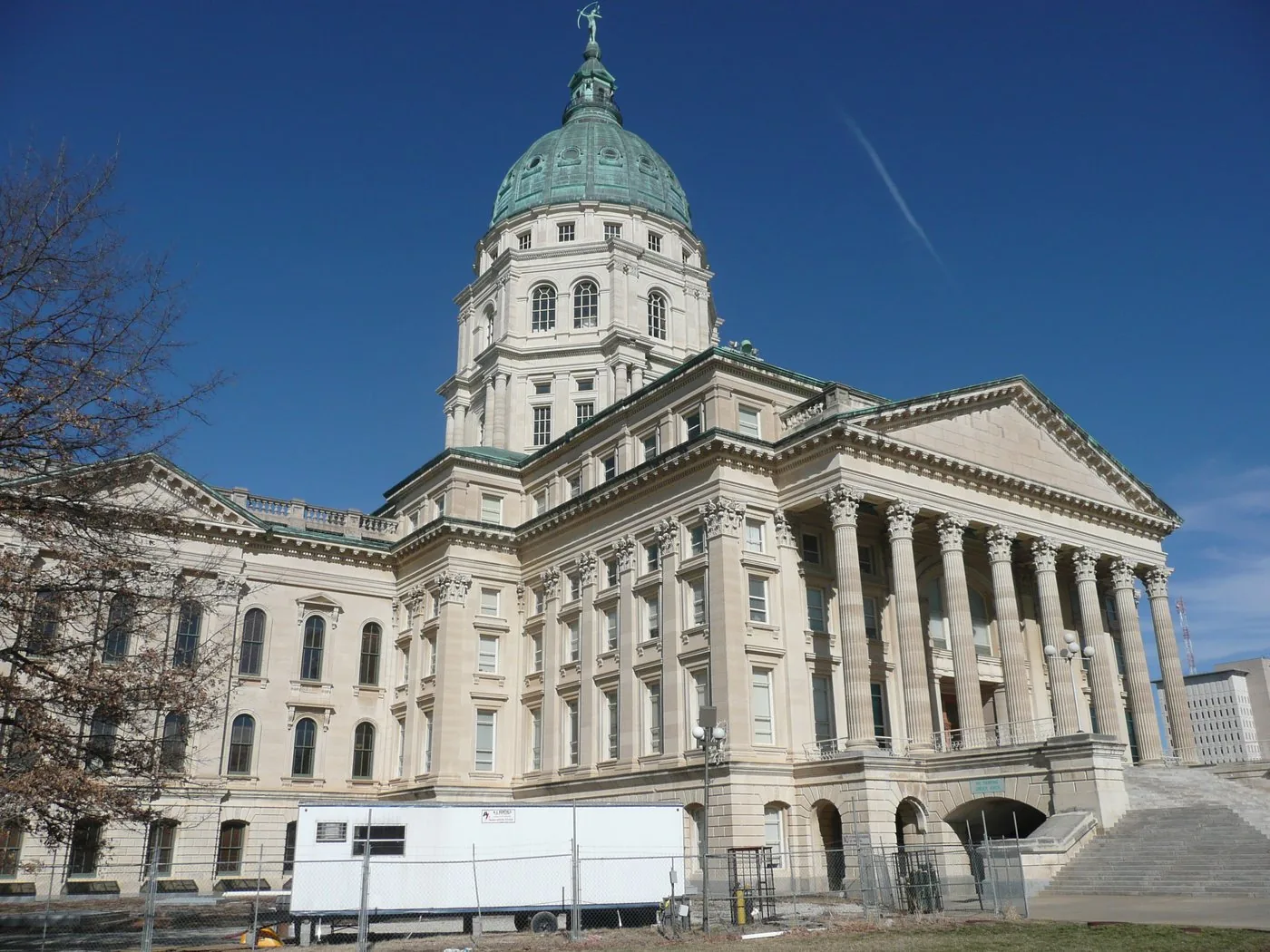
If you see a lowered flag in Kansas, check the live Kansas half-staff status, open the linked government notice, and match its location and end-time language to the flagpole you are responsible for. Kansas maintains an official Flag Honors page and email signup, but an alert is only the starting signal: a directive may cover all state buildings, one county, several named counties, or another limited set of properties. A federal order can also overlap a Kansas order. This guide explains how to verify the controlling source, interpret Executive Order 20-30, and restore the flag on time. Although people commonly search “half mast,” Kansas and federal sources use half-staff for flags on land. Because orders change, this article teaches the method rather than freezing today's answer.
How to verify Kansas flag status right now
A reliable answer combines speed with source control. Do not stop at a photograph, search snippet, forwarded email, or an undated page. Use this sequence:
- Open the live Kansas page. The Kansas status and order history keeps state and federal records separate, so a Kansas-only instruction is not mistaken for a nationwide order.
- Compare the national layer. Check today's U.S. half-staff status. A presidential action may explain the display even when Kansas has not issued a separate new notice.
- Follow the original source. For a state directive, the destination should be the Kansas Governor's Flag Honors notice or an official bulletin. The status page organizes evidence; it does not order a flag lowered.
- Read the audience. Look for phrases such as “all state buildings, grounds, and facilities,” “throughout the State of Kansas,” “Sedgwick County,” or a list of counties. Do not replace those words with “every flag in Kansas.”
- Copy the complete time window. Record whether the order begins immediately, at sunup, or on a future date and whether it ends at noon, sundown, interment, or a specified time.
- Ask the pole owner when the evidence does not fit. A federal office, city hall, school, cemetery, business, or private organization can have a different controlling instruction or voluntary memorial practice.
For advance notice, use the Subscribe Now link on the official Kansas Flag Honors page. It routes to the Kansas Office of the Governor's GovDelivery account. Treat an email as an alert to review the order, not as permission to ignore scope or timing. Confirm that the sender and links use official Kansas government or GovDelivery domains, then save the source with your facilities log.
If the state page or official notice is missing, stale, or ambiguous, label the reason not confirmed and contact the responsible agency or property operator. A cautious unknown is more useful than a confident explanation attached to the wrong county or an expired order.
What Kansas Executive Order 20-30 actually does
Executive Order 20-30 is Kansas's standing framework for half-staff displays. Published in the Kansas Register in May 2020, it directs how the United States flag is handled at state buildings, grounds, and facilities when a half-staff honor applies. It also organizes recurring observances and circumstances involving members of the armed forces, law enforcement officers, firefighters, emergency medical services personnel, and other public servants covered by its terms.
The practical distinction is important: the executive order supplies policy, while a dated flag-honor notice supplies the event details. EO 20-30 cannot by itself tell you why a flag is down outside your Kansas building today. The current notice must still identify the person or occasion, the affected properties, the beginning, and the restoration time. Recent Kansas governor notices in 2026 continued to cite EO 20-30 and then stated their own exact scope and duration.
The order also gives state government an administrative path. Requests or questions from state departments concerning a half-staff display go to the governor's legal counsel, while the Kansas Department of Administration assists with communicating and carrying out the direction. That matters when an agency employee receives a forwarded message that conflicts with a posted notice: the answer should come through the responsible official channel, not through guesswork at the flagpole.
Keep one date-related caution in view. A standing order may reproduce recurring observances using the calendar applicable when it was signed, but observance dates and later directions can change. Do not copy a date from the 2020 document into a 2026 or future calendar without verification. The governor's 2026 notice for National Fallen Firefighters Memorial Day, for example, used May 3. That illustrates why a current calendar and dated notice must control day-to-day operations.
For an actionable Kansas alert, therefore, use two documents together:
- EO 20-30 for the durable state policy, covered categories, agency workflow, and display procedure.
- The newest official honor notice for today's reason, audience, geographic reach, and ending instruction.
If those documents appear inconsistent, pause and seek clarification from the property owner or issuing agency. The live Kansas status page can help you find and compare the records, but the official state text remains controlling for Kansas facilities.
Statewide, county and city scope are not the same
The most common Kansas flag-alert mistake is turning a limited order into a statewide one. The headline may name a community, official, or first responder, but the controlling sentence tells you where the directive applies. Read that sentence word for word before acting.
Three official 2026 examples show how much the language can vary:
- A notice honoring Greeley County firefighter Carl “Levi” Evans directed flags throughout the State of Kansas to half-staff. The honoree's county did not limit the geographic reach.
- A notice honoring former Kansas Senate President Steve Morris named ten western Kansas counties. A flagpole outside those counties was not within that notice's stated geographic list merely because the honoree had served the state.
- A notice honoring former representative Melody McCray-Miller applied throughout Sedgwick County. That county language matters to Wichita readers, but it does not automatically extend to Topeka or another county.
Use a two-part location test. First, identify the pole's physical county. Second, identify who controls the property. A search for “why are flags at half-staff in Kansas” can surface a valid state notice that does not cover your county, while a search centered on a city can miss a statewide federal order. If you are in Kansas City, Overland Park, Olathe, Lawrence, Manhattan, Salina, Hutchinson, Dodge City, Garden City, or Hays, do not assume that an alert about a different Kansas locality applies—or that it does not. Compare your county with the actual list.
City action is another layer. A mayor, city manager, local board, university, school district, or property operator may direct or choose a display for property under its control. A lowered flag at one municipal building can therefore be a real local memorial without proving there is a statewide Kansas order. Likewise, a business or residence may voluntarily follow a government honor.
A useful operations note should copy the scope phrase exactly, not paraphrase it as “Kansas flags.” Write, for example, “official notice: throughout Sedgwick County” and record the issuing source. Then compare that phrase with the pole inventory. When an alert names multiple counties, check every location individually; do not treat the first county in the list as the only one or the whole list as statewide.
Historical examples explain the method but never establish current status. Return to the live Kansas status page and the newest official notice each time you need a today answer.
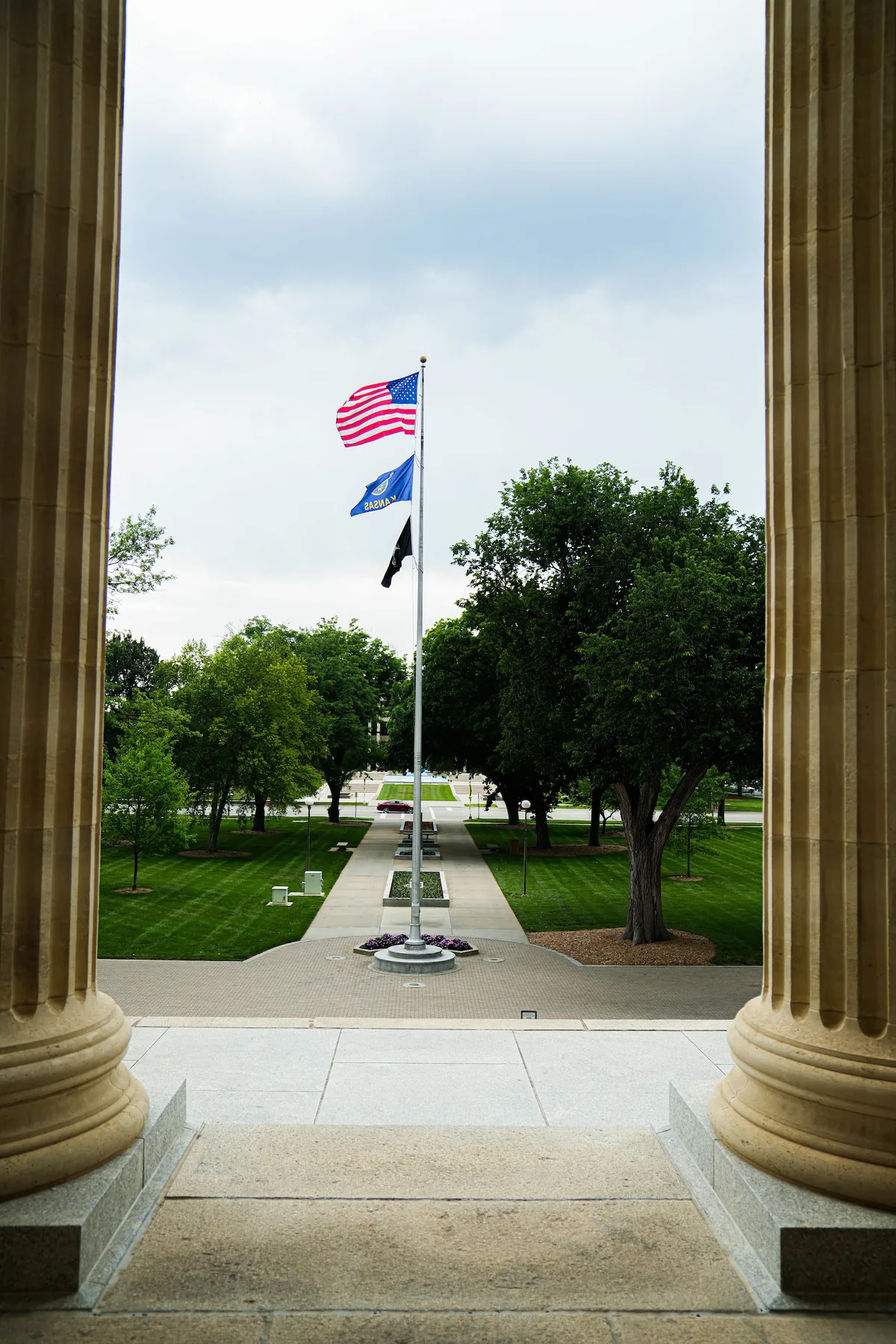
Which Kansas properties must follow an order?
Begin with ownership, not the nearest lowered flag. Executive Order 20-30 addresses the United States flag at Kansas state buildings, grounds, and facilities. A dated governor notice may use broader or narrower language, but neither should be silently converted into an instruction for every pole owned by a city, county, school, federal agency, business, or household.
- Kansas state facilities: follow the governor's operative notice and the agency instructions sent through the state's administrative chain. Preserve the notice in the building log.
- Federal facilities: follow the presidential proclamation and the facility's federal chain of command. A Kansas order can be relevant context without replacing a controlling federal directive.
- County and municipal properties: check whether the Kansas notice includes the location and whether the local government has issued implementation guidance. A nearby state office and city hall may display flags differently for a legitimate reason.
- Schools and universities: consult the superintendent, district, campus administration, or facilities office. Kansas statutes impose U.S. and state-flag display responsibilities on schools, including conformance with state-board etiquette instructions, but an employee should still follow the institution's authorized operational direction.
- Businesses, nonprofits, and residences: owners often choose to participate in an official honor. Voluntary participation should match the official time and scope, but it should not be mislabeled as a legal command when the source does not say that.
Federal law also matters to authority. Under 4 U.S.C. § 7, a governor may proclaim half-staff for specified state officials, active-duty armed forces members from the state, and first responders who die in the line of duty. That authority helps explain why Kansas can issue honors, but the exact proclamation and property policy still determine what a particular facilities employee should do.
Keep the U.S. flag and Kansas flag questions distinct. Kansas law separately addresses provision and routine display of the state flag on school grounds. That does not, by itself, answer whether the U.S. flag should be at half-staff today or whether every accompanying flag must be lowered. Read the applicable notice and your institution's protocol for multiple-flag displays.
When responsibility is unclear, ask one concrete question: “Who is the authorized owner or operator of this flagpole?” Contact that office, provide the link to the official notice, and request a written decision. This is especially useful for leased buildings, shared civic complexes, contractors, and campuses with separately managed properties. Documenting the decision prevents different shifts from lowering or restoring the flag at different times.
How to read sunup, sundown, noon and interment dates
A half-staff notice is a small schedule, not just a reason. Separate its publication time from its effective time. A notice posted on Friday may direct action on Monday; “effective immediately” may require action before the next normal flag detail. Copy four fields into the work order: publication date, start instruction, daily display instruction, and final restoration instruction.
Sunup to sundown usually describes the display window for one named day. Use the local operating time for the actual Kansas site rather than a single statewide sunrise estimate. If a flag is customarily displayed 24 hours, follow the property's illumination and overnight-display policy as well as the order; the words do not erase ordinary care requirements.
A multi-day notice can read from sunup on one date through sundown on another. That sets the first lowering and final restoration boundaries across several days. It does not necessarily direct staff to leave an unilluminated outdoor flag flying overnight. Record each day's normal raise/lower routine and keep the flag at the ordered position during its displayed hours.
Until noon demands a mid-day action. Memorial Day is the major example: federal flag guidance and Kansas's 2026 notice called for half-staff from sunup until noon, after which the flag is raised to the top for the remainder of the day. Scheduling only a morning lowering and end-of-day recovery would miss the noon transition.
Until interment is event-based rather than a fixed calendar hour. Do not guess the endpoint from a news report or funeral-home summary. Confirm the interment date and operational direction through the issuing notice or your authorized facilities channel. If the service changes, document the updated source before changing the work order.
Finally, distinguish “through,” “until,” and “on.” “Through sundown Thursday” includes Thursday until sundown. “On Friday, from sunup to sundown” applies to that Friday. An alert's email timestamp is not the start unless the text says “effective immediately.” These small words decide whether a flag is restored a day early or remains lowered after an honor has ended.
Assign two reminders whenever possible: one for the initial peak-then-lower procedure and another for restoration. For Memorial Day, add a noon reminder. For a multi-day order, include the final date in the reminder title. Clear calendar labels reduce reliance on memory and give the next shift enough context to verify the source.
A Kansas flag-alert workflow for facilities teams
A dependable alert program has a named owner and a repeatable record. Start by subscribing through the Kansas Governor's Flag Honors page, but do not depend on one person's inbox. Use a shared facilities address when policy permits, name a primary and backup reviewer, and include weekend or holiday coverage.
For every alert, capture these seven fields before anyone changes a flag:
- Source URL: save the full official notice, not a search-results link or screenshot without context.
- Issuing authority: record whether it is the president, Kansas governor, local government, or property operator.
- Reason: copy a short, neutral description from the notice.
- Scope: preserve the operative words—statewide, named counties, specific buildings, or another defined audience.
- Start: record the date and whether the instruction says sunup, a clock time, or effective immediately.
- End: record noon, sundown, a final date, interment, or another stated endpoint. Flag any unresolved endpoint for follow-up.
- Completion: note who performed and confirmed the lowering and restoration at each site.
The verifier should compare the notice with both the Kansas status page and the national status. If the sources disagree, do not force a conclusion just to close the ticket. Escalate through the property owner's chain and record “not confirmed” until an authorized source resolves it. For state departments, EO 20-30 provides a route through the governor's legal counsel and Department of Administration.
For organizations with several Kansas locations, maintain a pole inventory with address, county, owner, normal display hours, illumination status, hardware notes, and local contact. A county-limited honor can then be matched against that inventory without relying on city names or employee memory. A single work order may produce different actions at different properties, and that is acceptable when the official scope differs.
After restoration, retain the order and completion record so future staff can answer “why were flags lowered yesterday?” from evidence. The Kansas status and history page can help locate past records, but the saved official source is the audit trail. Periodically test subscriptions, backup coverage, and contact lists; an unread alert is not an effective alert program.
How to lower and restore the flag correctly
Once the order and scope are verified, inspect the flagpole, halyard, cleat, and surrounding area before moving the flag. Do not improvise on damaged hardware, work at height without authorization, or continue during unsafe wind, lightning, or ice. Follow the site's safety procedure and request trained maintenance support when needed.
- Raise to the peak. Hoist the U.S. flag briskly all the way to the top for an instant. Do not begin by stopping it halfway on the upward movement.
- Lower to half-staff. Bring it down slowly and ceremoniously to the correct position. Federal law and EO 20-30 define half-staff as halfway between the top and bottom of the staff.
- Secure and inspect. Secure the halyard, make sure the flag can fly freely, and confirm it is not touching the ground, landscaping, roof, or equipment.
- Restore through the peak. At the end of the honor, raise the flag briskly to the peak before either leaving it at full-staff or lowering it completely for the day.
Multiple flags require special attention. On one halyard, the U.S. flag remains above a state, city, or organization flag. On adjacent staffs, the U.S. flag is hoisted first and lowered last, and another flag must not appear in a superior position. When foreign national flags are present, use separate staffs of equal height and do not automatically lower another nation's flag under a U.S. or Kansas order. EO 20-30 specifically cautions that another nation's authorization is required.
A fixed wall-mounted or indoor flag cannot be moved to a literal halfway position. Some organizations use a black mourning ribbon or streamer under an approved protocol, but that is not a universal substitute. Ask the responsible institution before attaching anything to a flag or staff.
If the correct placement is not marked, the half-staff position calculator can turn pole and flag measurements into a setup aid. A facility marking, military instruction, diplomatic rule, or specific order still controls over a general calculation.
Finally, confirm the completed position and time with the second responsible person or a timestamped facilities record. The ceremonial procedure and the documentary procedure serve the same purpose: respectful, consistent observance without leaving the flag down after the authorized period ends.
Kansas half-staff alert questions
Why are flags at half mast today in Kansas?
Do not use an evergreen article as today's answer. Open the live Kansas flag status, compare it with the current federal status, and follow the linked official notice. The reason may be a presidential order, a Kansas governor directive, a county or local action, an institutional policy, or voluntary participation. Match the location, owner, start, and end before acting.
Can Kansas be at half-staff while the federal status is full-staff?
Yes. A Kansas governor notice can apply within the state even when no nationwide federal period is active. The reverse can also happen: a federal order can control federal facilities in Kansas without a separate state notice. Check both layers because their audiences and ending times may differ.
Does a Kansas order cover Wichita, Topeka, Overland Park, or every city?
Only the order's wording can answer that. “Throughout the State of Kansas” reaches statewide, while a named-county list is limited to those counties. A city or institution may also issue its own instruction for property it controls. Never infer statewide scope merely because the title names a Kansan or because flags are down in a large city.
Is the correct term half-staff or half-mast?
For the U.S. flag on land, half-staff is the standard American term used in federal and Kansas sources. Half-mast is traditional aboard ships and naval stations, although people commonly use it in web searches for the same mourning display. The wording does not change the need to verify an order.
Are Kansas flags automatically lowered for every funeral or public death?
No. An official death, line-of-duty death, or tragedy may fall within a standing rule or prompt a specific directive, but a death announcement alone is not an operational flag order. Look for an authorized notice that actually states the display, scope, and time. A private owner may choose a memorial display under its policy without making it statewide.
How can I check why Kansas flags were lowered yesterday?
Use the Kansas status and history page for the relevant date, then open the preserved official source. Check whether the period included the date and your location. A notice's publication date can differ from its effective date, so search both when necessary.
Which recurring days should a Kansas facility plan for?
Use the half-staff calendar as a planning aid, then confirm the current year's official direction. Memorial Day has a special noon transition, and other recurring observances may require an annual proclamation or current notice. A calendar reminder is not a substitute for source verification.
What should I do if the official pages disagree or the end is unknown?
Do not guess. Preserve the links and timestamps, label the status or endpoint “not confirmed,” and contact the property owner or issuing authority. State agencies should use their authorized administrative channel. Keep the case open until a reliable source supplies the missing scope or restoration instruction.
Comments
Comments are reviewed before publication.
Sign in with Google to join the discussion.
Loading comments…