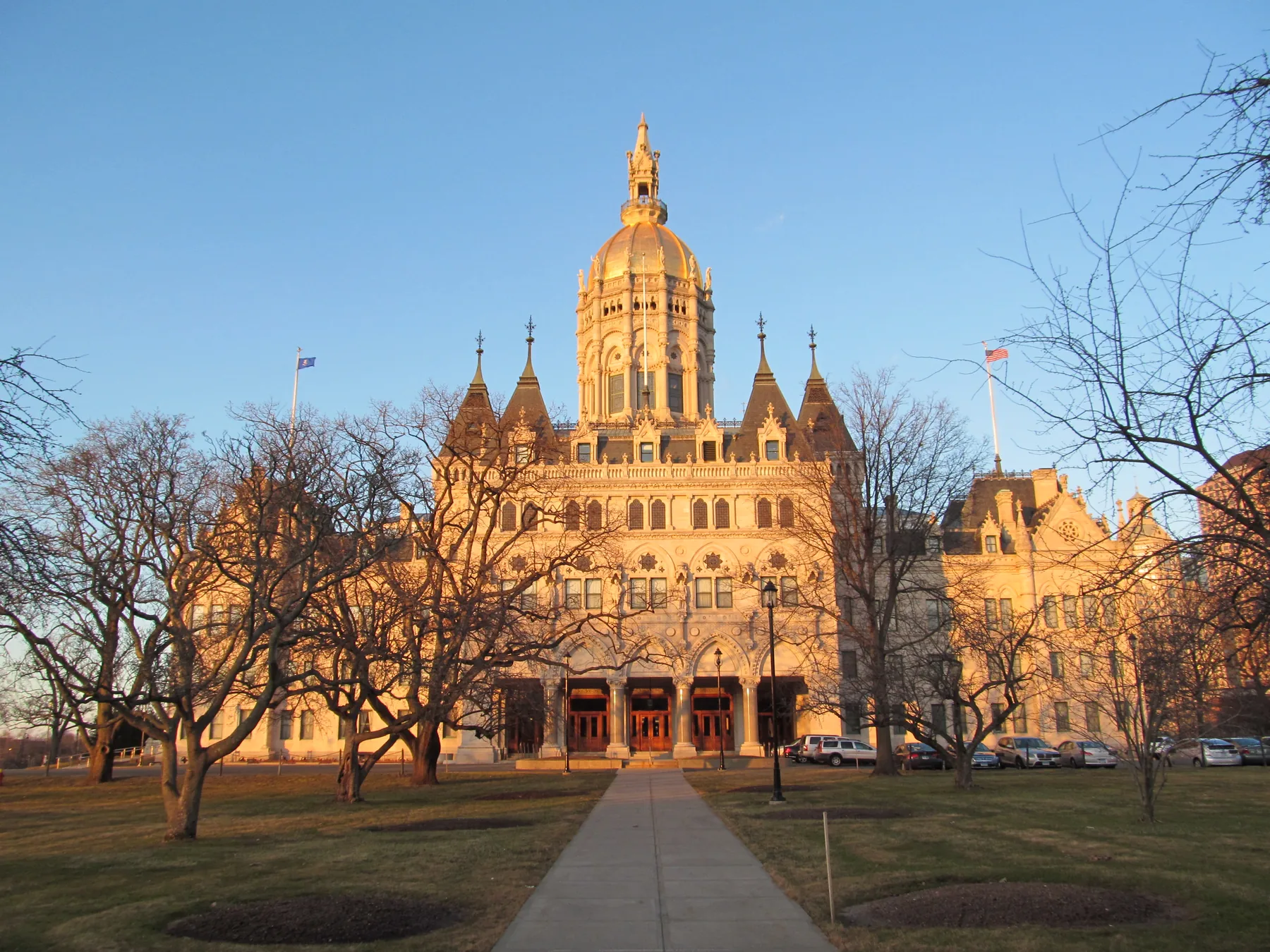
If you searched for CT flag status today, start with our live Connecticut flag-status page. It is the right place for the changing answer; this guide explains how to verify that answer and act on the official order.
Connecticut does not have just one status to check. The governor's official page reports the United States flag and the State of Connecticut flag separately. A directive can concern both flags, or in some circumstances the state flag alone. Before raising or lowering anything, identify which flag, which property, and which time period the notice actually covers.
Fast verification: check the live Connecticut page, open the official Connecticut Flag Status page, then read the newest relevant item in the Governor's press-release archive. Look for a later update or return-to-full-staff notice before treating an older lowering order as active.
This article stays deliberately evergreen: it does not repeat a FULL or HALF badge that may change after publication. Instead, it shows how to receive Governor's News Alerts, extract the controlling dates and locations from an order, distinguish state requirements from invitations to participate, compare federal and Connecticut instructions, and verify a past date. That process gives flag custodians a defensible answer even when a search snippet, saved email, or cached page is behind the newest official document.
Where to Check Connecticut's Current Flag Status
Use a short source chain, not a single search-result snippet. First, open Connecticut's live status and history page. It turns the changing status into a quick answer and keeps the supporting authority available. Second, compare the two indicators on the governor's official Flag Status page. The state describes that page as guidance, says it covers both the U.S. and Connecticut flags, and advises visitors to check back because it is routinely updated.
Third, open the newest relevant item in the Governor's press-release archive. Do not confuse “newest” with the first unrelated state-news headline. Search for terms such as flags
, the honoree's name, or full-staff
, and compare the publication dates and the effective times inside the releases.
- Identify the flags: Does the current record name the U.S. flag, the Connecticut flag, or both?
- Identify the operative window: Find the start and the stated end—especially words such as immediately, sunrise, sunset, noon, or interment.
- Look for a closure: Search for a later return-to-full-staff or amended notice before assuming the original instruction remains active.
A past Connecticut example shows why the third step matters. One August 2026 release initially said flags would remain lowered until sunset on an interment date that had not yet been determined. A later official release supplied a definite return time. The pair, rather than either headline in isolation, forms the complete historical record.
If a saved page, a search preview, and an official release disagree, do not guess based on where each result appears. Refresh the live pages, confirm that the notice is about flag operations, and follow the later operative instruction from the issuing authority. Record the URL and time you checked if you manage flags for an organization; that small audit trail is more useful than a screenshot with no source or timestamp.
How to Get Connecticut Governor Flag Alerts
Connecticut offers an official email option on the governor's news-update signup page. Enter the requested name and email information, then select the interest group labeled Flag Status Notifications. That choice is shown separately from Press Releases, so select the flag-specific group if lowering and return notices are your priority. You may choose broader news as well, but it is not a substitute for the dedicated selection.
Treat the email as an alert, not as the whole instruction. Open its official link and read the complete release before changing a flag. The headline may not tell you whether the notice covers the U.S. flag, the Connecticut flag, or both; whether it begins immediately or at sunrise; or whether it applies directly to your property. Those operational details belong in the release.
Do not make delivery assumptions. The state pages reviewed do not promise that every message will reach every inbox at a specific minute. Spam filtering, account settings, or ordinary delivery delays can leave an email behind the live record. Keep the Connecticut status page and the official archive bookmarked as independent checks.
For an organization, use a shared operational mailbox rather than making the process depend on one employee's personal inbox. Assign a primary and backup flag custodian, and keep a short checklist beside the flag controls: open the official notice, record the effective time, identify the flags and locations, and schedule the return check. When an order has no definite end date, do not invent one—watch for the promised follow-up notice.
If you stop receiving expected messages, revisit the signup form, confirm that the flag-status interest group is selected, and check filtering rules. Then verify directly on the official Flag Status page and press-release archive. Re-subscribing may help with future delivery, but only the published official instruction answers what must happen now.
How to Read a Connecticut Half-Staff Order
Read past the headline and extract six fields. This turns a ceremonial announcement into a usable instruction and exposes anything you still need to confirm.
| Field | Question to answer | Why it matters |
|---|---|---|
| Authority | Who issued or relayed the direction? | It identifies the jurisdiction and source to monitor for changes. |
| Flags | U.S., Connecticut, or both? | The two flags do not automatically share a status. |
| Start | Immediately, sunrise, or a stated date and time? | The publication date may precede the display date. |
| End | Noon, sunset, interment, or a fixed timestamp? | It determines when the flag returns to full-staff. |
| Locations | Which buildings, grounds, facilities, or groups are named? | A statewide message can still have property-specific scope. |
| Reason | Who or what is being honored? | It distinguishes overlapping notices and helps archive searches. |
Timing words are operational, not decorative. Effective immediately means the instruction begins when issued, while from sunrise to sunset defines a one-day display window even if the release was published earlier. A phrase such as until sunset on the date of interment supplies an ending rule, but not a usable calendar date if the interment has not been scheduled.
A dated Connecticut example illustrates the last point. On August 12, 2026, the governor's lowering release for former Lieutenant Governor Nancy Wyman named both U.S. and state flags, began immediately, and said the display would continue until sunset on an interment date that was not then determined. The office said it would issue another notification.
Four days later, a companion return notice directed flags to full-staff at sunset on August 16. These are historical examples, not a statement of today's status. They show why flag custodians should save the original URL and continue monitoring until an open-ended instruction receives a definite close.
Finally, separate the directive sentence from surrounding tribute text. The tribute explains the reason and deserves respect, but the operational paragraph normally carries the flags, locations, and duration. If a field is absent, mark it not stated and seek an official update; do not fill the gap from custom, a social post, or another state's order.
Connecticut Law Treats the U.S. and State Flags Differently
Connecticut General Statutes § 3-10f is the essential source for understanding why the two official status indicators can differ. The statute creates two paths; it does not say that every state tribute lowers every flag.
Under subsection (a), the governor may proclaim the national flag at half-staff after the death of a present or former principal figure of state government, or a member of the armed forces as defined in state law who is from Connecticut and dies in the line of duty. Once that proclamation is issued, the statute says state government buildings, offices, public schools, and military bases shall fly both the national flag and the state flag at half-staff.
Subsection (b) addresses a different category. After the death of a state official or prominent citizen, the governor may proclaim that the state flag be flown at half-staff. Once issued, the named state buildings, offices, public schools, and military bases shall fly the state flag at half-staff. The text does not add the U.S. flag to that subsection.
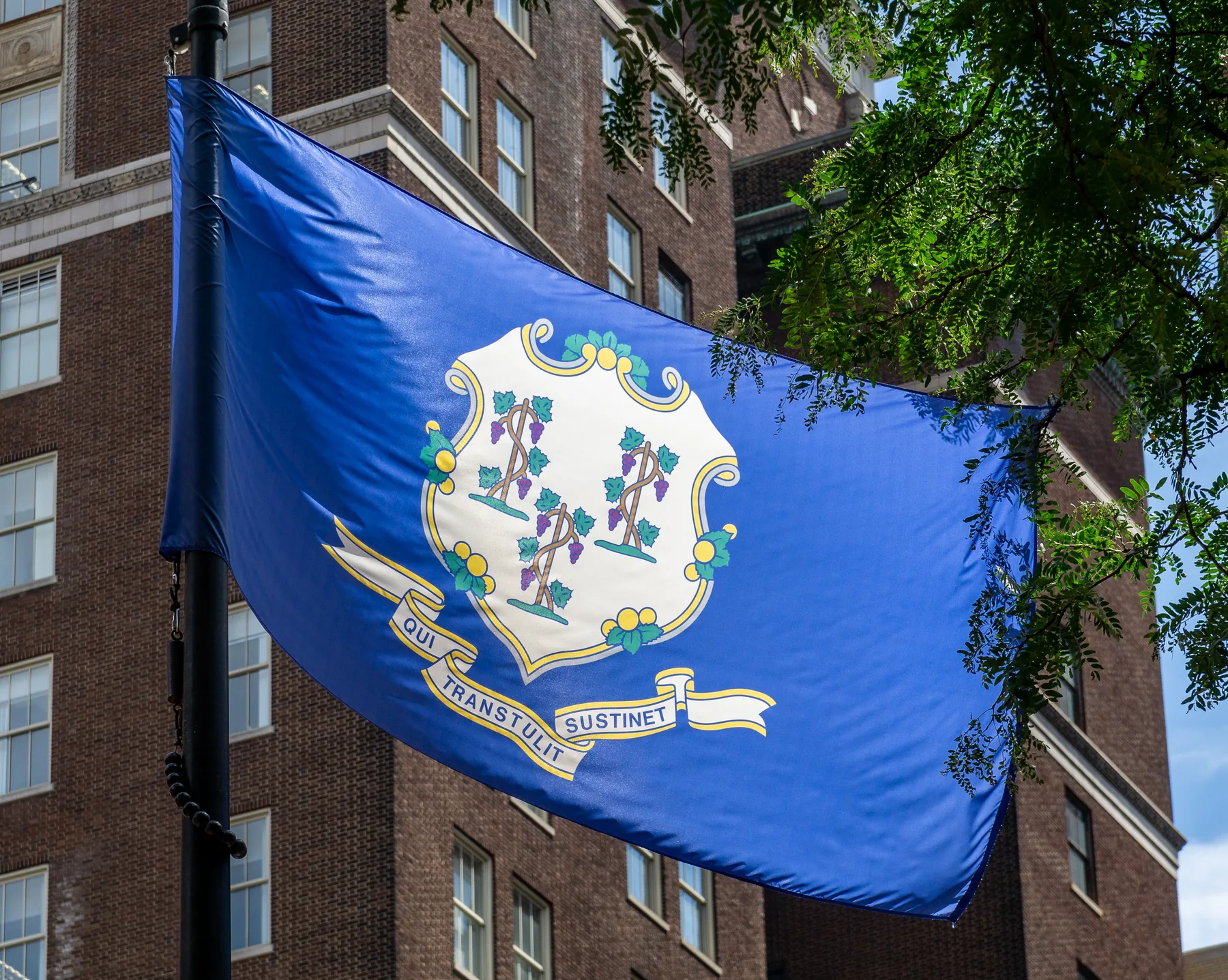
Read “may” and “shall” carefully. The governor may issue a proclamation in the circumstances described. After the applicable proclamation exists, the statute says the listed public sites shall follow the stated flag treatment. A news report about a death is not itself the proclamation.
The distinction is not merely theoretical. A November 2025 governor release concerning State Representative Kevin Ryan named only the State of Connecticut flag. Other releases expressly name both U.S. and state flags. These examples are historical evidence of how the distinction appears in practice, not instructions for today.
Accordingly, never infer the U.S. flag's position by looking only at a Connecticut flag. Read the active directive and compare both current indicators on the Connecticut status page. A separate federal order might also apply, but that is an independent source question addressed below.
Which Buildings and Flagpoles Are Covered?
Scope is where a correct status can become an incorrect instruction. Separate three layers: what the statute names, what the particular governor release directs, and whom that release merely invites to participate.
- State government sites: Connecticut law names state government buildings and offices. Recent governor notices commonly describe the Capitol and all state-operated buildings, grounds, and facilities statewide as the places where the directive will be carried out.
- Public schools and military bases: both appear in the facility list in § 3-10f after the applicable proclamation. A school employee should still use the current directive and instructions from the responsible district or administrator, not a search snippet.
- Municipal and other local property: many releases encourage municipalities and government subdivisions to match the state display. The word encouraged is not interchangeable with the statute's shall. A town can also provide operating directions for flagpoles it controls.
- Homes, businesses, and private organizations: these groups are frequently encouraged to participate for the same duration. If that is the wording, describe participation as invited—not as a state penalty-backed command.
- Federal installations: do not determine their duty from Connecticut's outreach paragraph. Federal law, presidential directions, and agency instructions may independently control those properties.
The difference appears plainly in a dated Connecticut 9/11 notice. It said flags would be at half-staff at the Capitol and all other state-operated buildings, grounds, and facilities. In the next sentence, it said individuals, businesses, schools, municipalities, private entities, and government subdivisions were encouraged to lower theirs. That grammatical shift is meaningful.
Do not use the word statewide as permission to erase these categories. It can describe geographic reach while the document still distinguishes directly operated property from outside participants. Equally, do not assume that every flag on a multi-flag display changes: return to the line naming the U.S. flag, Connecticut flag, or both, then follow any instruction about subordinate flags for that specific display.
For a workplace, school, or town, document who controls the pole and who is authorized to act. If the release and your internal instruction seem inconsistent, preserve the official URL and ask the responsible administrator for a prompt decision. This guide explains the source hierarchy; it does not replace the property owner's procedures or legal advice about a disputed duty.
When Federal and Connecticut Orders Overlap
A Connecticut flag custodian may face a presidential direction, a governor's proclamation, or both. Compare the current U.S. flag status with the Connecticut status; neither page should be treated as an invisible replacement for the other jurisdiction's source.
4 U.S.C. § 7(m) gives the President the central role in half-staff displays for principal figures of the federal government and sets several official durations. It also authorizes a governor to proclaim the national flag at half-staff for specified deaths involving present or former state officials, Armed Forces members from the state serving on active duty, and first responders working in the state who die in the line of duty.
That authority has an important federal-property exception to remember precisely. The statute says a federal installation or facility in the covered area follows a governor's proclamation when the proclamation concerns the death of an Armed Forces member under that provision. It does not say that every Connecticut tribute automatically directs every federal facility. Federal flag custodians should use their agency chain and the applicable federal instruction.
Connecticut sometimes publishes a state notice that expressly aligns with a presidential proclamation. For example, a September 2025 release said the governor was acting in accordance with a presidential proclamation and named both U.S. and state flags through a specified sunset. That is a useful model of documented alignment, but it is a historical example, not an active order.
Display procedure: federal law says a U.S. flag going to half-staff is first hoisted to the peak for an instant, then lowered. Before it is taken down for the day, it is raised to the peak again. Section 7(m) defines half-staff as halfway between the top and bottom of the staff.
Operationally, record the federal end and Connecticut end separately. If they differ, do not blend them into an average or assume the later date applies to every pole. Identify the owner and jurisdiction of each flagpole, follow the instruction that governs it, and reassess the remaining state or federal notice when the other one ends.
Timing, Return-to-Full-Staff Notices, and Historical Verification
Every verification should capture three dates: when the notice was published, when the display begins, and when it ends. Those dates are often different. Read them in Connecticut's local Eastern Time context, and retain the actual civic marker—sunrise, noon, or sunset—rather than converting it casually from your device's time zone.
A one-day order may be published several days before it takes effect. Connecticut's 2026 Peace Officers Memorial Day release, for example, was dated May 13 but directed a sunrise-to-sunset display on May 15. Publication was advance notice, not the starting signal.
Memorial Day needs special attention. A 2026 Connecticut notice directed both flags from sunrise only until noon, then stated that they would be raised promptly for the rest of the day. Do not copy that noon boundary to other observances; ordinary one-day notices frequently run through sunset.
How to reconstruct a past Connecticut status
- Start with the history tools on the Connecticut status page, searching the person, event, or target date.
- Search the official press-release archive by keyword, then narrow by month and year.
- Open the lowering notice and record the named flags, start, end condition, and locations.
- Search the following days for
return to full-staff
, the honoree's name, or an amended notice. Save that companion URL. - For an audit trail, record both publication dates and the exact operative interval; do not describe an unknown end as though it was known from the start.
The half-staff calendar is useful for recurring observances and advance staffing. It is not a substitute for an event-specific governor or presidential order. A death, tragedy, or amended funeral schedule may create a special window, while an annual observance can have an unusual boundary such as Memorial Day's noon change.
If you need to establish “yesterday,” use the Eastern date in question and documents published both before and shortly after it. A later return notice may be the clearest evidence of the exact closing time. Preserve what was officially knowable at each stage instead of backfilling the original notice with information announced later.
Connecticut Flag Status FAQ
What should I do if two status pages disagree?
Refresh both pages, confirm that you are comparing the U.S. flag with the U.S. flag and the Connecticut flag with the Connecticut flag, then inspect the newest relevant governor release. Compare its publication date with the instruction's effective time and search for a later return or amendment. A search snippet may represent an earlier crawl; an official document with a later operative instruction is better evidence. If your organization controls the pole, record the sources and check time.
Are the U.S. and Connecticut flags always at the same position?
No. Connecticut § 3-10f includes a path under which the governor may proclaim the state flag at half-staff for a state official or prominent citizen. Other proclamations name the national and state flags together. A presidential order can also affect the U.S. flag. Check both indicators and the flags explicitly named in the active order.
Must towns, schools, businesses, and homeowners follow every notice?
Do not apply one answer to all four groups. The state statute names state government buildings, offices, public schools, and military bases after an applicable proclamation. Governor releases commonly say that municipalities, individuals, businesses, schools, private entities, and government subdivisions are encouraged to participate, while separately describing state-operated facilities. Read the exact current notice and follow instructions from the authority responsible for your property.
Will an email alert tell me exactly when to raise the flag?
It may link to an order with a definite sunset, noon, or other endpoint. Some initial notices instead tie the end to interment and say another notification will follow. In that situation, keep monitoring the official status page and archive. The signup service is valuable, but no reviewed page promises delivery at a particular minute, so it should not be your only check.
How can I verify yesterday's status or another past date?
Search the history on the Connecticut status page, then open the original government source. Search the governor archive using the event, person's name, and the surrounding month. Look after the target date for a return notice. Record the Eastern-time start and end, flags, scope, and both source URLs when a pair exists.
Is “half-mast” wrong when asking about Connecticut?
People commonly search flag status today in CT
with either phrase, and the intent is clear. In U.S. law and Connecticut's official notices, half-staff is the standard term for a flag on land. Half-mast is traditionally associated with ships and naval settings. The vocabulary difference should not distract from verifying the flag, location, and time.
What is the fastest reliable answer right now?
Open Connecticut's live flag-status page, compare the U.S. and state entries, and follow the source link. If a nationwide instruction may be involved, compare the U.S. status as well. Then read the newest relevant governor notice through its return time. That takes a little longer than trusting a headline, but it produces an answer you can explain and document.
Comments
Comments are reviewed before publication.
Sign in with Google to join the discussion.
Loading comments…