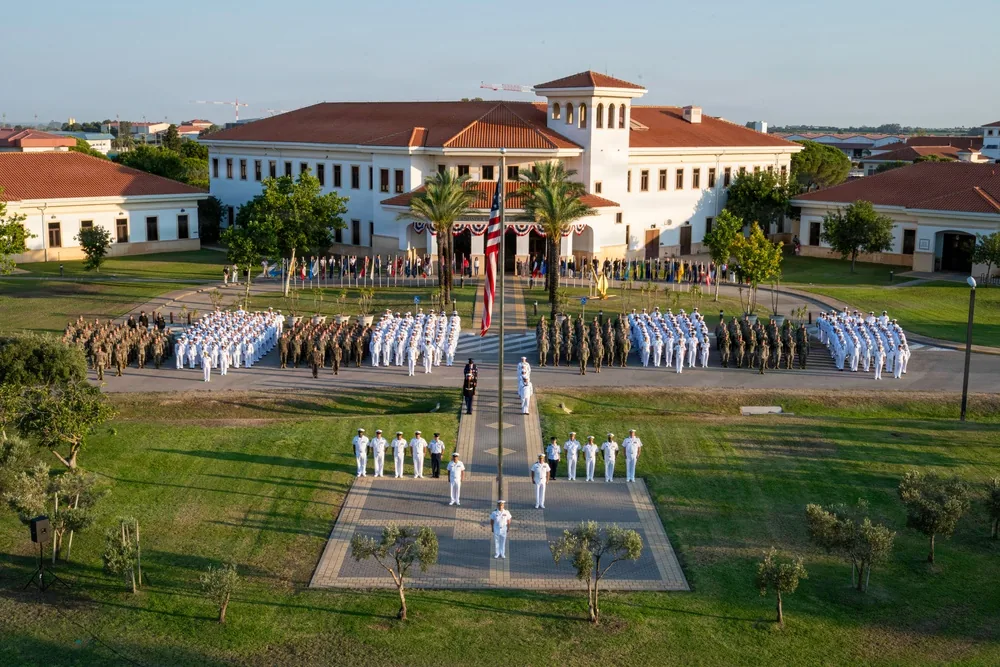
You can display the American flag every day in 2026. The U.S. Flag Code says it should be displayed on all days and gives certain holidays and observances special emphasis; those dates are reminders, not the only permitted days. This printable planning guide maps the Code's national dates to the 2026 calendar and keeps optional additions clearly labeled. It covers normal display planning, generally from sunrise to sunset or after dark with proper illumination. It is not a half-staff calendar: a current presidential or governor order can change the correct position on any date, and Memorial Day has a noon transition. Before treating any row as full-staff, check the site's current status and half-staff calendar.
Can you fly the American flag every day in 2026?
Yes. The controlling phrase in 4 U.S.C. § 6(d) is “displayed on all days, especially” the dates that follow. A household, school, office, or organization does not need to wait for a federal holiday. The listed days are useful prompts for people who raise a flag only for important occasions and for facilities that want a documented annual plan.
For a normal outdoor display on a building or stationary staff, the traditional schedule runs from sunrise to sunset. If you want the flag to remain up overnight, Section 6(a) permits 24-hour display when a patriotic effect is desired and the flag is properly illuminated during darkness. A calendar reminder marked “all day” should therefore include a lighting check; the label alone does not make an unlit nighttime display proper.
Weather is part of the daily decision. Section 6(c) says not to display the flag in inclement weather unless it is an all-weather flag. Even an outdoor-rated flag should come down when severe wind, lightning, ice, or another hazard makes damage or handling likely. The planner can remind you to inspect conditions, but it cannot replace a same-day forecast or a site's safety procedure.
Use one of two routines. For attended daytime display, schedule a sunrise opening task and a sunset closing task, with brisk hoisting and ceremonial lowering. For continuous display, schedule a monthly light test and periodic fabric, clip, halyard, and pole inspection. In both cases, assign a named person and a backup; a calendar without ownership is easy to ignore.
Finally, “a day to fly the flag” does not automatically mean “full-staff from sunrise to sunset.” An active mourning order may change the position and covered properties. This guide supplies the date plan; the live status source supplies the position. Keep those two decisions separate so an annual printable never overrides a newer official instruction.
Which 2026 dates come directly from the U.S. Flag Code?
The quarterly lists below use three authority labels. “Code—national” means the date or recurrence rule appears directly in 4 U.S.C. § 6(d). “Code—add locally” covers state admission anniversaries, state holidays, and newly proclaimed days, which the same section recognizes but a single national printable cannot calculate for every user. “Optional” means a facility may choose to add a meaningful civic, military, local, or organizational commemoration that is not part of the core national § 6(d) list.
| Printable label | What it means | What to do |
|---|---|---|
| Code—national | Named date or movable rule in 4 U.S.C. § 6(d) | Preload the 2026 date and assign normal display tasks |
| Code—add locally | State birthday, state holiday, or new presidential proclamation | Add only after checking the relevant official source |
| Optional | Other observance selected by your household or organization | Label it optional so it is not confused with the statutory list |
There is no Inauguration Day row for 2026. Although Section 6 names “Inauguration Day, January 20,” an inauguration is not an annual event. The Office of Personnel Management and National Archives describe the four-year presidential cycle: the 2024 election was followed by the January 20, 2025 inauguration, and the next regular presidential inauguration is in 2029. Printables that label January 20, 2026 as Inauguration Day have copied the date without its condition.
Use the legal name “Washington's Birthday” for the third Monday in February. Many calendars call the holiday Presidents Day, and a facility may include that familiar name in parentheses, but the federal statutory name and the Flag Code label remain Washington's Birthday. Likewise, mark the actual patriotic date rather than automatically substituting an employer's Friday or Monday paid day off when a fixed-date holiday falls on a weekend.
Finally, add a blank line for your state's admission date and state-specific holidays. Section 6(d) expressly calls out both, but their relevance depends on location. Public institutions, polling places, and schools also have separate daily/election-day/school-day language in subsections (e) through (g). A facilities calendar may need those operating rules even when a home printable uses only the special-emphasis dates.
January through March 2026 flag flying days
| Date | Day | Flag Code occasion | Planning note |
|---|---|---|---|
| January 1 | Thursday | New Year's Day | Confirm the holiday backup assignment before year-end staffing begins |
| January 19 | Monday | Martin Luther King Jr.'s Birthday | Use the third-Monday date, not January 20 |
| February 12 | Thursday | Lincoln's Birthday | Keep this row even though it is not a federal employee holiday |
| February 16 | Monday | Washington's Birthday | “Presidents Day” may be added in parentheses for local familiarity |
| March 29 | Sunday | National Vietnam War Veterans Day | Plan weekend access if the flag is not displayed continuously |
January 1 opens the annual checklist. If the site closes for the holiday, decide in December whether a custodian will raise and lower the flag or whether a properly illuminated continuous display will remain in service. Do not leave that choice to whoever happens to arrive first on Thursday morning.
January 19 is the third Monday and therefore the 2026 date for Martin Luther King Jr.'s Birthday. January 20 is deliberately absent: 2026 is not a presidential inauguration year. This is one of the most common mistakes in downloadable flag calendars because the words “January 20” are copied without the four-year condition.
February has two separate Code dates. Lincoln's Birthday is fixed on February 12. Washington's Birthday follows the third-Monday rule and falls on February 16 in 2026. Do not replace the fixed Lincoln row with February 22, and do not copy a “Presidents Day” date from another year's calendar. For workplace coordination, the OPM 2026 schedule confirms February 16.
National Vietnam War Veterans Day falls on Sunday, March 29. Congress added this date to Section 6(d) in 2017, and VA's current 2026 observance page confirms the annual date. A school or office closed on Sunday can still plan a continuous exterior display, arrange authorized weekend access, or record that its standing daily flag remains in place under the facility's normal lighting and weather procedure.
April through June 2026 flag flying days
| Date | Day | Flag Code occasion | Planning note |
|---|---|---|---|
| April 5 | Sunday | Easter Sunday | Confirm weekend staffing or continuous-display lighting |
| May 10 | Sunday | Mother's Day | Second Sunday in May |
| May 16 | Saturday | Armed Forces Day | Third Saturday in May; check weekend access |
| May 25 | Monday | Memorial Day | Half-staff until noon, then full-staff; verify the exact plan |
| June 14 | Sunday | Flag Day | Inspect the flag before the most flag-focused date of the year |
| June 21 | Sunday | Father's Day | Third Sunday in June |
All six core dates come from Section 6(d), and the current VA 2026 list confirms the movable-date calculations. Because five of the six fall on a weekend or Monday, a workplace that normally relies on weekday staff should arrange access, lighting, or a documented continuous-display procedure before the quarter begins.
Memorial Day needs its own operational note. It is a flag-flying day, but it is not a normal full-staff-from-sunrise row: the Code places the flag at half-staff until noon and then at full-staff for the rest of the day. Use the half-staff calendar for the time boundary and the flag-position guide for the correct peak-to-half-staff-to-peak sequence. The printable should prompt that check rather than duplicate the site's lowering calendar.
Flag Day is Sunday, June 14. Treat the week before it as a maintenance deadline: inspect the fly end, seams, clips, halyard, bracket, lighting, and clearance so a damaged display is not discovered on Sunday morning. GovInfo's 2026 Flag Day feature confirms that June 14 is the annual permanent observance tied to the 1777 adoption of the Stars and Stripes.
Juneteenth National Independence Day falls Friday, June 19 and is a federal holiday, but current Section 6(d) does not name it in the core list. Since the same section encourages display on all days, adding Juneteenth is entirely compatible with the calendar. Label it “optional/local policy” so readers can distinguish a useful modern addition from a date quoted directly from the Flag Code.
July through September 2026 flag flying days
| Date | Day | Flag Code occasion | Planning note |
|---|---|---|---|
| July 4 | Saturday | Independence Day | Use the actual date even though many federal employees receive Friday off |
| July 27 | Monday | National Korean War Veterans Armistice Day | Fixed date in current 4 U.S.C. § 6(d) |
| September 7 | Monday | Labor Day | First Monday in September |
| September 17 | Thursday | Constitution Day | Coordinate with any school or civic program |
Independence Day falls on Saturday in 2026. OPM lists Friday, July 3 as the in-lieu holiday for most federal employees, but the Flag Code's fixed patriotic date remains July 4. A federal office may need a Friday closure plan and a separate Saturday display plan; a home calendar should simply mark Saturday.
July 27 is the National Korean War Veterans Armistice Day row named in current Section 6(d). Use the current Title 4 text as the controlling calendar source. Some older Title 36 materials describe a time-limited version of the observance, which can confuse a search, but Congress added the date to the continuing Flag Code list in 2009.
August has no national date expressly listed in Section 6(d). That does not mean the flag should stay down for the month: every day remains appropriate. Add your state's admission anniversary, any state holiday, and selected local or service observances under the “Code—add locally” or “optional” legend instead of inventing a national Flag Code category.
September 7 is Labor Day, using the first-Monday rule. September 17 is Constitution Day and Citizenship Day; Title 36 also encourages government display and civic or educational observance. September 11 is intentionally not printed here as an ordinary full-staff row. Patriot Day has a separate half-staff framework, so check the half-staff calendar and the current flag status rather than letting a normal-display printable decide the position.
October through December 2026 flag flying days
| Date | Day | Flag Code occasion | Planning note |
|---|---|---|---|
| October 12 | Monday | Columbus Day | Second Monday in October; use the current statutory name in the source label |
| October 27 | Tuesday | Navy Day | A Flag Code date, although it is not an OPM federal employee holiday |
| November 11 | Wednesday | Veterans Day | Fixed date; inspect the display before any public ceremony |
| November 26 | Thursday | Thanksgiving Day | Fourth Thursday in November; arrange holiday coverage |
| December 25 | Friday | Christmas Day | Plan access, lighting, and weather response during the closure |
These five rows complete the national Section 6(d) list for 2026. OPM's holiday calendar verifies October 12, November 11, November 26, and December 25, while the current Flag Code and VA's 2026 display list preserve October 27 as Navy Day. That distinction matters: an occasion can be a Flag Code display date without being a paid federal holiday.
Election Day is Tuesday, November 3, 2026. Section 6(f) says the flag should be displayed in or near every polling place on election days, so an election administrator, school serving as a polling location, or facilities team should add that assignment. The rule is location-specific; it does not turn November 3 into another national special-emphasis row for every private home. Households may still fly the flag under the all-days principle.
December 7 also needs deliberate handling. National Pearl Harbor Remembrance Day is not treated here as an ordinary full-staff display row because 36 U.S.C. § 129 calls for a presidential request to fly the flag at half-staff. Put a reminder on the printable to check the half-staff calendar and follow the position procedure instead of assuming that the normal quarterly table supplies the position.
The final quarter contains several days when offices, schools, and households may be closed or lightly staffed. Assign a named primary and backup person, decide whether the flag will be lowered at sunset or illuminated overnight, and record who can respond to severe weather. A printable is useful only when each date has an owner and the physical display is ready.
How to print and use this 2026 flag display calendar
Use your browser's print command to turn the quarterly tables on this page into a working sheet. Select portrait or landscape according to the preview, choose a readable scale that keeps table rows together, and switch off browser headers and footers if they cover the content. Print the date tables plus this checklist; this page does not pretend that a separate PDF download is attached.
| Fill-in field | Your 2026 plan |
|---|---|
| State admission date and state holidays | ________________________________ |
| Primary flag custodian and phone | ________________________________ |
| Backup custodian and access method | ________________________________ |
| Lighting, halyard, bracket, and weather inspection dates | ________________________________ |
| Where current position orders will be checked | ________________________________ |
Before printing, preserve the labels that explain where each row comes from. “Code—national” means the occasion is expressly in Section 6(d). “Code—add locally” covers state birthdays, state holidays, proclamations, and facility-specific rules. “Optional” lets a household, school, business, or veterans organization include meaningful observances without representing them as statutory rows. That labeling makes the sheet easier to audit next year.
A household can keep the plan simple: circle dates for an early hardware inspection, write down whether the flag normally comes in at sunset, and keep the sheet near the storage area. A public facility should add assigned staff, after-hours access, backup contacts, work-order numbers, and holiday coverage. Polling places and schools should also review their specific Section 6 provisions instead of relying only on the national date list.
Review the sheet at the start of every quarter. Check the current flag status and half-staff calendar again before each marked day, because an intervening presidential or governor order can change the position. For Memorial Day and any lowering order, use the position guide. A laminated annual sheet is helpful for assignments, but it can never freeze future mourning orders or local instructions.
What should you check before each flag flying day?
- Check the required position. A normal display calendar answers when to plan a display, not whether today's flag belongs at full-staff or half-staff. Consult the current status, the date calendar, and any official state notice close to the actual day. Record who performed the check and when.
- Inspect the flag. Look for fading, tears, opened seams, a badly frayed fly end, stains, or damage around the grommets. VA describes ripped, faded, frayed, or otherwise damaged flags as unserviceable. Replace a flag that is no longer a fitting emblem rather than scheduling it for another prominent occasion.
- Inspect the mounting system and clearance. Test the halyard, clips, pulley, cleat, pole, wall bracket, and any anti-wrap hardware. Confirm that the flag will not scrape a roof, gutter, tree, vehicle, ground, or water as wind direction changes. The Code's respect rules and VA guidance both emphasize preventing contact, soil, and damage.
- Choose the time, weather, and lighting plan. For a customary daytime display, know local sunrise and sunset and assign both raising and lowering. A 24-hour display needs proper illumination during darkness. An all-weather flag can remain out in inclement weather under the Code's exception, but material rating does not make unsafe wind, icing, a failing pole, or inadequate clearance acceptable.
- Confirm the exact position and sequence. Normal display means the union at the peak on a projecting staff and the correct place of honor when other flags are present. For half-staff, first hoist to the peak, lower to half-staff, and return to the peak before final lowering. Memorial Day changes from half-staff to full-staff at noon.
If any check fails, postpone the display, replace the equipment, or use a safe indoor display that follows the appropriate orientation rules. Do not improvise a “half-staff” angle on a short house staff or allow a flag to drag because a date is printed in bold. Respectful planning includes deciding not to use an unsafe or unsuitable setup.
Keep the completed sheet with the flag equipment and review assignments after staffing, access, or lighting changes. For deeper explanations of display customs and future updates, visit the flag guidance library. The best 2026 calendar is not the one with the most dates; it is the one that clearly separates source types, prompts current-status checks, and turns each display into a safe, assigned action.
Comments
Comments are reviewed before publication.
Sign in with Google to join the discussion.
Loading comments…