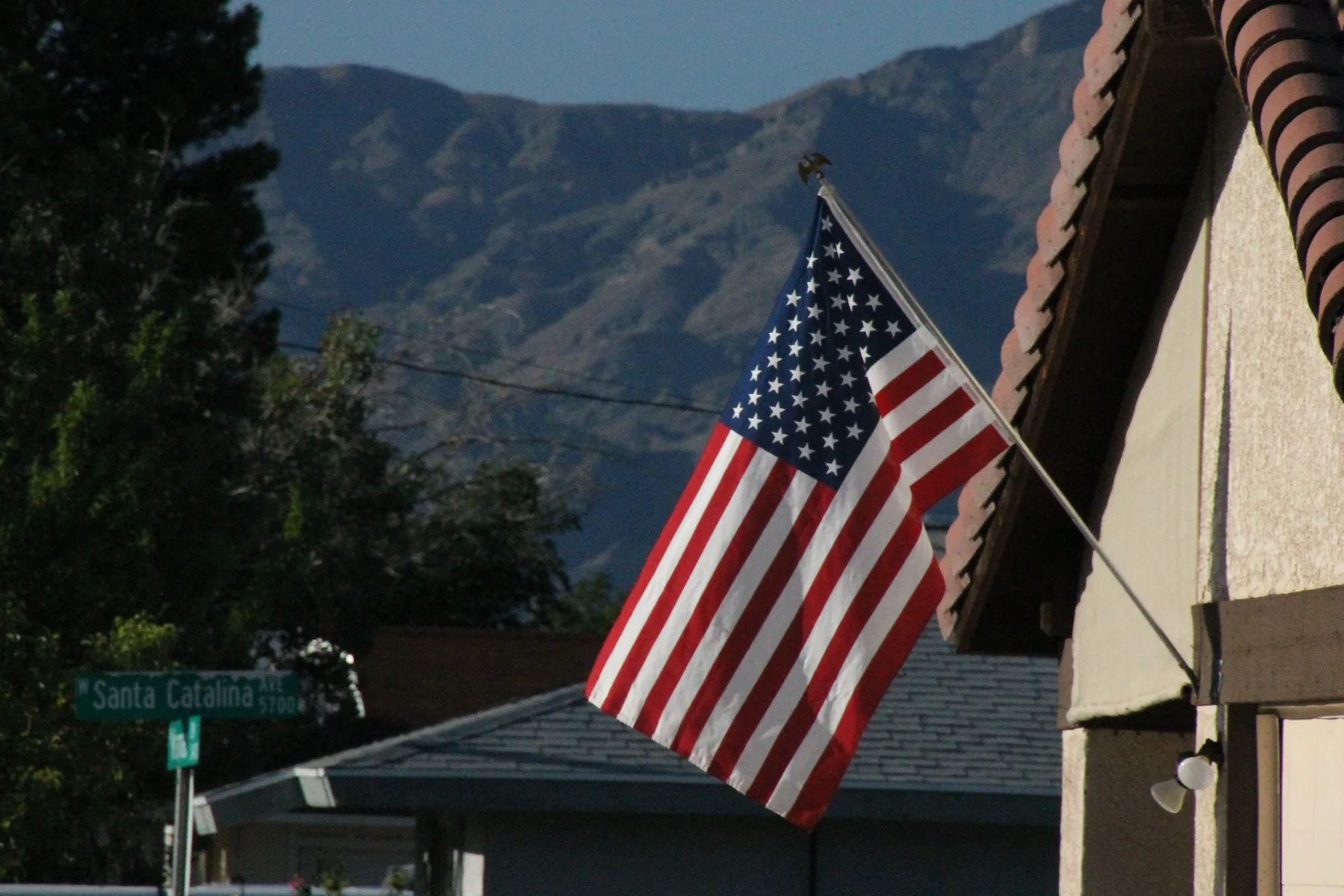
At home, display the American flag with the union in the correct place, keep the cloth clear of the ground and nearby objects, and choose either a sunrise-to-sunset routine or proper illumination after dark. An outdoor flag may remain up in bad weather only if it is an all-weather flag, and even then the pole, bracket, wind, ice, and clearance must be safe. A projecting porch staff, a wall display, a window, and a freestanding yard pole each require a different position check. Before lowering any flag, confirm that a current federal or state half-staff direction applies to your location. The Flag Code supplies national customs; a sound home plan adds secure hardware, realistic maintenance, local rules, and a named person who will bring the flag in when conditions change.
Start with the five rules every home display needs
| Check | Homeowner test | If it fails |
|---|---|---|
| Position | The union and the flag's place of honor match the display type | Reorient or relocate before displaying |
| Time | The flag comes down at sunset or remains recognizable under light after dark | Assign lowering or add reliable illumination |
| Weather | Material, pole, bracket, and clearance suit the actual conditions | Bring it in; “all-weather” is not “all hazards” |
| Condition | Cloth, seams, grommets, halyard, and fasteners are serviceable | Repair safely or replace the display |
| Status | Today's full-staff or half-staff position was checked from a current source | Check the live national status and applicable state notice |
The Flag Code gives the same core customs to a private household as it gives other civilian users, but the physical solution depends on the house. Section 6 covers time, illumination, and weather. Section 7 covers orientation and the position of honor. Section 8 covers respect, contact, fastening, damage, and fitness for display. None of those sections selects a bracket for your siding or certifies a pole for a particular wind load.
That legal-versus-practical distinction prevents two common errors. First, do not turn sensible installation advice into a federal mandate. The Code does not prescribe a residential pole height, a particular flag size for every porch, a spotlight model, or a wind-speed cutoff. Second, do not treat the Code's all-weather exception as a safety guarantee. A nylon flag can still be damaged, and a loose bracket or ice-loaded pole can still endanger people or property.
Use the table as a go/no-go test every time the display changes. Run it when you move from a wall flag to an angled porch staff, add a state or service flag, begin overnight display, or receive a weather alert. A setup that passes in calm daylight may fail after dark or in a different wind direction.
Finally, separate “when to display” from “where on the staff.” The Code encourages display on all days and especially on named occasions, but a special date does not automatically mean full-staff. A new presidential or governor direction can change the position. An evergreen home guide can teach the procedure; only a current notice and location check can answer today's status.
How to mount an American flag on a porch or house bracket
For the familiar angled staff projecting from a porch post, balcony, window area, or front wall, place the union—the blue field of stars—at the peak of the staff. In an ordinary sleeve-mounted home flag, that means the union sits nearest the finial and away from the building bracket. Section 7(h) states this rule for both angled and horizontal projecting staffs.
- Mock up the full sweep. Hold the assembled staff and flag at the proposed location. Check the cloth at rest and imagine it extending, dropping, and wrapping in changing wind. It must clear steps, railings, plants, gutters, lights, doors, vehicles, people, and the ground.
- Choose a structural attachment. Follow the bracket and fastener manufacturer's instructions for the wall material and expected loading. A screw that only grips thin trim or siding can loosen even if the flag itself is light. Building rules, electrical clearances, rental terms, and local wind conditions are outside the Flag Code but remain part of a safe installation.
- Seat and secure the staff. Confirm that the staff cannot bounce out of the holder, rotate the union downward, or let the flag slide toward the bracket. Test anti-furl or rotating hardware without assuming it will eliminate every wrap.
- Walk the public view. Step to the sidewalk or primary approach. Verify that the union is at the peak, the flag falls freely, and no decoration, roof edge, or second flag takes a superior position.
The Flag Code does not prescribe a universal residential pole height, flag size, bracket angle, finial, or number of fasteners. Size charts and a flag-length-to-pole ratio can be helpful product guidance, but they are not Section 7 requirements. Choose a combination that the listed hardware can carry and that fits the available clearance without brushing or sagging.
A rope running from a house to a pole across a sidewalk is a different arrangement. The Code says that flag should be hoisted out union first from the building. Do not apply that rope language to a standard socket-mounted porch staff. For the common angled bracket, the simple rule is union at the peak, secure mounting, and enough space for the fabric to remain aloft and free from damage.
How to hang the flag on a wall or in a window
| Display | Where the union belongs | Viewpoint |
|---|---|---|
| Horizontal on a wall | Upper left | Person facing the finished display |
| Vertical on a wall | Upper left | Person facing the finished display |
| In a street-facing window | Upper left | Observer outside in the street |
The table translates Section 7(i)'s formal wording: the union should be uppermost and to the flag's own right, which is the observer's left. Rotating a flag from horizontal to vertical does not move the union to the opposite top corner. Stand in front of the completed wall display; the blue field should be at your upper left.
A window creates an easy reversal mistake because the installer usually works from inside. The Code defines the relevant view as the observer in the street. Temporarily tape a paper marker where the union will sit, walk outside, and look back at the window before fastening the flag. From that exterior viewpoint, the marker belongs at the upper left. Do not rely on how it looks from the room.
Keep the flag flat or let it hang so its folds fall free. Use enough clean, appropriate attachment points to support the fabric without concentrating its weight on a weak corner. The Code does not specify a brand of hook, nail, clip, or frame, but Section 8 says the flag should not be fastened in a manner that permits easy tearing, soil, or damage. Check wall texture, sharp edges, vents, heaters, doors, pets, and furniture before choosing the location.
A flag is not a curtain, ceiling covering, table throw, or gathered decoration. If the design goal requires swags or folded fabric, use red-white-blue bunting instead of drawing the flag back in folds. On an outdoor wall, also apply the night and weather checks in the next sections; correct orientation alone does not make an exposed display serviceable.
Night display: what “properly illuminated” means at home
You have two straightforward choices after sunset: bring the flag in, or illuminate it through the hours of darkness. Section 6(a) does not require 24-hour display. It describes sunrise to sunset as the universal custom and allows an overnight display when a patriotic effect is desired and the flag is properly illuminated.
| Question | Flag Code answer | Homeowner action |
|---|---|---|
| Must I buy a dedicated flag light? | No fixture type is specified | Use a reliable source that makes the flag clearly recognizable |
| Is there a federal residential lumen or lux number? | No number appears in § 6(a) | Judge the finished display at night, not from a daytime product claim |
| Can a porch light work? | The Code states an outcome, not a fixture | Confirm visibility throughout the flag's movement; add aimed light if needed |
| What if the light fails? | The display is no longer properly illuminated | Restore the light or lower the flag |
The American Legion's practical test is useful: the flag should be clearly visible and recognizable to a casual observer. A dedicated spotlight is often the dependable solution, but a bright, well-placed porch or landscape light can meet that visibility outcome. Conversely, a decorative glow on the wall may not reach the fabric when wind carries it away from the house.
Run the test after full darkness. Look from the sidewalk or normal public viewpoint while the flag hangs still, extends in a breeze, and moves through its likely arc. Check whether the union and stripes remain identifiable, whether half the flag disappears in shadow, and whether glare blinds the observer. Re-aim the fixture or add coverage instead of lighting only the pole.
Use a dusk-to-dawn sensor, astronomical timer, or documented manual routine, then inspect it periodically. Keep outdoor fixtures and connections suitable for their location and follow electrical, manufacturer, and local rules. Trim vegetation that blocks the beam, clean lenses, and retest after moving a bracket. A power outage, failed lamp, or changed timer is a display issue, not merely a maintenance note.
Do not copy an institutional engineering number into a household rule. VA's facility design manual, for example, specifies illuminance, color temperature, glare control, and photocontrols for VA projects. Those criteria can inspire good design, but they are not a nationwide residential threshold in the Flag Code. For a home, the defensible standard remains proper illumination in darkness, verified at the actual display.
Rain, snow and wind: when an all-weather flag is not enough
Section 6(c) says the flag should not be displayed in inclement weather unless an all-weather flag is used. That exception answers a material question; it does not declare every storm safe. Read it with Section 8(e), which says the flag should not be displayed or fastened in a way that permits it to be easily torn, soiled, or damaged.
| Condition | Question to ask | Practical response |
|---|---|---|
| Light rain | Is the flag labeled all-weather, colorfast, and clear of surfaces? | It may remain up; inspect it after drying |
| Snow or freezing rain | Can ice add weight, bind a halyard, or pull the cloth into a roof or railing? | Bring it in before icing begins |
| Strong or gusty wind | Are the flag, pole, bracket, fasteners, branches, and nearby objects within safe limits? | Remove the flag before conditions deteriorate |
| Thunderstorm or warning | Would retrieval expose someone to wind, lightning, debris, or slippery surfaces? | Prioritize people; do not go out into danger |
The Flag Code does not publish one residential wind-speed cutoff. Flags vary in area and construction; house brackets, wall substrates, yard poles, halyards, and local exposure vary even more. Use the manufacturer's limits for the complete setup, monitor official forecasts and warnings, and choose a conservative take-down point while the job is still safe.
Prepare before the storm. The National Weather Service advises securing outdoor items and trimming branches away from houses and power lines. Add the flag to that routine: lower it, dry it if needed, store it where it cannot mildew or snag, secure the empty staff or remove it if the hardware permits, and keep people away from electrical lines. Never climb, handle a conductive pole near wires, or fight a loaded flag during dangerous wind.
After weather passes, inspect more than the cloth. Look for a stretched sleeve, torn grommet, opened seam, frayed fly end, bent staff, loose screws, cracked bracket, abraded siding, jammed pulley, and shifted light. Check clearance again because branches and fixtures may have moved. An all-weather flag that survives one storm can still be weakened for the next.
If your routine depends on remembering a forecast at the last minute, redesign it. A quick-release but secure attachment, reachable halyard, designated backup person, protected storage point, and alert reminder make respectful removal realistic. “All-weather” should reduce needless trips in ordinary rain; it should never pressure a homeowner to leave an unsafe display in service.
Other flags, contact, cleaning and replacement
When a state, city, service, POW/MIA, team, or organization flag shares one halyard with the American flag, the U.S. flag belongs at the peak. On adjacent staffs, it is hoisted first and lowered last, and no state, local, or organizational flag should occupy a superior position. A flag of another nation is different: in peacetime, national flags use separate staffs of the same height and approximately equal size.
At a house, the simplest error-proof arrangement is often one flag per bracket or only the U.S. flag on the primary pole. If you add another, check both the formal precedence and the new physical load. A second flag can make a wall bracket twist, reduce clearance, tangle around the staff, or exceed the pole manufacturer's rated flag area even when the visual order is correct.
If the flag touches the ground, do not panic and do not automatically destroy it. Section 8(b) says it should not touch the ground, floor, water, merchandise, or anything beneath it; the preventive rule still matters. After accidental contact, retrieve it carefully, inspect both sides, and decide whether it remains a fitting emblem. The American Legion confirms that a serviceable flag may be cleaned and returned to display.
Follow the manufacturer's care label for washing or dry-cleaning, dye stability, water temperature, and drying. Do not assume every cotton, nylon, polyester, embroidered, printed, indoor, or historic flag accepts the same treatment. Minor repair is not prohibited, but a patch or shortened edge should not leave the flag distorted, visibly makeshift, or likely to tear again. Inspect seams, stars, stripe edges, heading, sleeve, and grommets in good light.
Replace the flag when fading, fraying, tearing, staining, or structural damage means it is no longer a fitting emblem for display. Section 8(k) calls for dignified destruction, preferably by burning, but that wording is not permission to create a fire or fumes hazard. Synthetic flags can be unsuitable for home burning. A veterans service organization can often accept an unserviceable flag, and VA points owners to VSOs for retirement help.
For a fuller treatment of current Section 8—including the 2024 amendment concerning limited respectful horizontal carrying at military or patriotic observances—use a current-edition U.S. Flag Code explainer. That amendment did not erase the home's contact, fastening, damage, or fitness rules. Using a current source prevents an older brochure from being mistaken for the only legal text.
How half-staff works at a private home
Before moving a flag, confirm that an order or recurring observance is in effect and read its scope. The current half-staff status is the fastest starting point; the half-staff calendar helps with recurring dates. A presidential order, a governor's order, and a Washington, D.C. mayoral order can cover different jurisdictions and facilities. Private homeowners commonly participate as a voluntary mark of respect, but an official order should not be paraphrased as a blanket legal command to every residence.
On a pole with a working halyard, use the complete sequence in Section 7(m):
- Hoist the flag briskly to the peak for an instant.
- Lower it to a point exactly halfway between the top and bottom of the staff.
- Keep it there for the period specified by the applicable order or observance.
- Before taking it down for the day, raise it to the peak again, then lower it ceremoniously.
“Half-staff” is a position, not a general description of “lower than usual.” Sliding a flag a few inches down a short porch staff does not create the midpoint that the statute defines. Also remember the Memorial Day exception: the flag is at half-staff only until noon, then raised to the peak for the remainder of the day. Our flag-position guide gives a visual refresher, but the current order controls the dates and duration of a special mourning period.
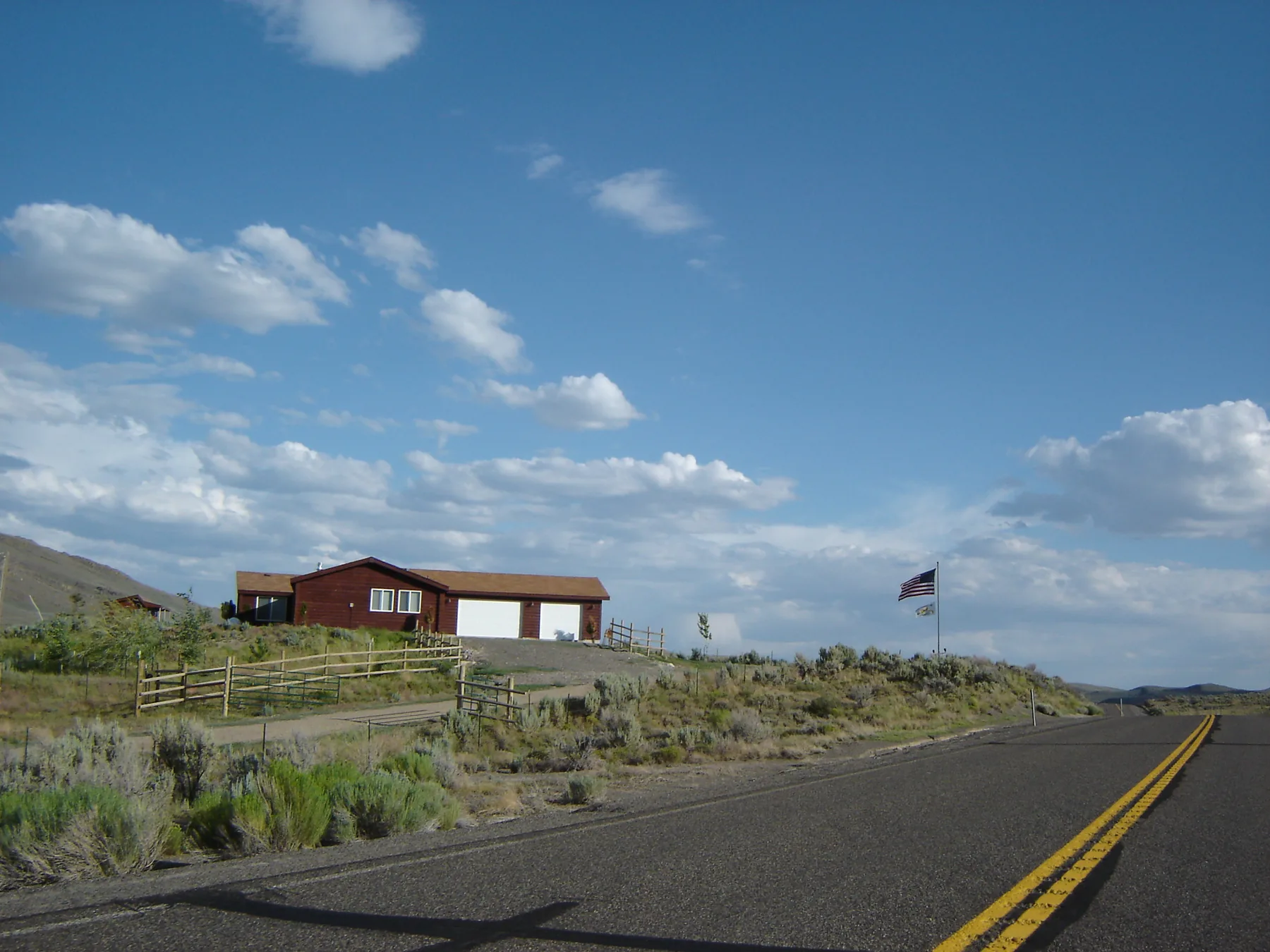
A fixed angled house staff usually has no halyard, no movable peak position, and too little travel to establish a genuine midpoint. Do not loosen clips or improvise a partial slide that could drop or damage the flag. If you want the ability to observe future orders literally, install an appropriately sized adjustable residential pole or halyard system, subject to safe mounting and local property rules. Otherwise, taking the fixed display down during the mourning period is more accurate than calling an impossible position “half-staff.”
Some veterans organizations, including the American Legion, offer a black mourning ribbon for a flag on a fixed staff that cannot be lowered. That is an organizational custom and separate mourning symbol; it is not the half-staff method stated in Section 7(m). If you choose one, describe it as a mourning ribbon, follow the issuer or organization's instructions, keep it from obscuring or damaging the flag, and remove it when the observance ends. This distinction lets a homeowner show respect without turning a useful custom into nonexistent federal text.
A homeowner setup audit before you fly the flag
Finish the job with a daylight and after-dark walkthrough. The goal is not merely a flag that looks right in one photograph; it is a display that remains correctly oriented, clear, visible, secure, and serviceable in its real environment. Mark each item pass, fix, or not applicable:
- Permission and location: confirm the wall, porch, balcony, yard, or window is within your ownership or exclusive-use area, and check a lease, association rule, permit, utility clearance, and local building or electrical requirement that applies to the installation.
- Orientation: on a projecting staff, the union is at the peak; on a wall it is uppermost and to the observer's left; in a window, verify that corner from outside.
- Clearance and hardware: the complete moving flag misses the ground, roof, gutter, railing, vegetation, wires, heat, sharp surfaces, doors, and traffic. The bracket, fasteners, pole, halyard, clips, and wall substrate carry the intended load without looseness or abrasion.
- Time and weather: assign a sunset lowering routine or test illumination after dark. Know where the flag will be stored and who will remove it before dangerous wind, ice, or other damaging weather.
- Condition and company: inspect fabric, seams, heading, sleeve, and grommets. If other flags are present, verify their precedence and the total load.
- Mourning readiness: decide whether the setup can create a true halfway position. Bookmark a reliable current-status source rather than relying on an old screenshot or social post.
If a condominium, cooperative, or homeowners association is involved, the federal Freedom to Display the American Flag Act of 2005 provides important but defined protection. A covered association generally may not prevent a member from displaying the U.S. flag on residential property in which that member has a separate ownership interest or a right to exclusive possession or use. The Act still allows reasonable time, place, or manner restrictions necessary to protect a substantial association interest, and it does not authorize an otherwise improper flag use.
That federal rule is not a promise about every renter, shared roof, common hallway, structural penetration, pole height, or local dispute. Get the written rule and identify the exact property interest before drilling or installing a freestanding pole. Ask what substantial interest a restriction protects and whether a safer, less intrusive placement satisfies it. For a consequential dispute, use the authenticated law and obtain qualified local advice rather than treating a general flag guide as individualized legal or engineering approval.
Recheck the setup monthly and after storms, construction, landscaping, electrical changes, or a move to another mounting point. Replace worn hardware before it fails and retire an unserviceable flag respectfully. You can use the broader flag guides library for observance-specific questions, but this audit remains the practical baseline: permission, position, clearance, light, weather, condition, precedence, and a workable mourning plan.
Comments
Comments are reviewed before publication.
Sign in with Google to join the discussion.
Loading comments…